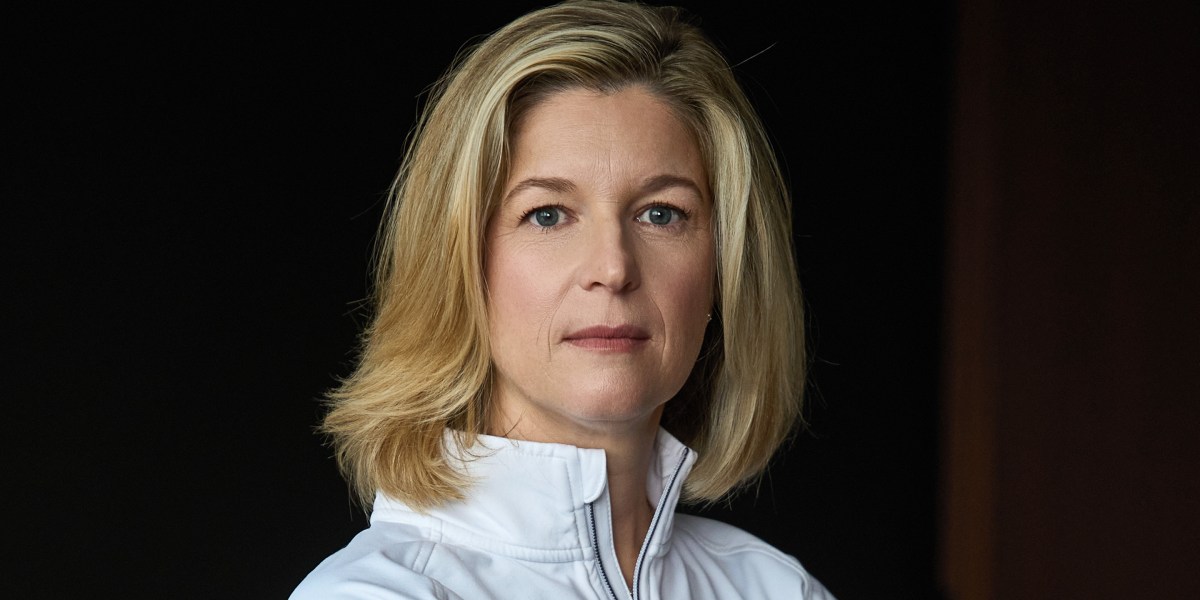





American parents (and students) weighing whether a U.S. college degree is still worth the hefty debt might want to hear what one philanthropy CEO did instead—she dodged six-figure tuition bills by sending her daughter to university in London.
It sounds counterintuitive. Flights, a foreign city, and a flat in one of the world’s most expensive capitals. But for Greater Good Charities CEO, Liz Baker, saving roughly $50,000-a-year, has been well worth the added admin of sending her kid off to study abroad.
“Once we started to look, we were like, ‘this is so much cheaper,’” she recalled to Fortune.
Tuition in London for her daughters’ courses comes in at around $35,000 a year, versus the $80,000 to $90,000 out-of-state U.S. bill they were initially bracing for. “So it’s like, really half the price,” Baker said.
As someone who has spent years running a nonprofit—scrutinizing budgets, tracking impact, and deciding where every dollar goes furthest—she’s perhaps better placed than most to do the math. “I always tell people who have kids that are going to college, you should look at the UK,” Baker added.
Even paying for a flat in Central London is still cheaper than U.S. college costs
Her oldest daughter has now completed an undergraduate degree at King’s College London and is currently studying a master’s at the London School of Economics, all while living in the heart of England’s capital city.
“Even paying for a flat in like Central London is cheaper than sending her to college here, because she was looking at UC Santa Barbara.” A staggering 747 km (or a 10-hour drive) from Arizona, where they were living at the time.
Essentially, wherever Baker’s children went to university, they’d have to factor in accommodation costs on top of tuition fees anyway—and even with London rent costing north of £2,000 ($2,700) a month, it still worked out cheaper than the American alternative once accommodation costs were stacked on top of that six-figure tuition bill.
“I mean, it’s expensive. But again, tuition out of state at any college is more expensive,” Baker added.
She also shaved off an entire year of college costs. One of the quiet quirks of the British system is that most undergraduate degrees last three years—and if students arrive with enough Advanced Placement (AP) credits, (good grades equal more points) they can often skip an extra foundation year some international students need.
“My one daughter did all of the AP classes, so she didn’t have to do a foundation year,” Baker explained. “So then you take into account that school is three years, and so then you eliminate that cost, and even master’s are shorter.”
One year cut alone can shave tens of thousands of dollars off the total bill for international students, whose annual tuition typically ranges from about £11,400 to £38,000 (roughly $14,000 to $50,000), depending on the course and university.
A $1.7 trillion student debt crisis is making the UK look like the smarter option
It’s not just the debt that worries Baker—it’s what (if anything) students are getting in return. Many grads are now walking off U.S. campuses with eye-watering debt but no clear path into a well-paying job.
U.S. student debt has surpassed $1.7 trillion; meanwhile, the unemployment rate for fresh-faced grads just keeps rising.
Now, millions of graduates are questioning whether their degree was worth the price tag, and a growing chorus of the world’s most powerful CEOs is starting to agree with them. Goldman Sachs CEO David Solomon has said he never hires for educational pedigree alone. Amazon’s Andy Jassy has said an “embarrassing amount” of your success depends on attitude, not credentials. And with AI quietly replacing entry-level roles that generations of graduates relied on to justify their loans, the premium higher education once held is eroding fast.
It’s why Baker thinks young people need to question the return on investment more than ever: “If you leave with an English degree, and you have $200,000-plus in debt from student loans—why would you do that?”
She genuinely believes her kids are getting more bang for their buck in Britain.
Not only are UK degrees shorter, but they’re also more specialised. Students typically focus on one subject and study it exclusively for the entire duration of their degree—every module, every year, laser-locked on their chosen field.
Crucially, in her eyes, they’re better aligned with the skills employers actually want.
“I think the curriculum is better because it’s more focused,” Baker said, while adding that when she took her musical theater and criminal justice degree, she had to take irrelevant classes that she’d never use in a career, like “Earth science.”
And when asked whether a British degree holds up against an American one in the eyes of employers, the CEO didn’t hesitate: “Yeah. 100%.”