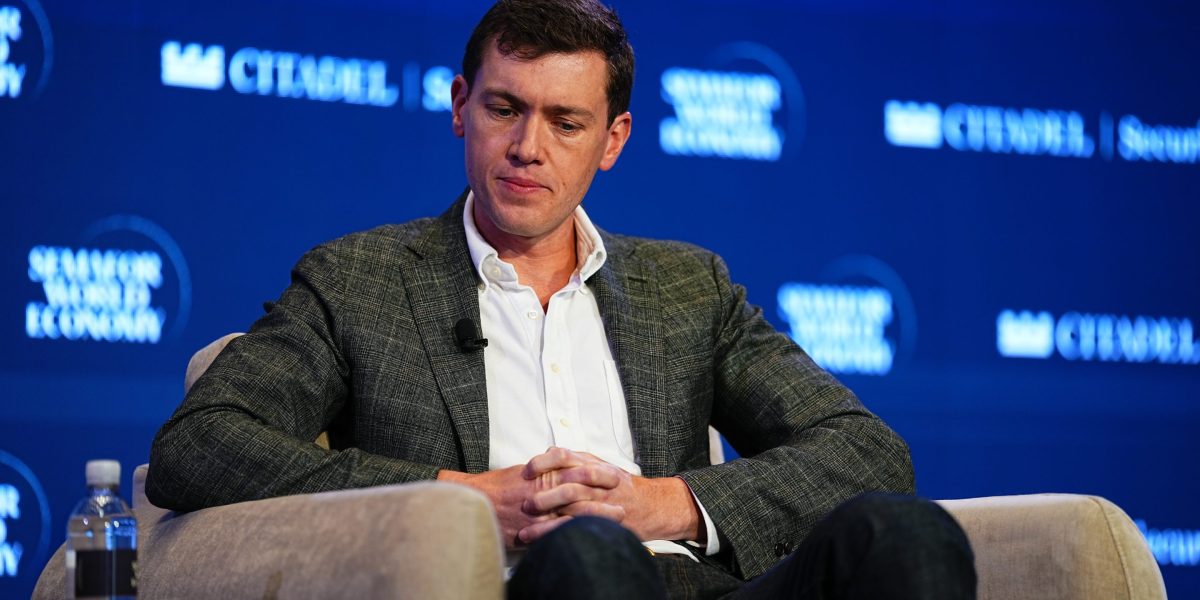




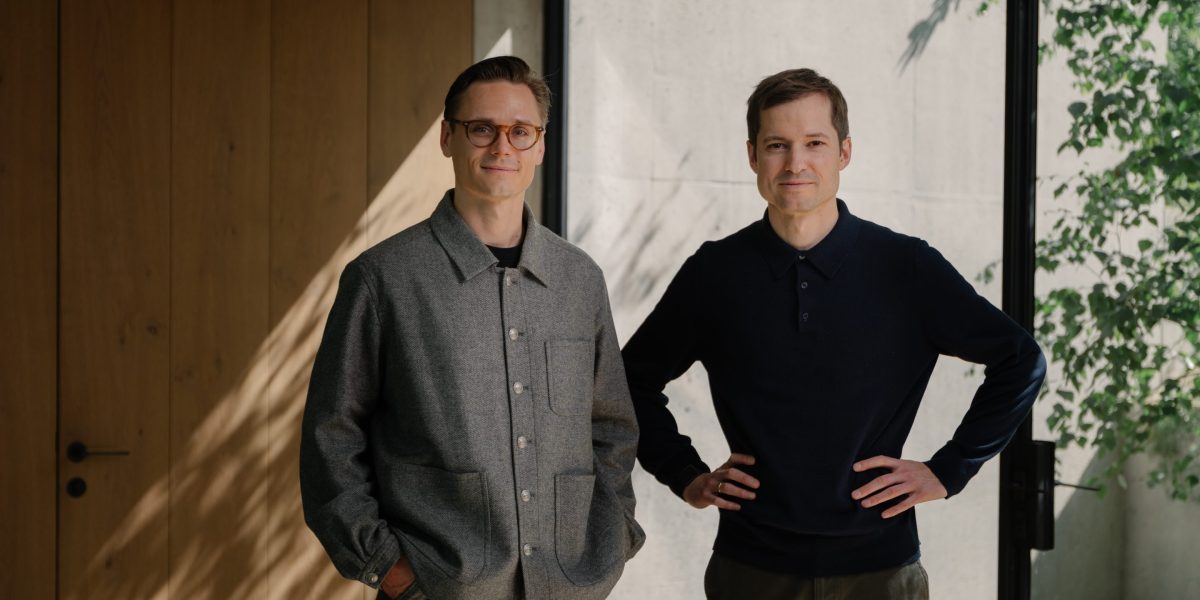
Banks and insurance companies spend billions of dollars to employ staff to screen risky transactions, process claims, and onboard new customers. If these decisions go awry, there can be serious consequences. The AI startup Taktile aims to automate even these risky calls, and one of the largest financial institutions has decided to back the company.
Cofounded by machine-learning engineers Maik Taro Wehmeyer and Maximilian Eber, Taktile announced Wednesday that it has drummed up $110 million in a Series C fundraise. An arm of Goldman Sachs led the round, with participation from brand-name investors like Tiger Global, Index Ventures, and Y Combinator. Wehmeyer declined to specify at what valuation his startup raised the capital.
“AI has been around for a couple of years, but 2026 is the year where AI comes to financial services,” he said. “The models have now increased to such a strong level that they finally allow for agents to perform better than humans at many complex tasks.”
AI tornadoes
Since OpenAI launched ChatGPT in 2022, business leaders have trumpeted AI’s potential to handle tasks long reserved for a massive white-collar workforce. Software engineers have arguably been the first class of workers to see the technology upend their jobs, as programming tools like Anthropic’s Claude Code and OpenAI’s Codex have exploded in popularity.
Now, the AI labs and large tech companies are developing products to disrupt other white-collar workers. Anthropic recently launched a version of its chatbot that sits inside the workplace messaging app Slack. In June, software giant Salesforce said it will buy AI customer service platform Fin for $3.6 billion. And, in the same month, Meta unveiled an AI business agent that helps companies manage customer interactions and sales across its messaging and social apps.
Taktile doesn’t aim to rival general‑purpose AI tools like Claude or ChatGPT. Instead, the startup positions its product as an operating system that lets financial institutions turn models from the leading AI labs into dedicated agents for their most sensitive work.
As an example of how his platform would work, Wehmeyer pointed to processing insurance claims after a tornado tears through a house in Minnesota. An examiner can take weeks to assess the damage, and it can take even longer for the homeowner to receive a check. Taktile’s services aim to speed up payouts.
“First, there’s an agent that reads out the document. Then, there’s another agent that actually interprets what the data means and matches that to the coverage you have in your insurance policy. Then, another agent is actually making a decision if that claim should be paid out,” Wehmeyer told Fortune.
The Taktile cofounder said he’ll use his startup’s new stash of capital to continue to build out the company’s software as well as open a new office in São Paulo.