



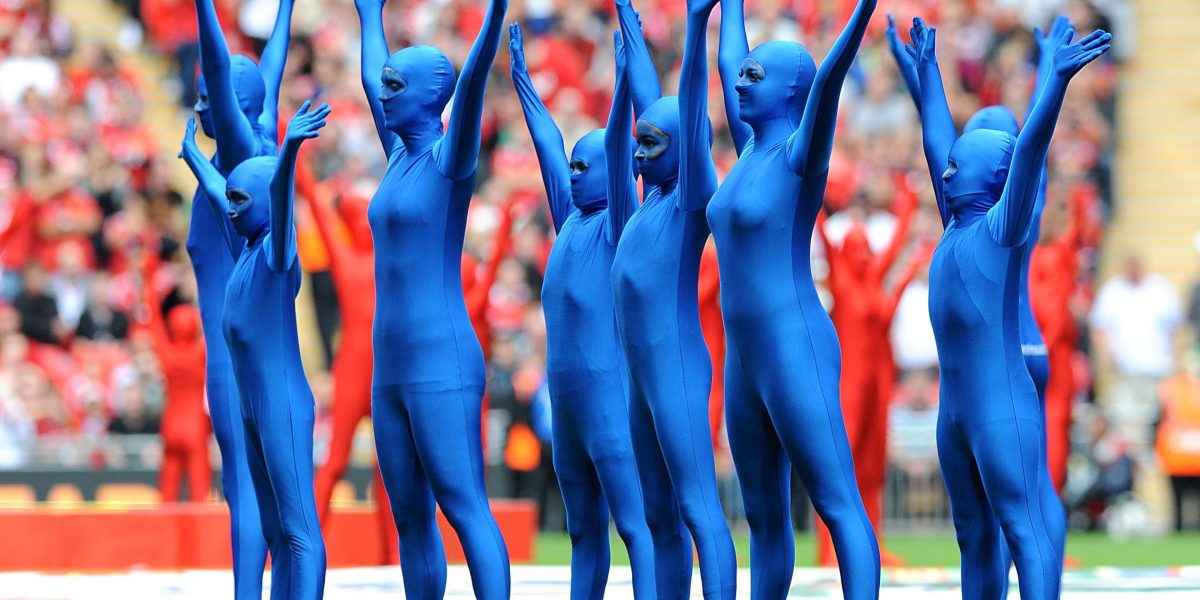
For pranksters of a certain age, Fraser Smeaton is a hero. With his brother, Ali, and former roommate, Gregor Lawson, the Scottish business leader is the founder of Morph Costumes. Morph is a UK costume company that launched a twist on the zentai full-body spandex suit in 2009 and spawned a legion of viral videos. When the GAP store on Fifth Avenue was ‘morphed’ by a band of improv-artists in 2018, the police had to be called. The accompanying video received millions of views.
Morph Costumes’ biggest market is America, particularly around Halloween, when children from Detroit to West Palm Beach like nothing better than ghost outfits and fake blood. Smeaton—who runs the company from its Edinburgh headquarters—is now an expert in global tariff policy and the negative impact of economic volatility and barriers to trade. The President should give him a call.
Morph Costumes is a Main Street example of tariff effects. It makes its costumes in China, which has a 30-year start on the rest of the world in the business of clothing production. Moving production elsewhere is prohibitively expensive.
Since Donald Trump entered the White House for the second time, the US import taxes faced by Morph, which supplies Walmart and Target, have lurched wildly—from zero tariffs to 20% tariffs to 50% tariffs, before briefly flirting with 145% tariffs. The figure fell back to 20%, before the Supreme Court intervention last week ruled the tariffs illegal, which brought them back down to zero. The President then announced a new 10% tariff, although there is some confusion about whether he actually means 15%.
“It is certainly not good for investment,” Smeaton tells me, with the wry understatement common to Scots. “Or for the US consumer. They are paying higher prices.” Morph Costume’s outfits now cost 9% more, after Smeaton’s business was hit by a $3 million duty bill, wiping out most of its profits.
Higher prices for witches’ outfits may not cause a riot is the aisles of your local supermarket, but they do contain a lesson. Tariffs (a tax on goods) raise money for the US government (bills fall due in seven to ten days, Smeaton told me). They also push up inflation across all goods affected, from Superman outfits to fridge-freezers. Cost-of-living effects have a direct read-through to the polls.
“We find that consumer prices have risen disproportionately in categories facing larger tariff increases,” Goldman Sachs said in a note to investors and analysts last autumn. An updated forecast this week estimated that “tariff passthrough increased core PCE (Personal Consumption Expenditure) prices by about 0.7% through January and will raise prices by a further 0.1% in the remainder of 2026.”
The President has spoken of tariffs as a tool to encourage the reshoring of jobs back to the US. Although this may be true for large-scale manufacturing—Volvo is increasing production at its Ridgeville plant in South Carolina, for example—it is not true for many firms which rely on China for production. Three-quarters of all US toys are manufactured there.
“Cut-and-sew is not the type of work Americans want,” Smeaton says. “In China, labor costs are $2-3 an hour. In America they are $20 an hour.” He explains that tariffs would have to rise to 500% to make reshoring worth considering. Many firms would be out of business long before then.
Morph Costumes has scoured the world for alternatives to Chinese production, including Vietnam, Bangladesh and Cambodia. None offer the deep expertise in everything from cloth-sourcing to zip-making that is available in China, often in the necessarily small batches needed for fast-moving consumer goods.
“We planned to open a factory in India, but then there was a fallout there and tariffs were imposed, so we had to cancel that idea,” says Smeaton.
When it comes to the President, chaos is often the strategy. For businesses like Smeaton’s the opposite is needed—stability. Wearing Morph suits might be fun and gain you 5 million views on YouTube. But a wipe-out of your profits after the latest announcement from the White House is hardly a laughing matter.