





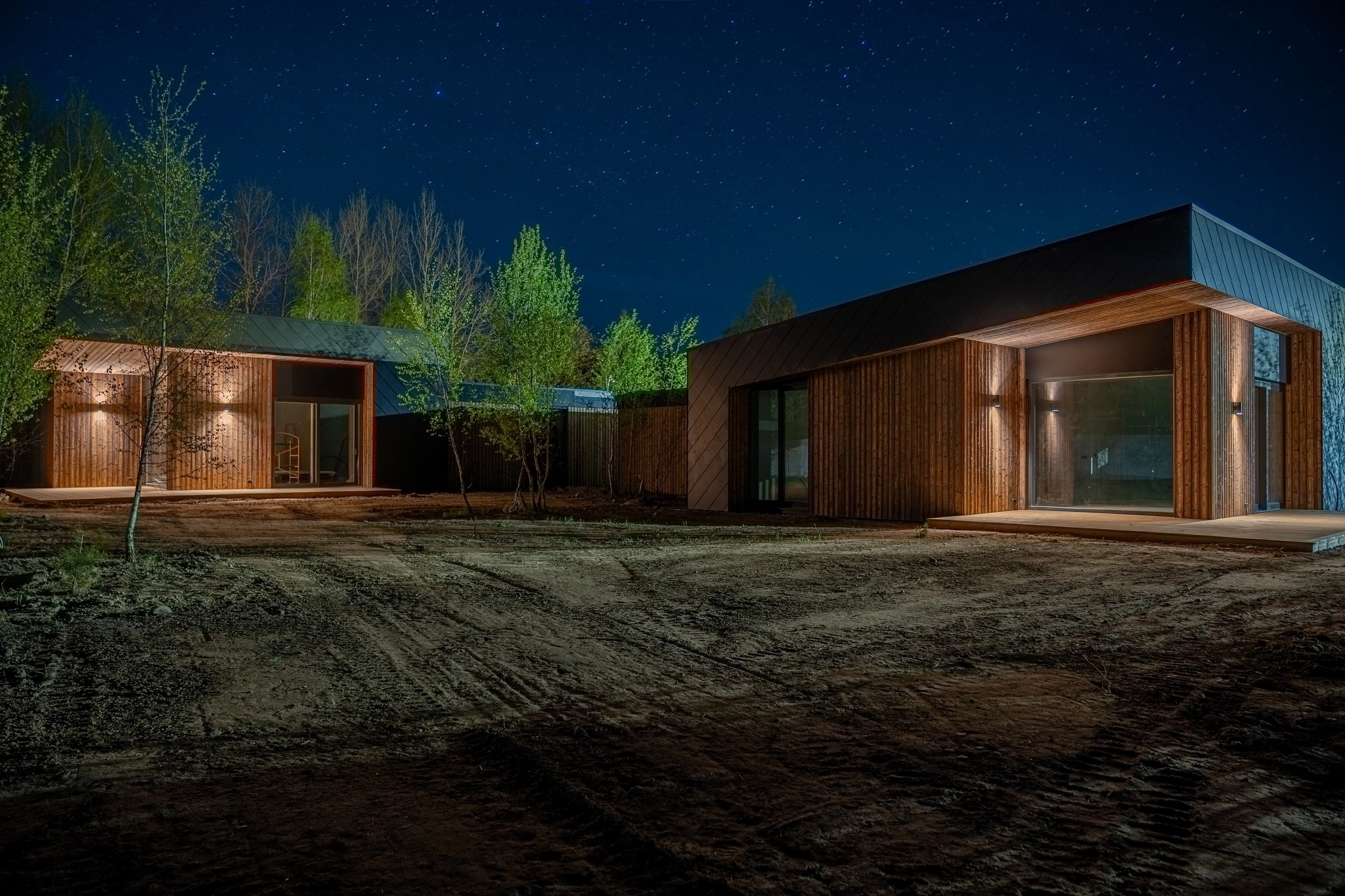

Lithuania has quietly become one of Europe’s more reliable suppliers of charred timber cladding, with companies like Eco Facade shipping Yakisugi-style products to the UK, Ireland, Scandinavia, and Germany. The material’s blend of striking looks and weather resistance is turning a centuries-old Japanese craft into a modern European export niche.
From Ancient Craft to Export Product
The technique behind this trend, known as Yakisugi or Shou Sugi Ban, dates back centuries in Japan and involves controlled burning of a wood’s surface to create a carbonized, protective layer. Lithuanian producers have adapted the process using local softwoods, primarily larch and spruce, selected for their density and suitability for charring. The finished material typically goes through several stages — charring, cooling, cleaning, optional brushing, washing, and sometimes oil treatment — before it is ready for shipment abroad.
Why UK and EU Buyers Are Interested
Architects and homeowners in damp, weather-exposed regions such as the UK and Ireland are drawn to charred wood because the carbonized surface resists moisture, rot, and pests more effectively than untreated timber. The same protective layer also improves fire resistance, which matters for compliance with building regulations across several European markets. On top of the practical case, the material’s deep charcoal patina and “alligator skin” texture fit current design trends favoring bold, natural-looking facades in both residential and commercial projects.
What the Trade Data Shows
Lithuania’s overall wood and wood-product exports to the UK reached roughly 98.4 million US dollars in 2023, spanning categories from joinery to sawn timber. More narrowly, Lithuania’s wood charcoal exports — a related but distinct product category from charred cladding — totaled about 2.15 million US dollars in 2024, with France as the largest destination and the UK receiving a comparatively small share of roughly 52,900 US dollars. These figures describe wood and wood-charcoal trade broadly; dedicated statistics specifically isolating charred wood cladding (as opposed to charcoal or general timber) are not publicly broken out, so treating any such number as an assumption is advised unless verified against a primary trade source.
Other Lithuanian charred-wood producers, such as Reburnent PRO, report exporting to Denmark, Sweden, Finland, and Norway in addition to domestic sales, suggesting the trend extends beyond a single company.
Where the Advantage Comes From
Industry sources point to a few recurring reasons why Lithuanian charred wood competes well in Western and Northern European markets:
-
Raw material access: Lithuania’s forests supply dense larch and spruce well suited to charring.
-
Cost position: Lithuanian producers often price competitively against Western European and Japanese suppliers without sacrificing finish quality.
-
Climate fit: the moisture and pest resistance gained from charring suits the damp conditions common in the UK, Ireland, and Scandinavia.
-
Sustainability positioning: many producers source timber from responsibly managed forests and avoid chemical preservatives, which aligns with EU and UK green-building expectations.
-
Established logistics: companies active in this space already have experience navigating export documentation and shipping to Nordic and Western European destinations.
Applications Driving Demand
Charred cladding is being specified across a wide range of project types rather than a single niche. Common uses include house facades and garden structures in the UK and Ireland, minimalist commercial facades in Scandinavia, and interior feature walls or acoustic panels in various EU markets. Lithuanian suppliers also offer varying charring intensities and finishes — from deep black to lighter smoked tones — allowing customization for different architectural styles.
A Realistic Outlook
The broader picture is one of steady rather than explosive growth: general wood-product trade between Lithuania and the UK remains sizable, with builders’ joinery and carpentry alone accounting for roughly 47 million US dollars of exports in 2023, while charred cladding sits as a smaller, higher-value niche within that wider trade relationship. As sustainability regulations tighten across the EU and UK, and as architects continue favoring natural, low-maintenance facade materials, demand for this category is likely to keep expanding, though a verified growth-rate figure specific to charred wood cladding is not currently available.
For companies looking to source this material directly, Eco Facade’s website (https://ecofacade.lt/en/) outlines its production process, product range, and export destinations in more detail.