



There are more Americans experiencing food insecurity now than there were during the pandemic, a new survey from the Federal Reserve of New York found.
In the survey from Feb. 2026, the New York Fed asked American households about their spending habits, just as consumer sentiment reached an all-time low this month and as the economic effects of the Iran war were starting to be felt at home. The survey asked Americans questions such as if someone in their household dipped into savings to cover expenses; had trouble finding enough food to eat; had children miss meals: received food donations; or received Supplemental Nutrition Assistance Program (SNAP) benefits.
The Fed said the results are concerning, as the percentages of economic hardships increased across the board, compared to when the Fed conducted the Survey of Consumer Expectations early in the pandemic.
“We find a remarkable increase in food insecurity, particularly among lower-educated and lower-income households and households with young children,” the researchers wrote.
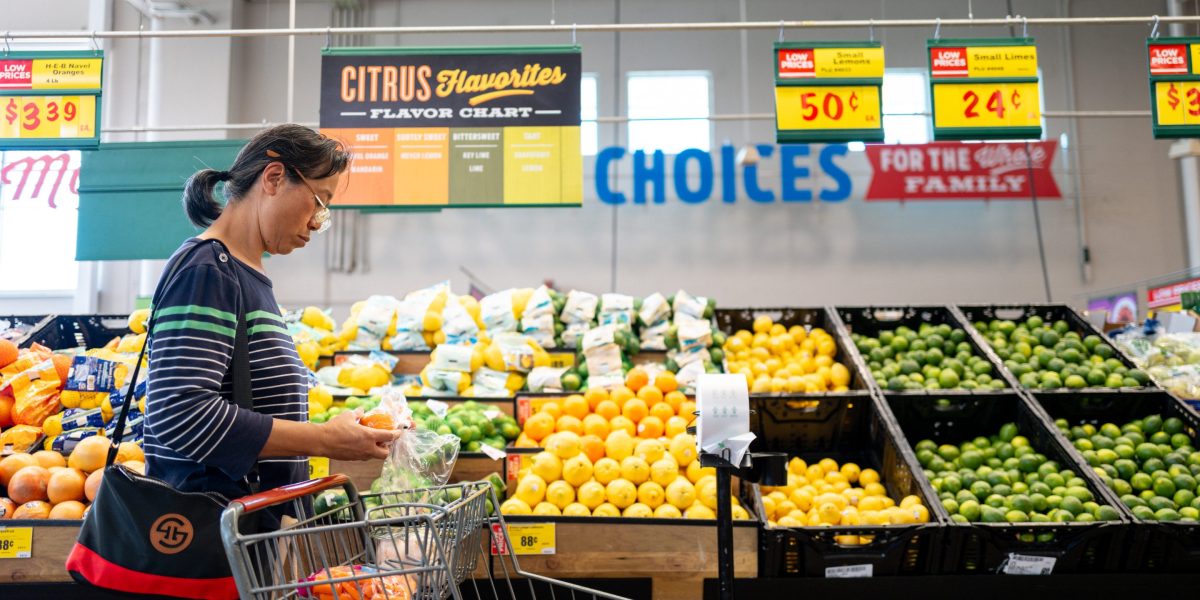
One-tenth of respondents reported not having enough food to eat or that their children missed meals, more than double the 4% who reported so in June 2020. More than a third of households reported dipping into savings to pay for groceries, compared to just 21.8% early in the pandemic.
“Such financial stress is reflected in concerns about affordability due to the high cost of living, persistent inflation, and high interest rates, and in high delinquency rates for credit cards and auto and student loans,” the researchers wrote.
The findings come as more low and middle-income households feel the pressure of higher housing and food costs, and experience higher effective inflation rates. Inflation reached 3.8% in April, the highest level seen in almost three years. The Fed economists say the findings show signs of a growing “K-shaped” economy, as lower-income Americans face financial stress and affordability issues while higher earners seem to drive productivity and wage growth.
As food insecurity increases, the researchers found that there has also been an increase in consumer pessimism. The University of Michigan monthly consumer sentiment survey fell to 44.8 this month, a rating lower than the Great Recession and the pandemic. The percentage of families who believe they will be financially better off in a year is also rapidly declining, the New York Fed found.
Low consumer sentiment comes as the Trump administration has celebrated what he called “lifting” 2.4 million Americans off of SNAP benefits. The One Big Beautiful Bill Act cut $186 billion from SNAP over 10 years, amounting to a 20% funding reduction. The cuts have hit children and the elderly particularly hard. Before the cut, they made up 39% and 20% of SNAP recipients, respectively. Additional cuts to Medicaid, Medicare, and the Affordable Care Act subsidies have also raised the cost of living for lower- and middle-income families.