







Shares of quantum computing companies were a rare bright spot amid a tumultuous market Tuesday, surging after President Trump signed two executive orders aimed at maintaining U.S. dominance in the emerging technology.
While the broader market slumped Tuesday, with investor jitters on AI and tech pushing the tech-heavy Nasdaq down 2.2% and the S&P 500 down more than 1.4%, quantum computing companies saw their shares surge as of market close Tuesday.
Quantinuum, formed in 2021 through a merger of Honeywell Quantum Solutions and Cambridge Quantum, led the pack, with its shares up more than 13% at market close. Another two pure-play quantum companies, Infleqtion and D-Wave, saw their shares close up 12% and 2%, respectively. Meanwhile, IBM, which operates the largest fleet of high-powered quantum systems, gained by 5%. JPMorgan analyst Brian Essex also upgraded IBM to overweight from neutral, partly because of its potential to benefit from increased interest in AI and quantum computing, helping boost the stock Tuesday.
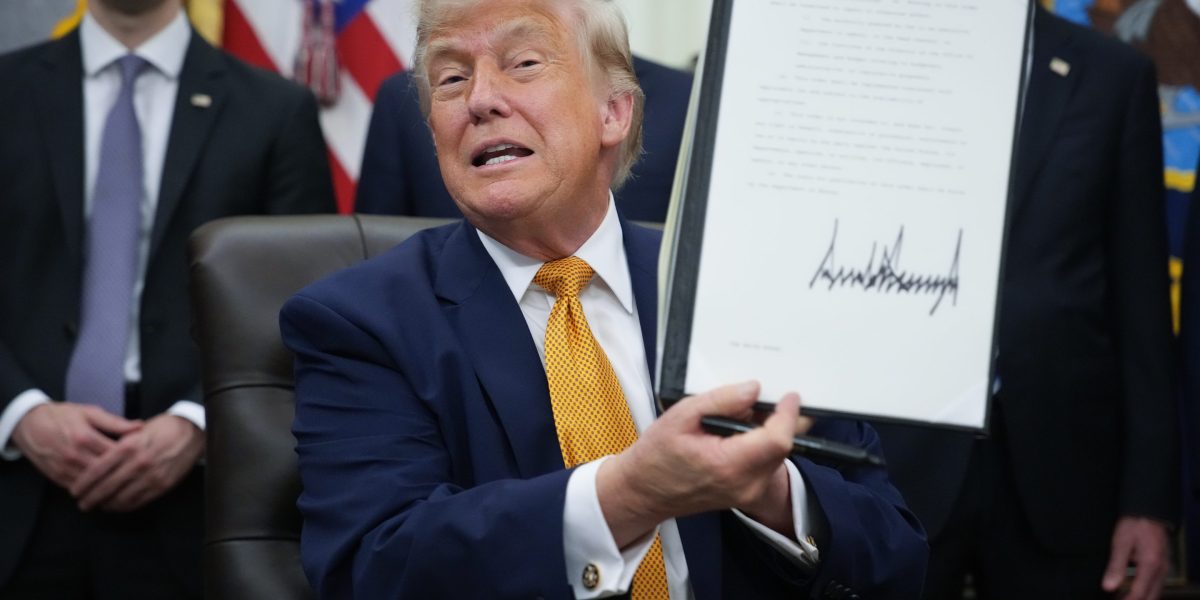
Joined at the White House by leaders of quantum computing-linked companies on Monday, Trump signed two orders that impose hard deadlines for both creating a “scientifically relevant” quantum computer and for government agencies to adopt post-quantum cryptography for sensitive data. Quantum computing, Trump said at the White House Monday, is of “enormous significance for our country’s economic growth, scientific research, and cyber security.”
The orders gave a jolt to a sector that has long promised transformational breakthroughs but has struggled at times to convince investors that a commercial payoff is near.
While classical supercomputers use binary code (1s and 0s) to run calculations sequentially, quantum computers rely on qubits, tiny units that can represent both 1 and 0 simultaneously through a property called superposition. Quantum computers can run calculations in parallel, making them exponentially faster for certain problems. At the same time, qubits are highly sensitive to environmental interference, making them difficult to stabilize. And despite billions of dollars in investment, some experts say quantum computing remains years away from commercial viability.
Trump’s orders may help accelerate that timeline, at least according to some of the industry’s main players.
Infleqtion CEO Matthew Kinsella, who attended Monday’s signing of the executive orders at the White House, told Fortune that the new orders now make quantum a “national imperative.”
“American companies, researchers, and government agencies can now move together with urgency. That is exactly what this technology requires,” he said.
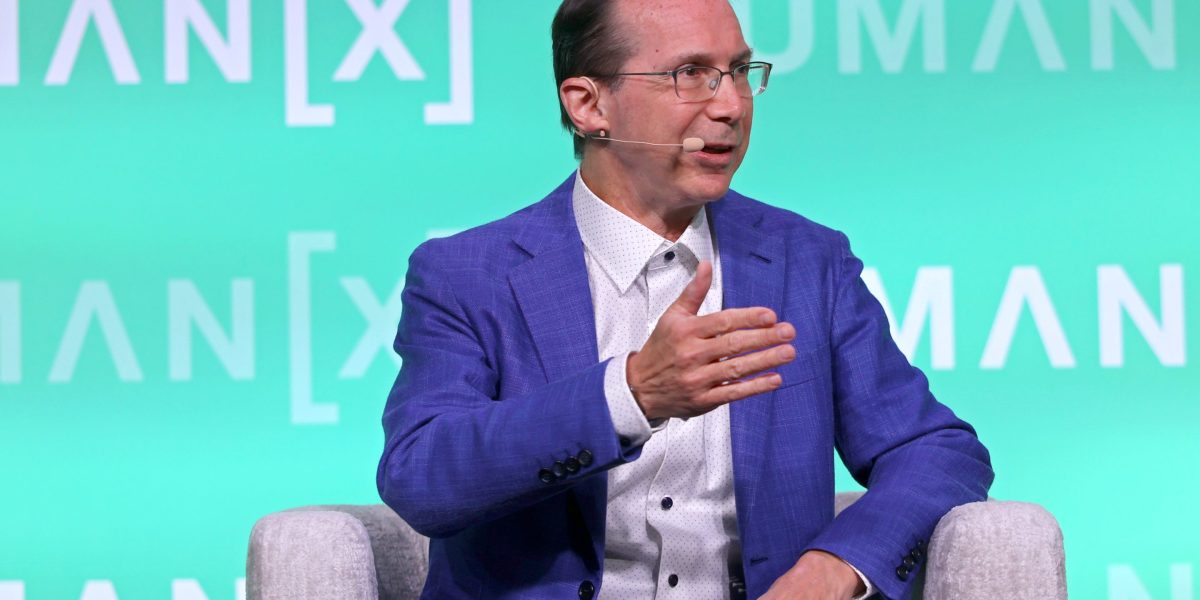
Arvind Krishna, the CEO of IBM, was also present at the White House. He called the executive orders an “important, timely step forward.”
“Sound policy, sustained investment and public-private partnership are vital to sustaining U.S. quantum leadership and technological resilience,” he said in a statement.
The first executive order, among other actions, establishes the QC-ADDS initiative, directing federal agencies to build the first quantum computer capable of performing meaningful scientific research, to be housed at a Department of Energy facility. The Pentagon must also deploy at least three next-generation quantum sensor projects by 2028. Those sensors would give the military GPS-independent navigation in conflict zones and the ability to detect underground infrastructure from space.
The second order targets cybersecurity. Under the executive order, federal agencies must upgrade their most sensitive systems to quantum-resistant encryption by the early 2030s. Federal contractors face the same requirements, while the State Department was directed to push allied governments and critical infrastructure operators to adopt compatible standards globally.
This isn’t Trump’s first bet on quantum. In 2018, he signed the National Quantum Initiative Act, which authorized up to $1.2 billion for quantum research. In May, the Trump administration also said it would invest an additional $2 billion in nine quantum computing companies in exchange for equity stakes. Some of the beneficiaries include GlobalFoundries and IBM, which are set to receive $375 million and $1 billion, respectively, for quantum-associated projects. The rest of the funding will go to smaller quantum companies including D-Wave, Infleqtion, and Quantinuum, whose shares surged Tuesday.
To be sure, despite Tuesday’s stock gains, most pure-play quantum companies have yet to turn a profit. Quantinuum, Infleqtion, and D-Wave are all pre-profit companies that have leaned heavily on government contracts and private investment to fund their research and operations.
Monday’s orders show that the federal government backs quantum, yet whether this support can lead these companies to profitability remains to be seen.
