








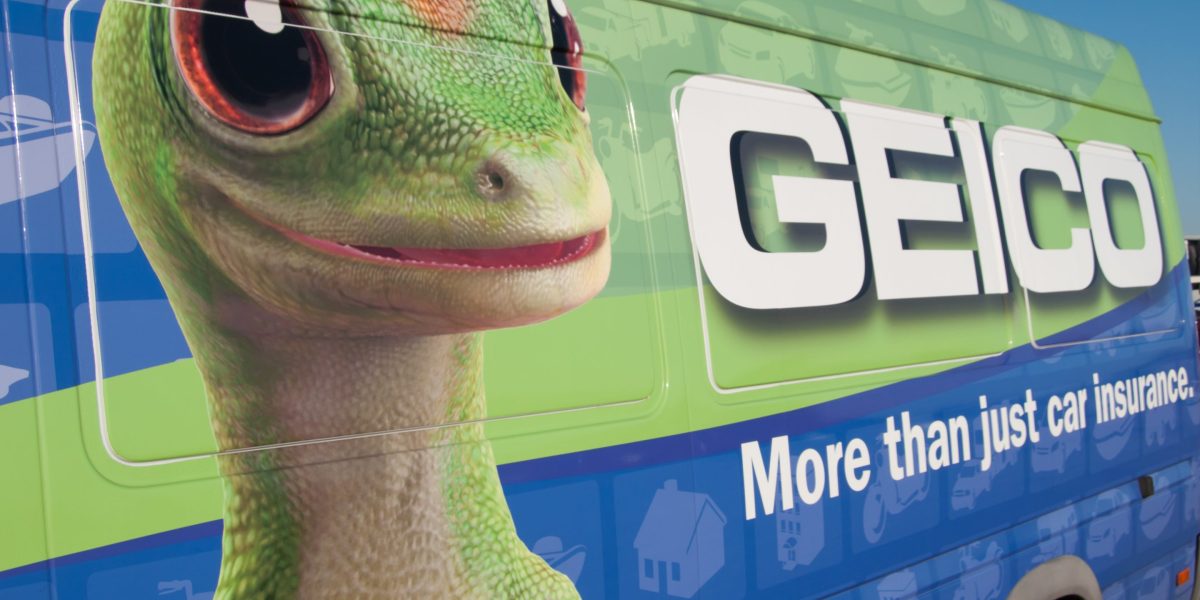
Here is the paradox at the center of the American insurance industry: the companies that dominate market share today got there not by explaining what they sell, but by refusing to mention it. Warren Buffett’s GEICO spends more than $2 billion a year on advertising. Almost none of it describes a policy. Almost all of it produces comedy.
I’ve spent a career studying how the screen reshapes commerce—as President and CEO of The Museum of Television & Radio (now The Paley Center for Media), as Harvard Law School’s inaugural Visiting Professor of Entertainment and Media Law, and as a bipartisan adviser to four presidential administrations on media, communications, and technology policy (Carter, Clinton, George W. Bush, and Obama). What GEICO, Progressive, Allstate, and Liberty Mutual have built is something I have not seen any other industry replicate: a competitive landscape where the primary corporate asset is not the product or the distribution network, but a comedy franchise.
The numbers bear this out. The GEICO Gecko has been on television longer than most sitcom characters. Progressive now runs two parallel comedy franchises simultaneously—Flo, who has become a genuine pop culture icon, and Dr. Rick, the “parenta-life coach” whose campaign about new homeowners turning into their parents won a Bronze Lion at Cannes. Allstate’s Mayhem, played by Dean Winters as a dark-comic personification of catastrophe, proved so successful that the company launched a second franchise, “Knowers,” alongside it. Liberty Mutual’s LiMu Emu has higher name recognition than most cable news anchors.
These aren’t ad campaigns. They’re entertainment portfolios, managed the way a network manages multiple shows. Together, these four companies have become the most prolific and consistent producers of short-form entertainment on American television, spending more on creative content than most studios spend developing scripted series. And they did it to solve a problem that defeated generations of corporate strategists: how to build brand loyalty for a commoditized product that nobody wants to think about until the moment they desperately need it.
Their answer was to abandon the product almost entirely and become entertainment brands that happen to sell insurance. The Gecko is worth a staggering amount to Berkshire Hathaway. Flo is Progressive’s most valuable intellectual property. Mayhem functions as a franchise character with sequel potential. These companies didn’t just buy media time. They built characters that audiences choose to spend time with, an asset class that appreciates rather than depreciates.
The competitive consequences have been decisive. The insurers that made this entertainment pivot now dominate their markets. The ones that didn’t—the “good hands” and “good neighbor” holdouts from the trust-and-authority era—have been forced to follow or fall behind. A comedy franchise has become a barrier to entry in American insurance. That is not a marketing insight. That is a structural transformation of an industry.
And the underlying logic extends well beyond insurance. When nobody wants to think about what you sell until the moment they desperately need it, the only viable long-term strategy is to give people a reason to think about you when they don’t need you. Entertainment does that. Product advertising doesn’t. Banking, utilities, telecommunications, healthcare, and indeed any sector where the product is commoditized and the purchase decision is infrequent, faces the same problem. The insurance companies cracked it first. The playbook is sitting in plain sight.
So why haven’t more companies followed? This is where the story gets uncomfortable for most boardrooms. Building an entertainment franchise requires a commitment that few CEOs are prepared to make: years of consistent investment in characters and narratives, a willingness to let the creative property become bigger than any individual campaign, and the discipline to resist the quarterly pressure to pivot to whatever seems urgent this month.
The Gecko debuted in 1999. Flo arrived in 2008. Mayhem launched in 2010. Each character was sustained through market cycles, leadership changes, and the relentless churn of digital disruption because the companies understood that the franchise, not the campaign, was the unit of value.
Patience is the hardest part of this model to replicate. It is also, for any company selling a product consumers would prefer not to think about, the most important competitive advantage. The insurance industry figured that out a generation ago. The rest of American business can still catch up.
The opinions expressed in Fortune.com commentary pieces are solely the views of their authors and do not necessarily reflect the opinions and beliefs of Fortune.
