



Back in February, with the S&P 500 breaching 7,000 for the first time, Owen Lamont was one of the few economists willing to say it plainly: we are not in a bubble. Four months later, he’s sounding the alarm.
“The chamber of dispersion has been opened,” Lamont, a senior portfolio manager at Acadian Asset Management and former finance professor at the University of Chicago, Harvard, Yale, and Princeton, wrote in his Owenomics blog this week—ahead of the massive SpaceX IPO. “The beast of volatility has awakened, and the season of chaos is at hand.”
The framework, now under pressure
Lamont’s bubble-detection system relies on what he calls the “Four Horsemen”: overvaluation, bubble beliefs, equity issuance, and investor inflows. In February, with companies still buying back roughly $1 trillion in stock and the IPO market eerily quiet, only three of four conditions were met. “I don’t see the smart money acting like there’s a bubble,” he told Fortune at the time. “Maybe I should say there’s not a bubble yet.”
The emphasis on “yet” was doing a lot of work. He warned that the missing horseman — issuance — could arrive at any moment. Indeed, Wall Street has been gearing up for a genuinely historic IPO pipeline. Blackstone’s CEO told the Financial Times early this year that it was shaping up to be “one of our largest IPO pipelines in history” and Goldman Sachs’ head of investment banking predicted to Fortune that there would be an IPO “megacycle” unlike anything before.
In late May, Goldman Sachs updated its projection for gross IPO proceeds to a record $225 billion — up from $160 billion earlier in the year. Of course, this will be largely driven by Anthropic and OpenAI, which have both confidentially filed for IPOs, and by SpaceX, which is set to have the largest listing ever in the first week of June.
The market that changed in April
The specific trigger for Lamont’s latest alarm isn’t the IPO pipeline — it’s what happened to chip stocks.
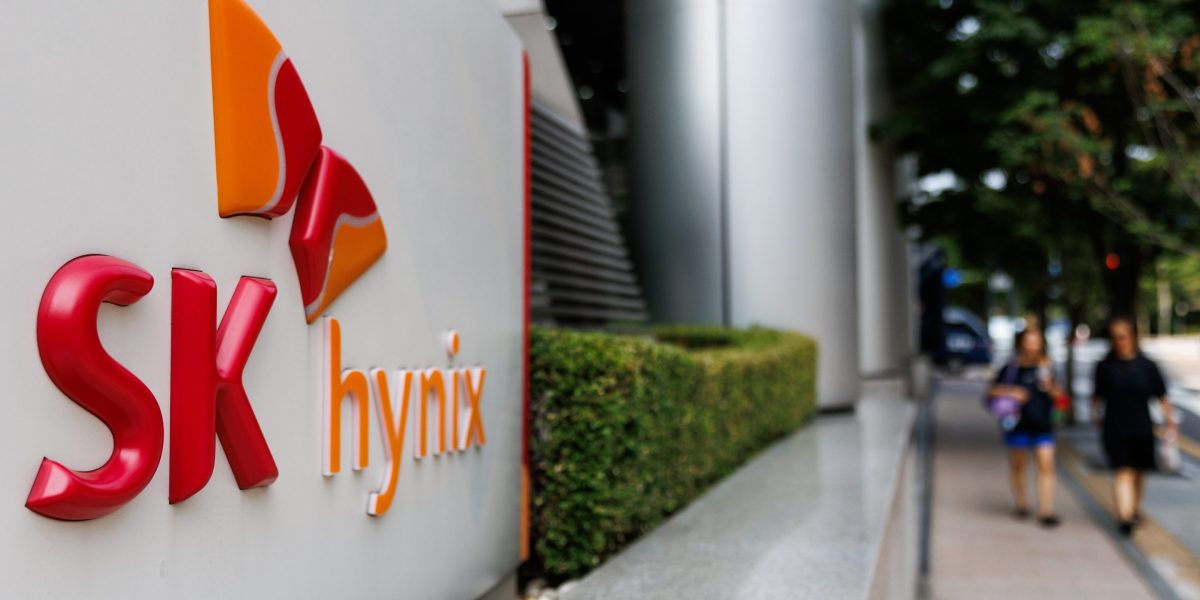
Since April 2026, world stock market return dispersion has hit levels not seen since the peak of the dot-com bubble. In May, Micron Technology surged 87.8% in a single month. SK Hynix jumped 78.6%. Both stocks entered May with index weights below 1% in the MSCI All Country World Index — yet together they accounted for 17% of the entire index’s 5.2% monthly return. In Lamont’s 31-year dataset of more than 800,000 stock-month observations, those are the first- and fourth-largest contributions to index returns ever made by a stock with less than 1% weight. “May 2026 was very unusual,” he noted.
The dispersion readings for April and May 2026 — 15.0% and 15.6%, respectively — rank third- and fourth-highest since 1995, trailing only December 1999 (18.2%) and February 2000 (15.9%). The average since 1995 is 7.6%.
The earnings expectations that break the map
Even before the dispersion data crystallized, Lamont was growing uneasy about the earnings story justifying valuations. On June 3, he published a note titled “A pessimistic take on optimistic growth forecasts,” arguing that the clearest bubble signal isn’t price — it’s the surge in earnings expectations used to rationalize price.
Since 1985, he calculated, analysts have on average predicted 13% annual S&P 500 earnings growth; the realized figure has been closer to 7%. Expected long-term S&P 500 earnings growth has now hit 20.2% — exceeding even the 2000 peak of 18.6%. “Perhaps when 2031 rolls around, we’ll look back and see today’s market valuation as another triumph of the efficient market hypothesis,” he wrote. “But for me, today’s optimism is yet another way in which 2026 is looking like 1999.”
Widespread unease
Lamont is far from a lone voice. JPMorgan CEO Jamie Dimon, speaking at Bernstein’s Strategic Decisions Conference on May 27, described the deal environment as “gung-ho, folks” and reached for the word “exuberance” — the same loaded term Alan Greenspan used in 1996, three years before the dot-com crash. Dimon anchored his unease in four specific years — 1972, 1986, 2000, and 2007 — each a moment when confidence was high right before the music stopped.
Bridgewater Associates founder Ray Dalio told Bloomberg on June 3 that his proprietary bubble indicators showed U.S. equity markets “rising close to — not at — the same level in 2000 and the same level in 1929.”
Goldman Sachs’ own global head of equity research, James Covello, was blunter still: “At some point, you’ve got to make money. You make investments in a business so that you can generate returns and make money. And we’ve gotten further away from that over the last couple years instead of closer to it.”
Bubble or rational repricing?
Still, Lamont resists rendering a verdict. He has long framed the massive hyperscaler AI spending as a “rational gamble” rather than speculative mania — comparing it to the economics of drilling for oil or laying railroad tracks, where overbuilding is common in transformative technology waves but doesn’t automatically constitute a bubble. The current dispersion, he notes, could reflect genuine fundamental repricing of AI-driven earnings — a 2020-style structural shock that continues — or 1999-style speculation that eventually reverses.
But one thing is certain: “It’s official: the world stock market is now as wild as it was during the tech-stock bubble,” he wrote. “Since April 2026, we’ve had epic levels of return dispersion” with “AI excitement” driving “extreme price moves.” It can be normal for small-cap stocks to surge 50% in a single month, but “it’s not normal for the whole market to be meaningfully impacted by extreme winners.”
The options market isn’t betting on calm. The CBOE S&P 500 Dispersion Index, based on forward-looking options prices, is near all-time highs, signaling that traders expect volatility to remain elevated over the next month. For active managers, the squeeze is already real: any long-only manager benchmarked to the ACWI who didn’t hold Micron and SK Hynix in May underperformed their benchmark by 0.9% — in a single month.
The whirlwind, Lamont concludes, is a challenge “every market participant must confront” — whether it proves to be a bubble, repricing, or some unstable mixture of both.