
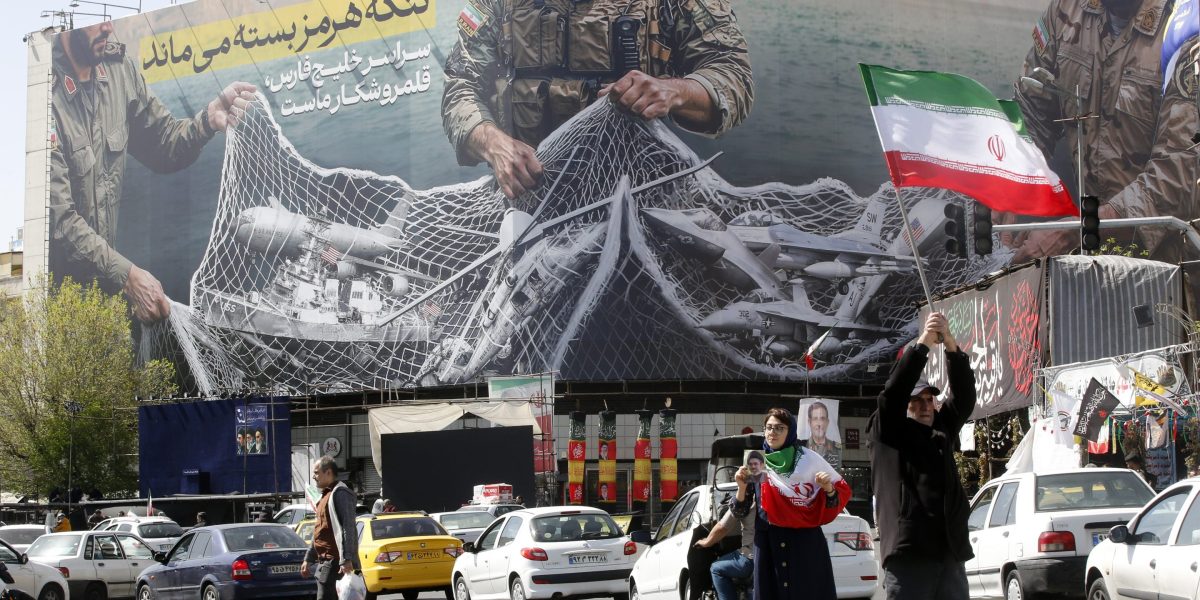



A fragile ceasefire agreement in the war began with bombs continuing to explode in Lebanon and contradictory statements about whether Iran will continue to control the critical Strait of Hormuz energy chokepoint.
But the most likely scenarios moving forward involve either Iran exerting more control over global energy markets than it did before the fighting started in March, or the current tenuous agreement merely delaying another military escalation by days or weeks, geopolitical and energy experts said.
There is a less likely, “happy scenario” where global energy trade returns to normalcy—but even that will take until the end of this year because of supply chain challenges—and where Iran is left weakened and militarily degraded for the long term, said Bob McNally, former White House energy advisor under George W. Bush and founder of Rapidan Energy Group.
“We think the odds favor this ceasefire either not ever sticking or unraveling if it does,” McNally told Fortune, arguing the April 7 announcement of a two-week ceasefire was vague, fragile, and contradicted by Iran—not exactly justifying oil prices falling by almost $20 per barrel overnight.
“The only thing we know for sure is the president called off a larger attack,” McNally said. “I am amazed at the market’s willingness to price in relief so willingly. While we do see a ceasefire as an ultimate end state, we don’t think we’re there yet, and we think this is going to get worse before it gets better.”
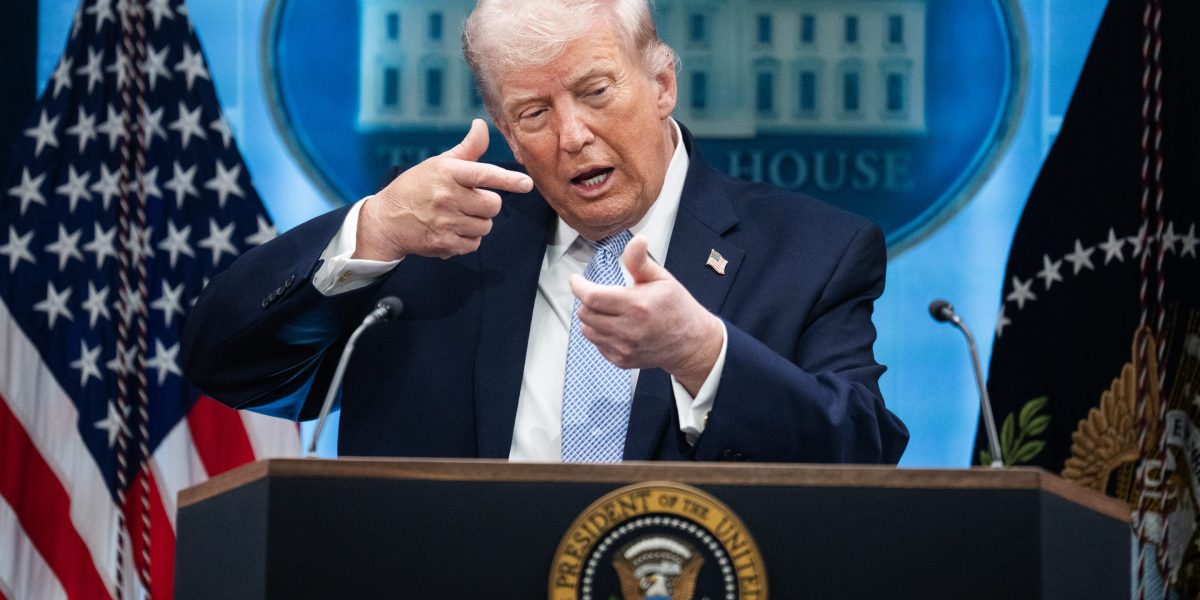
Hours after President Donald Trump issued profanity-laden messages threatening that Iran’s “whole civilization will die” in one night on April 7, he announced a two-week ceasefire in exchange for opening the narrow Hormuz waterway through which about 20% of global energy supplies transit. Iran agreed to open the strait but only “via coordination with Iran’s Armed Forces and with due consideration of technical limitations.”
Iran said it could continue to charge tolls per vessel, while Oman, which is situated on the other side of the strait, said “no fees will be imposed”—yet another contradiction.
Regardless, Israel, which was unhappy about the ceasefire, continued to attack Lebanon on April 8, and Iran kept the strait closed and threatened to withdraw from the ceasefire.
If the ceasefire does hold, Vice President JD Vance, special envoy Steve Witkoff and Jared Kushner are scheduled to travel to Islamabad for in-person negotiations with Iran on April 11, White House press secretary Karoline Leavitt said.
What happens next
Rystad Energy chief economist Claudio Galimberti sees an enduring ceasefire as the most likely scenario, but it won’t be pretty. Iran is likely to assert its control over the strait for at least a few months before any broader, long-term deal is reached with the U.S. and neighboring, oil-producing Gulf states.
“The normalization of the Strait of Hormuz is still far, far away,” Galimberti fold Fortune. “It’s a very fragile situation.”
He agreed that regular flows through the strait are unlikely at least until late 2026. In the meantime, a stronger ceasefire could mean the resumption of about one-third of the vessel traffic through the strait.
Traffic for oil, liquefied natural gas, fertilizer for agriculture, hydrogen for semiconductors, and petrochemicals plunged to 5% of typical flows in March and only grew to nearly 10% for a few days in early April before ceasing again on April 8.
Only a single Iranian-linked oil tanker passed through the strait on April 8, said Rohit Rathod, senior analyst with the Vortexa cargo tracking firm.
A lot of work remains. First, the strait would have to be cleared of mines and emptied of the hundreds of ships that have remained trapped for over a month. Then, vessels would need to resume their complicated, global logistical dance. And, eventually, Saudi Arabia, Iraq, Kuwait, the United Arab Emirates, and other Gulf states would restart their oil and gas production volumes—all of which would take many months, Galimberti said.
Oil prices—down to about $94 a barrel from over $110 the day prior—could continue to fall but remain elevated from pre-March levels by at least $10 per barrel longer term, including from higher insurance costs on tanker journeys, he said.
“The political risk premium is going to be embedded for a long time,” Galimberti said.
A return to the normal transit system of goods and commodities means ensuring insurance availability, commercial trade financing, and the resumption of empty, inbound “ballasting” vessels.
While the currently trapped ships will want to exit as quickly as they can, resuming other traffic is much harder, said Alan Gelder, senior vice president for refining, chemicals, and oil markets with the Wood Mackenzie energy research firm.
“[Inbound] ballasting vessels are unlikely to enter via the Strait of Hormuz any sooner than a ‘just in time’ logistics basis, at risk of becoming trapped if hostilities resume,” Gelder added.
As for the liquefied natural gas (LNG) exports, which mostly come from Qatar, shipments could be back up and running by the end of the summer, but more than 15% of its export capacity will remain offline for years because of serious damages inflicted from Iranian attacks.
In the meantime, McNally sees investors and energy traders overreacting to the ceasefire—as evidenced by the big spike in stock markets and the opposite drop in oil prices.
“The market was eager to hear a ceasefire had been reached. And the market continues to underappreciate the gravity and the risk of a prolonged disruption from Hormuz,” McNally said. “I still think there’s an unwarranted, large reservoir of hope and optimism that you see reflected in prices today.”