
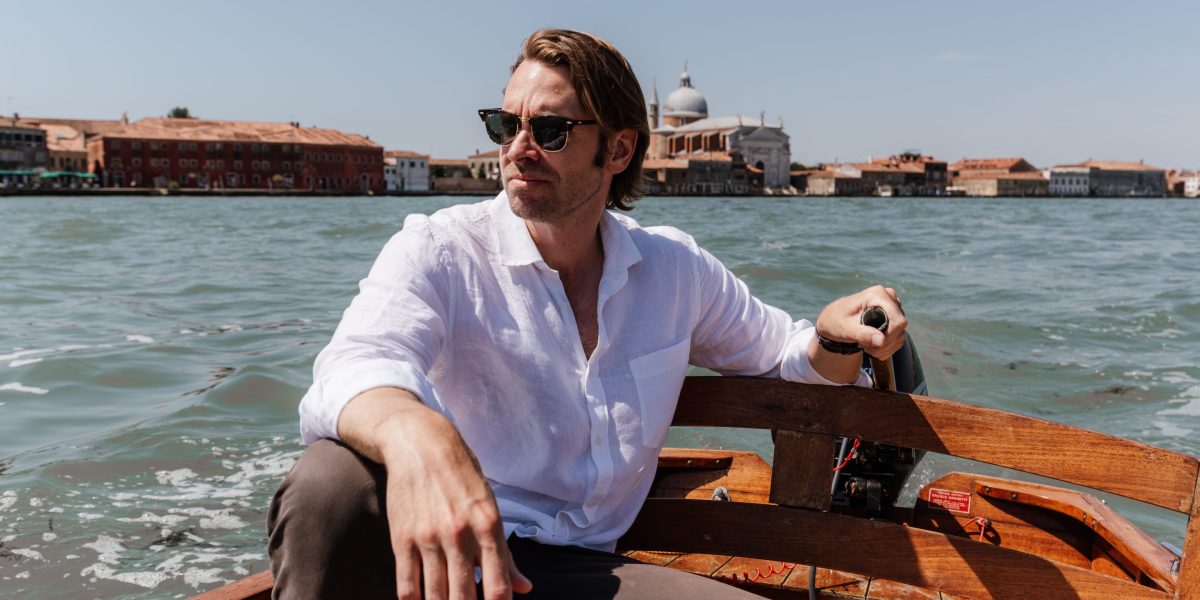




Every other month, one U.S. doctor trades rugged Appalachia for Venetian waterways to recharge from his hectic work life. And he’s part of a growing trend of American professionals looking for a change of pace in breezy European countries.
Since December 2023, Dr. Alexander Gabrovsky has been splitting his time between his physician job in the U.S. and water-front villa in Italy. And it all started after stumbling across a listing for a porto d’acqua “water door” apartment in Venice; the one-bedroom, two-bath home accessible by boat overlooks a medieval church and local town square. Longing for a slice of tranquil Italian life, he put down an offer €60,000 ($69,000) below the asking price, and within a matter of months, the deal was closed at $438,000.
“It was definitely a spontaneous decision. It was an emotional decision,” Gabrovsky tells Fortune. The Italian city had been a fascination throughout most of his life, and thanks to his flexible job schedule, he finally decided to follow through. “Venice captured my imagination: the history, the art, the lifestyle.”
Alessandro Pietrosanti / www.alessandropietrosanti.co.uk
Living the dream for six months of the year also comes with some sacrifices. To make his cross-country living work while juggling an in-person job, the 42-year-old condenses his work schedule into intense multi-week clusters.
Gabrovsky says he’ll work 12-hour shifts for three weeks straight at his gig in Kentucky, then spend a month relaxing in Venice, then repeat the cycle. Normally, full-time hospitalists work seven days on, seven days off—but he says his plan is economical with travel costs, circumvents the 90-day tourist cap, and carves out enough meaningful time to unwind in Italy.
“I can work in a way that allows me to travel right to Europe for an extended amount of time,” Gabrovsky explains. “While I’m [in Kentucky], it’s 12-hour shifts. There’s a little bit of social life, but you’re really just working and sleeping.”
Alessandro Pietrosanti / www.alessandropietrosanti.co.uk
Buying the Venetian ‘water door’ apartment for $438,500 with all his savings—and making it work
When Gabrovsky was trawling the internet for a waterfront getaway, he found the perfect pad in Castello: representing the tail of the fish of Venice drawn out on a map.
It was nestled at the crux of three canals, with two water door entrances that allow him to ride a boat right up into his living room. Luckily, buying the house was pretty straightforward: he leaned on some internet sleuthing, but help from the firm Italian Real Estate Lawyers sealed the deal.
The city also came with unique paperwork, like getting permission to moor his boat outside his apartment, but getting set up was a fairly painless process.
Alessandro Pietrosanti / www.alessandropietrosanti.co.uk
“It was definitely daunting at first,” Gabrovsky recalls. “The lawyers that I used were very helpful—I obviously watched a lot of YouTube videos and educated myself as much as I could about it…The process was fairly smooth.”
Inside, the historic apartment was a fixer-upper, but the American was well prepared to bring the late medieval-era flat back to its former glory. In addition to having one bedroom and two bathrooms, the apartment features a kitchen, living room, loft, and two balconies. The building’s foundation is extremely old: its wooden beams and brickwork originated in the 14th century, with additional expansions made throughout the 18th and 19th centuries.
Living in a piece of history also came with a price; Gabrovsky bought the property for €380,000 ($438,500), which he says exhausted nearly all his savings at the time. However, the physician reasoned that it was still cheaper than buying a comparable property in the U.S., renovations included. He spent $16,000 installing a brand new kitchen, and another few grand restoring the water doors, but the revamp was relatively inexpensive.
Alessandro Pietrosanti / www.alessandropietrosanti.co.uk
Gabrovsky deploys other financial hacks to ensure he can afford his transnational lifestyle. While he’s in rural Kentucky for his job assignments, he typically stays in hospital-provided accommodations, which greatly reduces his housing expenses.
Flying between the U.S. and Italy every month can also run up a big bill, but Gabrovsky keeps travel costs down. He only flies with carry-on luggage, avoids checked bag fees, and always looks to buy the best-priced plane tickets in advance.
The doctor leads a ‘rich’ life between the U.S. and Italy: lower costs, less stress, and slower living
By splitting his time between Kentucky and Venice, Gabrovsky says he isn’t just saving on living costs. The setup also lets the physician enjoy a culture-rich European city aligned with his academic background, having received a PhD in medical literature from the University of Cambridge in 2015.
“Venice is a breathing, living museum,” Gabrovsky explains. “I like the contrast of the energy of the rugged mountains of Appalachia, to all of a sudden being in Italy and having a spritz and watching boats go by. Having that variety of experiences is very refreshing, and also helps me put different things in perspective, seeing how different people live. It makes life very rich.”
Alessandro Pietrosanti / www.alessandropietrosanti.co.uk
Plus, Italy’s leisurely living is a good break from his intense work grind. Gabrovsky says it’s “therapeutic” to be in town; Venice’s beauty, calming waters, and car-free environment are natural destressors from the hustle and bustle of America. Touching down in the city, he’s immediately surrounded by beautiful buildings and the warmth of friendly Venetians, who invite him over for long dinners that go into the evening.
He gets the best of both worlds in Italy: being a part of an active and vibrant community, while living a slower pace of life. It helps reset his nervous system before delving back into weeks of 12-hour shifts.
“Italy certainly helps me relax, because the pace in Venice and Italy in general is a lot slower, especially in a historic city like Venice,” the physician says. “Learning to slow down and appreciate, having to walk everywhere and not get in your car, but instead take my boat out into the lagoon and go rowing…It does help de-stress.”
Living between two countries is a dream for many Americans, but taking the leap can be very daunting. There are many things to consider, from country caps on tourists staying without a visa, to the different real estate laws in purchasing property as a foreigner. But Gabrovsky says it’s well worth it for disillusioned Americans to try and bring their dual-living fantasies to life.
“Americans who are thinking about either moving abroad and doing a digital nomad visa, or splitting their life between the U.S. and somewhere else abroad, if you feel a strong passion for it, then go for it,” he advises.