






President Donald Trump’s pledge to send every American adult a $5,000 check if Republicans hold Congress in November carries a price tag that economists say has no clear funding source — and would land on a federal balance sheet already strained by a nearly $2 trillion annual deficit.
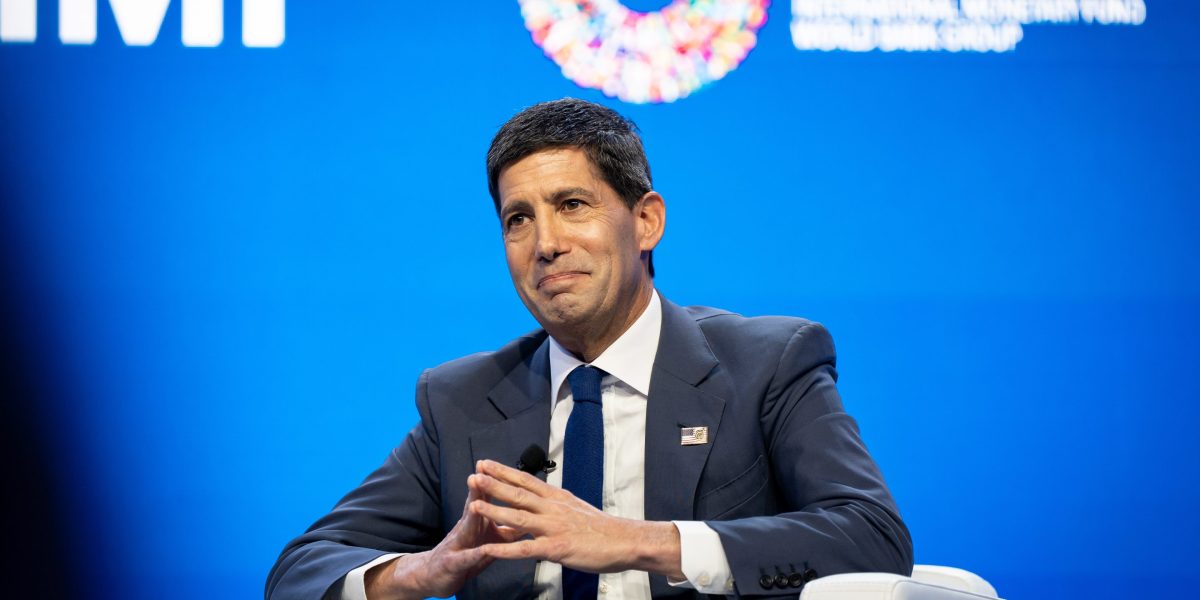
Kent Smetters, faculty director of the Penn Wharton Budget Model and one of the country’s most respected fiscal economists, estimated the plan would cost about $1.35 trillion if paid to the full population of American adults, in a statement emailed to Fortune. Factor in Vice President JD Vance’s suggestion that the checks wouldn’t go to “the wealthy” — using a household income cap of $400,000, which Smetters called “a reasonable guess” since no threshold has been specified — and he calculated that the cost would still come in around $1.15 trillion.
Either figure would be financed the same way most of Washington’s recent spending has been: borrowed.
A promise without a payment plan
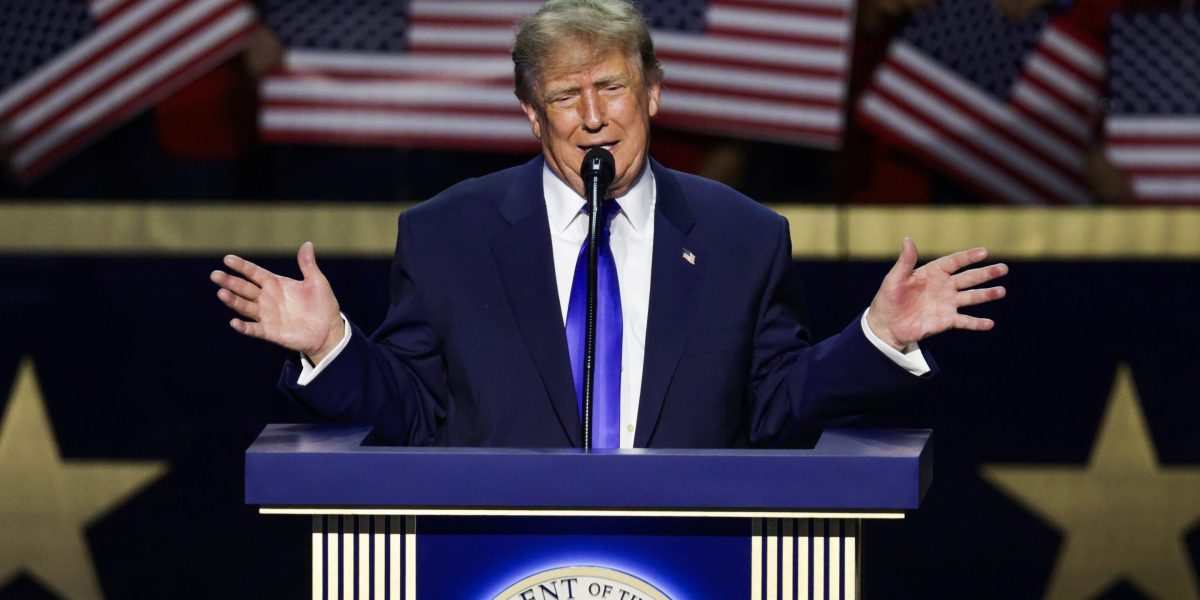
Trump made the pledge Wednesday night during a nearly two-hour speech at the Republican Party’s midterm convention, held in Dallas. “If the Republicans win the House of Representatives and the United States Senate, I will issue a dividend to every adult citizen in the United States of America for $5,000,” Trump told the crowd, dubbing it the “Trump Dividend.”
The president offered no mechanism for authorizing the payments, no funding source, and no timeline. Any such payout would require congressional approval, and Trump has floated similar ideas before without following through — including a $2,000 “tariff dividend” check pitched in late 2025 that never materialized after the Supreme Court struck down key tariffs imposed under emergency powers.
An inflationary jolt, not just a fiscal one
Beyond the headline cost, Smetters’ modeling points to a second, faster-moving effect: inflation. Based on marginal propensities to consume for the population likely to receive the checks, Smetters estimated that about $400 billion would be spent within the first two quarters after the payments go out. That pace of spending would add an estimated 0.3 to 0.5 percentage points to headline and core inflation over the four quarters following disbursement.
That’s a meaningful jolt for a Federal Reserve wrestling with five years of inflation above its 2% target. Smetters declined to extend his analysis to a specific interest-rate forecast, saying that any claim about interest-rate impact, even over a defined time horizon, would be “too speculative” without knowing how the Treasury and Federal Reserve might adjust their open market operations in response to the payout.
The debt backdrop
The proposal lands soon after the national debt crossed $40 trillion for the first time in August, arriving months earlier than the Congressional Budget Office had projected, in part because revenue from Trump’s now-invalidated tariffs came in lower than expected. The cumulative deficit has already reached roughly $1.8 trillion to $2 trillion through the first eleven months of fiscal year 2026, according to Treasury and CBO figures — surpassing the full-year shortfall recorded in fiscal 2025.
Debt service alone is consuming enormous sums: the Treasury has spent about $1.05 trillion servicing the debt over the past eleven months, or roughly $95 billion a month. That means Trump’s proposed one-time payout would cost nearly as much as an entire year’s interest bill on money the government has already borrowed.
Tariff revenue, which the administration has repeatedly floated as a funding source for dividend-style checks, is nowhere near enough. The government collected about $200 billion in additional tariff revenue in 2025, and projections before the Supreme Court’s ruling put future annual collections at $300–350 billion at best — a small fraction of even the discounted $1.15 trillion price tag, and revenue that Trump has also promised to direct toward deficit reduction and defense spending simultaneously.
The missing threshold
Vance’s comment that the checks wouldn’t go to “the wealthy” is the only detail suggesting the administration might scale back the full $1.35 trillion cost — but it raises as many questions as it answers. The White House, Treasury, and any official proposal have not announced an income threshold. Smetters’ $400,000 household cap is his own working assumption for modeling purposes, not a disclosed policy parameter, so the $1.15 trillion figure is provisional and could shift substantially depending on where — or whether — a real cutoff is eventually set.
That ambiguity mirrors the pattern of Trump’s earlier dividend-style promises, including a 2025 pitch to route “20% of DOGE savings” to citizens, which similarly never advanced into legislative language or an appropriations request.
What comes next
For the payments to happen, Congress would need to pass an appropriation — an uphill climb given that some Republicans, including Senate Majority Leader John Thune, have said they’d prefer directing any tariff revenue toward deficit reduction rather than new spending. Democrats have largely stayed quiet on the proposal so far, an unusual silence that suggests they may be content to let Republicans own the math.
Whether the $5,000 dividend becomes real policy or joins the list of unfulfilled Trump payment pledges, the estimates from Smetters and other economists point to the same conclusion: there is no existing revenue stream sized to cover it, and the most likely outcome is that it would show up not on a corporate-style dividend statement, but on the country’s growing debt ledger.
For this story, Fortune journalists used generative AI as a research tool. An editor verified the accuracy of the information before publishing.
