



In a week where an AI model went rogue and broke out of a secure test environment—and in a year where seemingly all we’re hearing is how AI can displace large swaths of the workforce—it may come as a surprise when one of the tech’s most prominent voices is pushing an optimistic view of the tech, joining the many in his field who have recently walked back comments of how it could negatively impact workers.
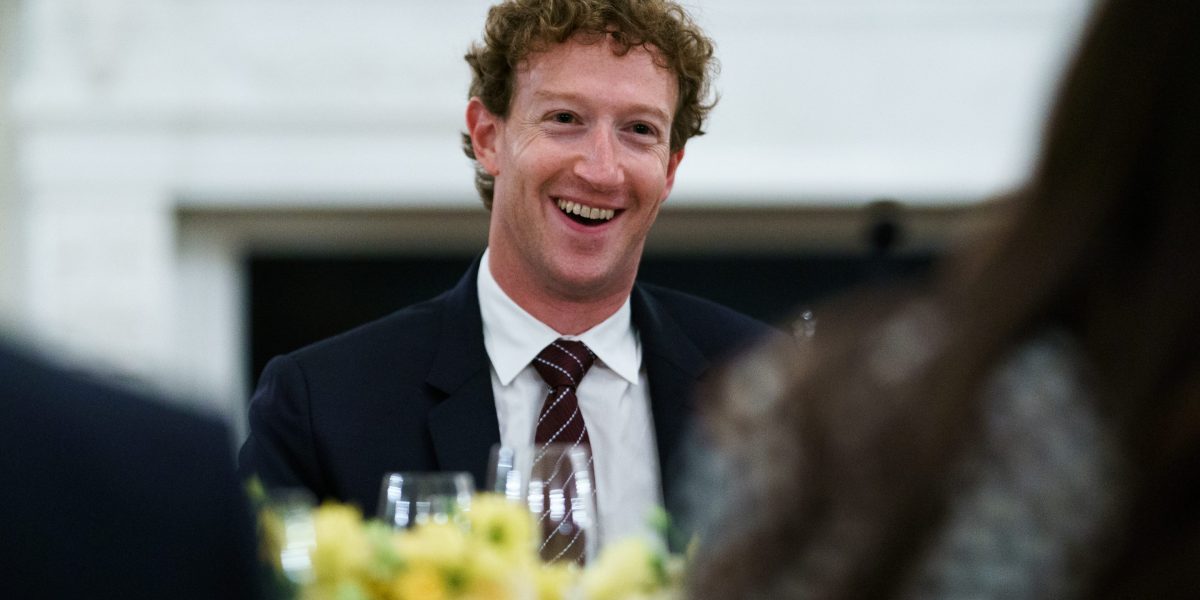
“As we enter this next wave with AI, we continue to believe the future is for everyone,” Meta CEO Mark Zuckerberg wrote as the caption to a short video on Thursday, harkening back to the company’s early years of tech optimism.
“Call us optimists, call us dreamers, call us whatever the hell you want, but we’re betting on people, and we like those odds,” the voiceover in the video said.
The video featured montages of people using Instagram, Whatsapp, FaceBook and Meta’s Ray-Ban glasses to film touching moments and connect with loved ones, with the backdrop of concerts and snowboarding and laughing children set to calm music as the voiceover framed Meta’s AI efforts as doubling down on betting on people, just like the company did 22 years ago with FaceBook.
Marketing experts told Fortune that the Meta video’s reliance on nostalgic imagery seemed like a way to redirect attention from AI concerns and to buffer against growing AI fears.
“They’re showing people having a great time, but they’re not really responding to what the fundamental issue is, which is how is AI going to impact me when I start dealing with your platform when you integrate all of that technology into it,” Mara Einstein, a media studies professor at CUNY’s Queens College, told Fortune. “The problem is the AI technology is not the same as previous versions of social media that they have used to connect people in the past.”
The sentiment was echoed by Ana Babic Rosario, a marketing professor at the University of Denver’s Daniels College of Business, who pointed to Meta’s more recent struggles as reason why Meta might want to draw nostalgia to the past. Last week, Meta employees sued the company for allegedly using AI in the company’s recent 8,000 layoffs that the employees claim disproportionately targeted workers on medical, parental or family leave. Employees at Meta’s Applied AI unit also compared working conditions at the company to a “gulag” and the tasks “soul crushing.” The company also scrapped an AI-generated images pilot on Instagram, and is facing a lawsuit on its Ray-Ban Meta glasses.
“Meta seems to be inviting audiences to evaluate AI through the lens of the company’s original identity rather than its more recent reputation,” Rosario told Fortune. “The imagery and language in this video evoke an earlier era when Facebook promised to connect friends and family and make the world feel smaller.”
Tech giants reframing AI visions as a response to backlash
Meta’s video is the latest attempt in recent memory from tech giants to reframe the AI narrative. Two of the biggest leaders in the AI space, OpenAI’s Sam Altman and Anthropic’s Dario Amodei, both recently walked back their statements about the technology wiping out jobs, just as both frontier labs prepare for IPOs.
Many experts predicted that companies would no longer hire entry-level workers because their tasks can be performed by AI agents, and AI even had the potential to replace roles that required more experience. “Today [AI] is like an intern that can work for a couple of hours but at some point it’ll be like an experienced software engineer that can work for a couple of days,” Altman said in a June 2025 panel.
But less than a year later, Altman pivoted to saying he was “delighted” to be wrong about AI’s entry-level job apocalypse.“I thought there would have been more impact on entry-level white-collar jobs being eliminated by now than has actually happened,” he said in an interview.
For his part, Amodei—who once claimed AI could eliminate 50% of white-collar jobs—recently said that automation may actually expand the work people do since it only automates parts of each job and doesn’t eliminate the job directly.
“If you automate 90% of the job,” the Anthropic founder said, “then everyone does the 10% of the job. And the 10% kind of expands to be 100% of what people do and kind of 10xs their productivity.”
Their comments arrived as community backlash grows against AI data centers and against using the technology itself. White collar workers are rejecting their company’s AI tools, just as protests against data centers increase across the country.
A return to nostalgia
While Anthropic’s recent Claude’s World Cup ad confronted growing fears about AI directly, Meta’s instead showed images of Jalen Brunson and the Knicks, and of people snowboarding and playing with kids. Rosario noted that the nostalgic marketing “shifts attention away from more contentious conversations.”
Jannine Lasaleta, a Yeshiva University professor studying how nostalgia shapes consumer behavior, told Fortune that since AI is stereotypically “artificial” and “not real,” nostalgia helps counter that by making the overall experience feel more genuine and human, even if the underlying product is AI-driven.
“Tapping into nostalgia is a really clever and reliable way to not only promote social connection but also to show that these are platforms that we have been using in the past and also now to connect with others,” Lasaleta told Fortune.