
Close Menu
Alpha Leaders
  • Home
  • News
  • Leadership
  • Entrepreneurs
  • Business
  • Living
  • Innovation
  • More
    • Money & Finance
    • Web Stories
    • Global
    • Press Release
What's On
Magna Chief Urges Auto Industry Adopt More Flexibility, Earlier

Magna Chief Urges Auto Industry Adopt More Flexibility, Earlier

9 June 2026
Mystery NASDAQ selloff adds tension into a make-or-break week for the AI trade

Mystery NASDAQ selloff adds tension into a make-or-break week for the AI trade

9 June 2026
The Scientific Reason We Can’t Pause AI

The Scientific Reason We Can’t Pause AI

9 June 2026
Facebook X (Twitter) Instagram
Alpha Leaders
newsletter
  • Home
  • News
  • Leadership
  • Entrepreneurs
  • Business
  • Living
  • Innovation
  • More
    • Money & Finance
    • Web Stories
    • Global
    • Press Release
Alpha Leaders
Home »  Top Wall Street economist sees 2 ways tariffs could play out — and neither is good for the average worker
News

 Top Wall Street economist sees 2 ways tariffs could play out — and neither is good for the average worker

Press RoomBy Press Room7 October 20255 Mins Read
Facebook Twitter Copy Link Pinterest LinkedIn Tumblr Email WhatsApp
 Top Wall Street economist sees 2 ways tariffs could play out — and neither is good for the average worker

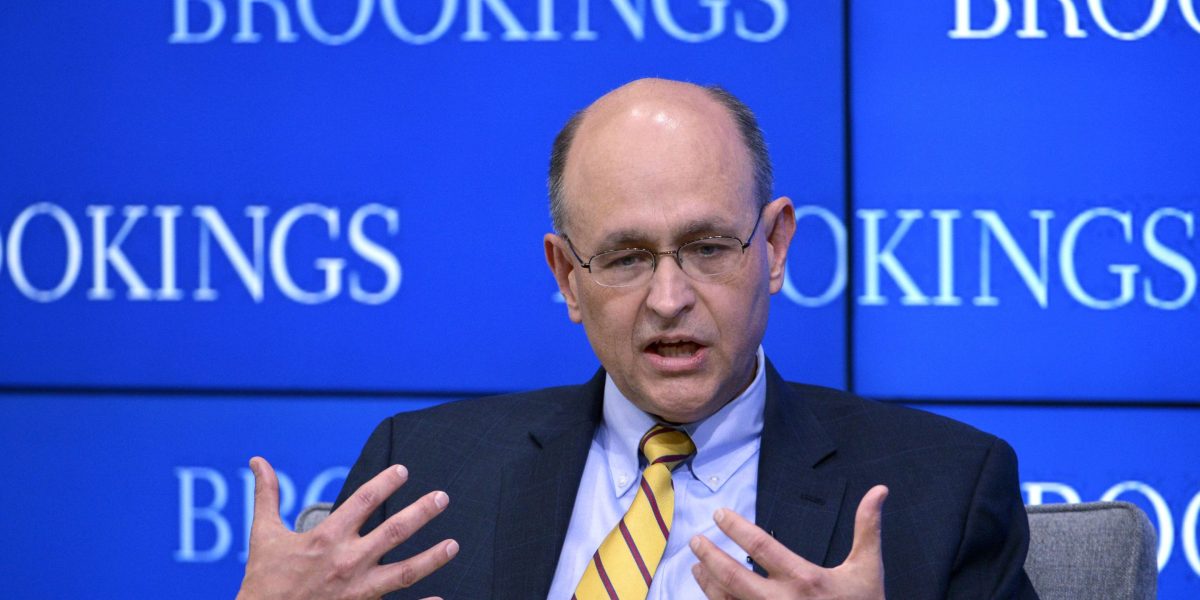
Flying between Helsinki, Prague, Milan and Geneva to meet with clients, Nathan Sheets, Citigroup’s top economist, has a bird’s-eye view of how tariffs are reshaping the global economy.

But on the ground, he warns, the consequences of President Donald Trump’s renewed tariff wars are showing up in ways that will hit regular Americans the hardest.

“We haven’t seen tariffs at these kinds of levels in the United States for many decades,” he told Fortune while en route to Zurich. “And so an implication of that is that we’re learning about how tariffs affect the economy in real time.”

Sheets, who also served in former President Barack Obama’s administration as the U.S. Treasury’s top economic diplomat, estimates that U.S. consumers are currently bearing about 30% to 40% of tariff costs—but that number is poised to rise to around 60% as companies run out of room to absorb higher import prices. “Firms can only absorb so much,” he said. “They’ll need to push more through to the consumer.”

Sheets isn’t alone among Wall Street economists in arguing this. Earlier this week, Morgan Stanley’s chief economist Michael Gapen argued that firms have been absorbing the hit as much as they can, and tariffs have effectively been a “tax on capital,” at least so far.

That pass-through is already starting to appear in the data, Sheets added, though unevenly. Goods inflation in several categories has accelerated since the tariffs took effect earlier this year: audio equipment up 15%, furniture and bedding nearly 7%, tools and hardware around 4%. 

Most of those are imported products—things that show up in your household, not your grocery cart, he said.

A slow squeeze

Sheets believes that retailers will pass through the tariff effects subtly, through key “pricing windows” when they are already likely to be raising prices, such as during holiday shopping season and the new year.

Companies can afford to do that, he said, because they stocked up on inventory before tariffs were imposed and have been drawing down those cheaper supplies. But that cushion is running out. 

“We’re starting to see it,” he said. “By spring, it’ll be more visible in the data.”

The economist said firms are walking a fine line: Consumers are still “fatigued” from post-pandemic inflation and are not in a mood to tolerate another wave of price increases, but companies can’t keep eating the costs forever. 

“One thing you wouldn’t want to do is raise your price, make your customers mad, and then have the tariffs adjust downward,” he added. “So they’re judging carefully their capacity to pass it through, and the timing in which they do it.”

The manufacturing mirage

The second way tariffs could play out, Sheets warned, is through a kind of snake-eating-its-own-tail effect: hurting the same U.S. manufacturing base they’re meant to protect.

“There’s a fundamental reality here,” he said. “Wage rates in the United States are relatively high. If you’re going to use U.S. labor and pay them competitive wages, there are just certain kinds of manufacturing activities that are very difficult to do profitably.”

That, he argued, is why so many jobs shifted to China and Mexico over the past 40 years—and why tariffs may bring factories back, but in a “very capital-intensive” way: think automatons, not more workers. 

“Firms will say, ‘I can’t afford to pay U.S. wages for this activity, so I’m just going to fully automate it,” Sheets said. You bring back production, you bring back investment—but you don’t bring back nearly as many jobs.”

Trump, on “Liberation Day,” promised to usher in the “Golden Age” of manufacturing and reshore production through his tariffs. But Sheets argues that he might’ve just accelerated the push to automate factories through AI and advanced robotics, which make it easier than ever to run a factory with fewer people.

“We saw this with the computer revolution,” the economist said. “Some jobs vanish, new ones emerge, but they’re not the same jobs.”

A fragile global order

Sheets said that for now, most U.S. allies are taking a “wait and see” approach rather than retaliating with their own tariffs, largely because they still depend on access to the American market.

But he warned that if more countries follow Washington’s lead and start weaponizing tariffs, the global trading system that’s defined the postwar era could begin to fracture.

He compared the situation to the early 1930s, when the Smoot-Hawley tariffs triggered widespread retaliation and a collapse in global trade that worsened the Great Depression. Back then, the world turned inward, and the result was “devastating,” he said. He cautioned that, thank goodness, other countries aren’t following the U.S. lead—so far.

Still, Sheets said he thinks there’s room to rethink—not abandon—the economic order that’s held for decades. Global leaders did it about every forty years—in the 1940s, they came up with the IMF and the World Bank, and the in the ‘80s and ‘90s with the development of the WTO.

“Maybe it’s time to do more deep thinking about how we can have an effective global trading system,” he said. 

Fortune Global Forum returns Oct. 26–27, 2025 in Riyadh. CEOs and global leaders will gather for a dynamic, invitation-only event shaping the future of business. Apply for an invitation.
Barack Obama citigroup Depression Donald Trump Great Depression inflation manufacturing prices Recession Tariffs tariffs and trade
Share. Facebook Twitter Pinterest LinkedIn Tumblr Email Copy Link

Related Articles

Mystery NASDAQ selloff adds tension into a make-or-break week for the AI trade

Mystery NASDAQ selloff adds tension into a make-or-break week for the AI trade

9 June 2026
Millennial heir Nick Reiner, and the dark side of the Great Wealth Transfer

Millennial heir Nick Reiner, and the dark side of the Great Wealth Transfer

9 June 2026
Grimes says AI can make music, but humans must still tell the story

Grimes says AI can make music, but humans must still tell the story

9 June 2026
A Biden-era study told Americans to drink less alcohol. The Trump admin ‘sidelined’ the research

A Biden-era study told Americans to drink less alcohol. The Trump admin ‘sidelined’ the research

9 June 2026
China builds cheap humanoids at scale, but finding buyers might be the hardest part

China builds cheap humanoids at scale, but finding buyers might be the hardest part

9 June 2026
Matt Damon’s new campaign asks Gap, Starbucks, and Amazon to help give water back to the earth

Matt Damon’s new campaign asks Gap, Starbucks, and Amazon to help give water back to the earth

9 June 2026
Don't Miss
Unwrap Christmas Sustainably: How To Handle Gifts You Don’t Want

Unwrap Christmas Sustainably: How To Handle Gifts You Don’t Want

By Press Room27 December 2024

Every year, millions of people unwrap Christmas gifts that they do not love, need, or…

Exclusive: DeFi platform Azura launches after raising .9 million from Initialized

Exclusive: DeFi platform Azura launches after raising $6.9 million from Initialized

22 October 2024
Sam Altman’s World Wants To Scan Your Eyes To Prove You’re Human

Sam Altman’s World Wants To Scan Your Eyes To Prove You’re Human

22 October 2024
Stay In Touch
  • Facebook
  • Twitter
  • Pinterest
  • Instagram
  • YouTube
  • Vimeo
Latest Articles
Blood Rain’s New Hero Evie Draws Fire

Blood Rain’s New Hero Evie Draws Fire

9 June 20260 Views
Grimes says AI can make music, but humans must still tell the story

Grimes says AI can make music, but humans must still tell the story

9 June 20262 Views
Ocarina Of Time’ Remake Is Out This Year

Ocarina Of Time’ Remake Is Out This Year

9 June 20260 Views
A Biden-era study told Americans to drink less alcohol. The Trump admin ‘sidelined’ the research

A Biden-era study told Americans to drink less alcohol. The Trump admin ‘sidelined’ the research

9 June 20261 Views

Recent Posts

  • Magna Chief Urges Auto Industry Adopt More Flexibility, Earlier
  • Mystery NASDAQ selloff adds tension into a make-or-break week for the AI trade
  • The Scientific Reason We Can’t Pause AI
  • Millennial heir Nick Reiner, and the dark side of the Great Wealth Transfer
  • Blood Rain’s New Hero Evie Draws Fire

Recent Comments

No comments to show.
About Us
About Us

Alpha Leaders is your one-stop website for the latest Entrepreneurs and Leaders news and updates, follow us now to get the news that matters to you.

Facebook X (Twitter) Pinterest YouTube WhatsApp
Our Picks
Magna Chief Urges Auto Industry Adopt More Flexibility, Earlier

Magna Chief Urges Auto Industry Adopt More Flexibility, Earlier

9 June 2026
Mystery NASDAQ selloff adds tension into a make-or-break week for the AI trade

Mystery NASDAQ selloff adds tension into a make-or-break week for the AI trade

9 June 2026
The Scientific Reason We Can’t Pause AI

The Scientific Reason We Can’t Pause AI

9 June 2026
Most Popular
Millennial heir Nick Reiner, and the dark side of the Great Wealth Transfer

Millennial heir Nick Reiner, and the dark side of the Great Wealth Transfer

9 June 20262 Views
Blood Rain’s New Hero Evie Draws Fire

Blood Rain’s New Hero Evie Draws Fire

9 June 20260 Views
Grimes says AI can make music, but humans must still tell the story

Grimes says AI can make music, but humans must still tell the story

9 June 20262 Views

Archives

  • June 2026
  • May 2026
  • April 2026
  • March 2026
  • February 2026
  • January 2026
  • December 2025
  • November 2025
  • October 2025
  • September 2025
  • August 2025
  • July 2025
  • June 2025
  • May 2025
  • April 2025
  • March 2025
  • February 2025
  • January 2025
  • December 2024
  • November 2024
  • October 2024
  • September 2024
  • August 2024
  • July 2024
  • June 2024
  • May 2024
  • April 2024
  • March 2024
  • February 2024
  • January 2024
  • December 2023
  • March 2022
  • January 2021
  • March 2020
  • January 2020

Categories

  • Blog
  • Business
  • Entrepreneurs
  • Global
  • Innovation
  • Leadership
  • Living
  • Money & Finance
  • News
  • Press Release
© 2026 Alpha Leaders. All Rights Reserved.
  • Privacy Policy
  • Terms of use
  • Advertise
  • Contact

Type above and press Enter to search. Press Esc to cancel.