
Close Menu
Alpha Leaders
  • Home
  • News
  • Leadership
  • Entrepreneurs
  • Business
  • Living
  • Innovation
  • More
    • Money & Finance
    • Web Stories
    • Global
    • Press Release
What's On
The Creators Who Are Quietly Running The 2026 World Cup

The Creators Who Are Quietly Running The 2026 World Cup

16 July 2026
Pink Floyd Edition Of The Classic We Are Rewind WE-001 Cassette Player

Pink Floyd Edition Of The Classic We Are Rewind WE-001 Cassette Player

16 July 2026
The MacKenzie Scott paradox: How a bull market lets billionaires donate billions without being poor

The MacKenzie Scott paradox: How a bull market lets billionaires donate billions without being poor

16 July 2026
Facebook X (Twitter) Instagram
Alpha Leaders
newsletter
  • Home
  • News
  • Leadership
  • Entrepreneurs
  • Business
  • Living
  • Innovation
  • More
    • Money & Finance
    • Web Stories
    • Global
    • Press Release
Alpha Leaders
Home » U.S. wheat crops wither, herds thin as spring drought deepens
News

U.S. wheat crops wither, herds thin as spring drought deepens

Press RoomBy Press Room25 April 20265 Mins Read
Facebook Twitter Copy Link Pinterest LinkedIn Tumblr Email WhatsApp
U.S. wheat crops wither, herds thin as spring drought deepens

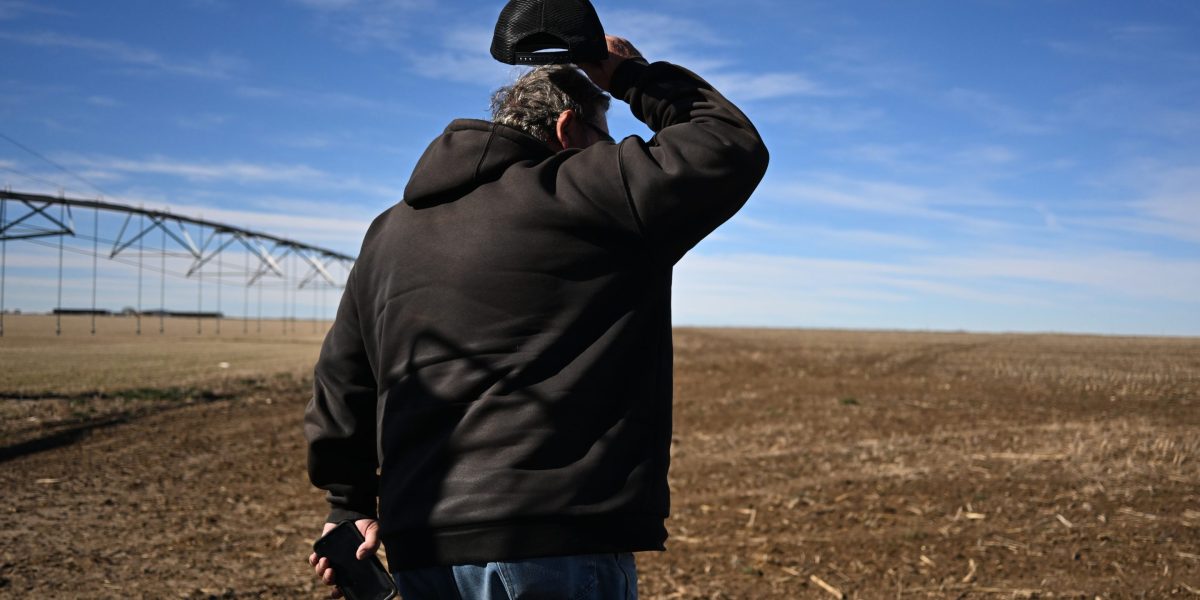
Farmers across the Great Plains are confronting an intense drought that threatens winter wheat harvests and is pushing cattle producers toward costly feed purchases, prompting some to abandon plans to expand their herds.

The dryness is expected to persist through spring after weeks of scant rainfall and a late-winter heat spell that fueled massive pasture fires across the nation’s breadbasket. Drought now covers nearly 90% of Nebraska and Oklahoma, with more than half of Nebraska in “extreme” drought. Such conditions have historically driven cattle producers to sell off animals and forced farmers to drill new irrigation wells as rivers run dry.

The coming weeks are critical for growers in the Plains, as winter wheat begins to mature ahead of the summer harvest and before other crops are planted. Without sufficient moisture from rainfall or irrigation, wheat shoots struggle to fill out and produce grain. Some farmers will allow cattle to graze fields instead of attempting to harvest grain.

“We’ve got a lot of modern precedent for these very rough conditions heading into the spring growing season, but this certainly ranks up there with some of the worst we’ve seen,” said Brad Rippey, a meteorologist for the US Department of Agriculture.

Though periodic rains have rolled through parts of the Plains this spring, the region as a whole remains unusually dry after a La Niña winter, marked by low snow and record-breaking warm temperatures, stripped moisture from the soil.

The impact is already showing. Just 30% of the US winter wheat crop was rated good to excellent as of Sunday in USDA data, the lowest rating since 2023. Roughly half of the crop in Colorado, Nebraska, Oklahoma and Texas — the region’s largest producers — is categorized as poor to very poor, Rippey said, indicating a high risk of yield losses.

The drought is also colliding with higher input costs. Fertilizer prices have soared following attacks on Iran by the US and Israel, prompting some farmers to cut back on applications. US Representative Frank Lucas, a Republican from Oklahoma, said he chose not to purchase nitrogen fertilizer for his wheat fields in the western part of the state.

“I didn’t have enough moisture — it wouldn’t have done any good,’’ Lucas said. “Number two, I’m not even sure what the cost would be.”

Farmers were under economic pressure even before the drought threatened yields. Still, ample grain supplies elsewhere in the world could limit any price gains. In the Plains, “moisture is desperately needed,” Rippey said, adding that rainfall in the coming weeks will likely determine whether the winter wheat crop will be “made or broken for 2026.” The drought, while unlikely to impact meat prices, will also lend little reprieve to record beef costs if it stalls the rebuilding of the US cattle herd.

Relief may not arrive soon enough. Although the drying La Niña pattern has ended, heavy rains may not return to the central US until its warming counterpart, El Niño, develops later this summer. By then, the winter wheat harvest and planting window could be closing.

Between now and late July, outlooks from the US Climate Prediction Center call for an expansion of drought in eastern Colorado and western Kansas, with below-average rainfall in some areas and unseasonably warm temperatures. That warmth can “induce more atmospheric demand” for moisture, said Eric Hunt, an agricultural meteorologist at the University of Nebraska-Lincoln. “Evapotranspiration is higher, meaning that you could lose more water out of the ground.”

Dry terrain has contributed to a spate of destructive wildfires across the southern Plains, burning roughly 1 million acres of hayfields and pasture by the end of March. The losses are further dimming prospects for rebuilding the US cattle herd, which has already shrunk to a 75-year low as farmers opt to sell animals for slaughter instead of keeping them for breeding.

Early in the year, the number of heifers — young female cows that have yet to give birth — auctioned into the meat supply chain began to fall, said Altin Kalo, head economist at Steiner Consulting. That data point can signal future breeding plans, Kalo added, but as drought conditions deepened in recent weeks, auction volumes climbed back toward levels seen over the past two years.

“Drought just sets everything back,” said Ben Smith, a field operations manager with the nonprofit Farm Rescue. “That’s when guys start to have to make tough decisions on liquidating some of their herd if they can’t afford to buy feed or can’t find alternative feed.”

Farm Rescue has delivered donated hay to replace supplies lost to fires in Oklahoma, Kansas and Nebraska, Smith said. Two major trade associations, Nebraska Cattlemen and Oklahoma Cattlemen’s Association, have also opened mutual aid funds to support affected ranchers.

“Rebuilding, whether it’s corrals or fences, takes time and takes money,” said Nebraska Cattlemen President Craig Uden, noting that thousands of miles of pasture fencing were destroyed in the blazes. Replacement costs usually exceed $10,000 per mile, cutting into ranchers’ incomes even if they don’t show up in consumer prices. “What people really need is seed, hay, tillers and equipment to help move cattle, because a lot of them will have to find new homes for the summer.” 

agriculture
Share. Facebook Twitter Pinterest LinkedIn Tumblr Email Copy Link

Related Articles

The MacKenzie Scott paradox: How a bull market lets billionaires donate billions without being poor

The MacKenzie Scott paradox: How a bull market lets billionaires donate billions without being poor

16 July 2026
Cantor Fitzgerald eyes blockchain-based IPO shares in new tie-up with Securitize

Cantor Fitzgerald eyes blockchain-based IPO shares in new tie-up with Securitize

16 July 2026
This marine biologist warned that coral loss could collapse the oceans. Then 3 men walked into his house and shot him

This marine biologist warned that coral loss could collapse the oceans. Then 3 men walked into his house and shot him

16 July 2026
LAPD is renegotiating agreement with Flock Safety after ‘serious concerns around civil liberties’

LAPD is renegotiating agreement with Flock Safety after ‘serious concerns around civil liberties’

16 July 2026
GOP’s  billion war-and-voting bill adds no offsets to  trillion deficit

GOP’s $95 billion war-and-voting bill adds no offsets to $2 trillion deficit

16 July 2026
YouTube appeals verdict, argues it isn’t a social media platform

YouTube appeals verdict, argues it isn’t a social media platform

16 July 2026
Don't Miss
Unwrap Christmas Sustainably: How To Handle Gifts You Don’t Want

Unwrap Christmas Sustainably: How To Handle Gifts You Don’t Want

By Press Room27 December 2024

Every year, millions of people unwrap Christmas gifts that they do not love, need, or…

Exclusive: DeFi platform Azura launches after raising .9 million from Initialized

Exclusive: DeFi platform Azura launches after raising $6.9 million from Initialized

22 October 2024
Sam Altman’s World Wants To Scan Your Eyes To Prove You’re Human

Sam Altman’s World Wants To Scan Your Eyes To Prove You’re Human

22 October 2024
Stay In Touch
  • Facebook
  • Twitter
  • Pinterest
  • Instagram
  • YouTube
  • Vimeo
Latest Articles
How Klarna’s AI Agent Strategy Backfired But Became A Useful Lesson

How Klarna’s AI Agent Strategy Backfired But Became A Useful Lesson

16 July 20262 Views
Cadence Automates PCB Design With AI Super Agents

Cadence Automates PCB Design With AI Super Agents

16 July 20263 Views
Cantor Fitzgerald eyes blockchain-based IPO shares in new tie-up with Securitize

Cantor Fitzgerald eyes blockchain-based IPO shares in new tie-up with Securitize

16 July 20261 Views
AI Drives Energy Acceleration Processes

AI Drives Energy Acceleration Processes

16 July 20261 Views

Recent Posts

  • The Creators Who Are Quietly Running The 2026 World Cup
  • Pink Floyd Edition Of The Classic We Are Rewind WE-001 Cassette Player
  • The MacKenzie Scott paradox: How a bull market lets billionaires donate billions without being poor
  • Colorado Law Mandating Therapists’ Real-Time Intervention During Client-AI Psychotherapy Sets Dubious Precedent
  • How Klarna’s AI Agent Strategy Backfired But Became A Useful Lesson

Recent Comments

No comments to show.
About Us
About Us

Alpha Leaders is your one-stop website for the latest Entrepreneurs and Leaders news and updates, follow us now to get the news that matters to you.

Facebook X (Twitter) Pinterest YouTube WhatsApp
Our Picks
The Creators Who Are Quietly Running The 2026 World Cup

The Creators Who Are Quietly Running The 2026 World Cup

16 July 2026
Pink Floyd Edition Of The Classic We Are Rewind WE-001 Cassette Player

Pink Floyd Edition Of The Classic We Are Rewind WE-001 Cassette Player

16 July 2026
The MacKenzie Scott paradox: How a bull market lets billionaires donate billions without being poor

The MacKenzie Scott paradox: How a bull market lets billionaires donate billions without being poor

16 July 2026
Most Popular
Colorado Law Mandating Therapists’ Real-Time Intervention During Client-AI Psychotherapy Sets Dubious Precedent

Colorado Law Mandating Therapists’ Real-Time Intervention During Client-AI Psychotherapy Sets Dubious Precedent

16 July 20261 Views
How Klarna’s AI Agent Strategy Backfired But Became A Useful Lesson

How Klarna’s AI Agent Strategy Backfired But Became A Useful Lesson

16 July 20262 Views
Cadence Automates PCB Design With AI Super Agents

Cadence Automates PCB Design With AI Super Agents

16 July 20263 Views

Archives

  • July 2026
  • June 2026
  • May 2026
  • April 2026
  • March 2026
  • February 2026
  • January 2026
  • December 2025
  • November 2025
  • October 2025
  • September 2025
  • August 2025
  • July 2025
  • June 2025
  • May 2025
  • April 2025
  • March 2025
  • February 2025
  • January 2025
  • December 2024
  • November 2024
  • October 2024
  • September 2024
  • August 2024
  • July 2024
  • June 2024
  • May 2024
  • April 2024
  • March 2024
  • February 2024
  • January 2024
  • December 2023
  • March 2022
  • January 2021
  • March 2020
  • January 2020

Categories

  • Blog
  • Business
  • Entrepreneurs
  • Global
  • Innovation
  • Leadership
  • Living
  • Money & Finance
  • News
  • Press Release
© 2026 Alpha Leaders. All Rights Reserved.
  • Privacy Policy
  • Terms of use
  • Advertise
  • Contact

Type above and press Enter to search. Press Esc to cancel.