



For the better part of four years, AI has been the only trade that mattered. Nvidia. Data centers. The infrastructure buildout. A rising tide of capex spending that has minted fortunes and reshaped the S&P 500. If you were long the AI stack, you were a genius.
Ben Silver and David Tykocinski think the easy part may be ending.
“There’s a risk,” according to Tykocinski, co-chief investment officer of Maverick Capital’s public funds, of an “air pocket” in the gap between the infrastructure buildout and the actual productivity handoff. Even for a full-throated AI believer, he says, that gap is precisely where market volatility breeds.
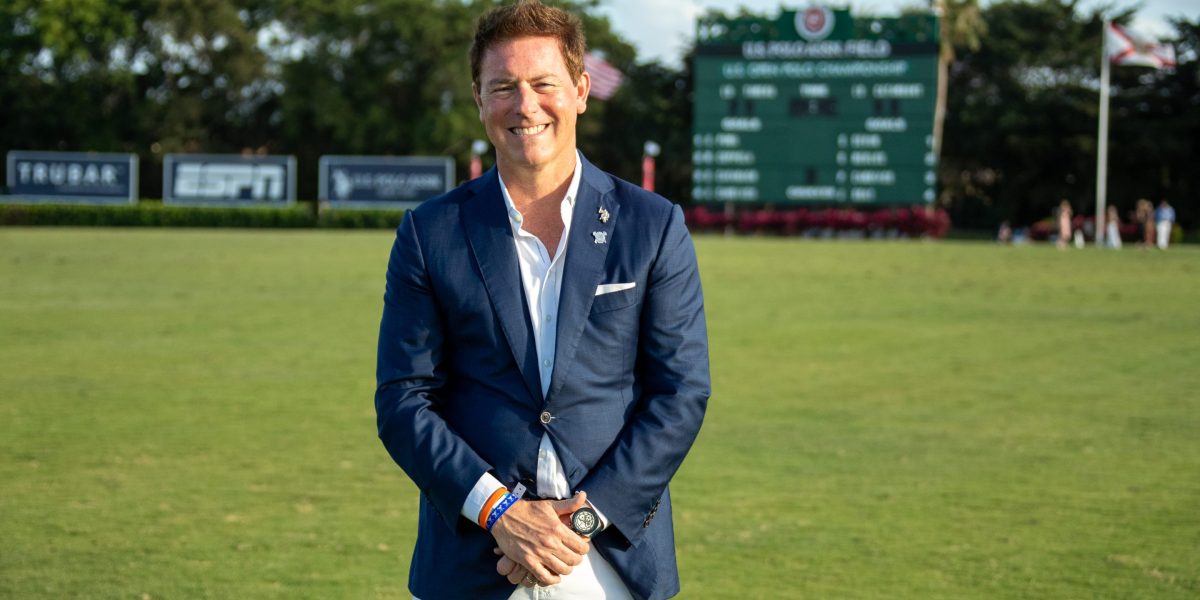
Silver and Tykocinski are the co-CIOs of Maverick Capital, the Dallas- and New York-based hedge fund founded in 1993 by Lee Ainslie, one of the original “Tiger Cubs”—the generation of investors trained under legendary hedge fund manager Julian Robertson at Tiger Management. Ainslie built Maverick into one of the most respected long/short equity firms on the street over three decades and Silver and Tykocinski are the men he chose to carry it forward.
They are, in other words, the next generation of Tiger Cubs—and, as they said in an appearance on Goldman Sachs’ Exchanges: Great Investors podcast, they are looking at a market most investors still see as a one-directional AI trade and seeing something considerably more complicated.
Following the bottleneck
To understand their thesis, you have to understand how they think about where value migrates in a major technology cycle.
Bloomberg reported in August 2025 it was raising money for a new semiconductor fund in a “rare expansion” after “trouncing” rivals with a strong run since 2021, exactly when Silver and Tykocinski assumed co-CIO duties. Its oldest hedge fund returned more than 70% cumulatively from the start of 2021 through the first half of 2025, which Bloomberg noted beat the performance of founder Ainslie’s Tiger Cub peers.
The hallmark of the AI trade so far, Tykocinski argues, has been an inversion of the prior two decades of tech investing. In the 2000s and 2010s, value accrued at the software application layer—the Salesforces and Googles and Metas that sat closest to the end user. AI flipped that script. Suddenly it was the hardware and infrastructure layer—Nvidia’s GPUs, the hyperscalers’ data centers, the energy ecosystem powering them—that captured the lion’s share of investor returns.
The key to monetizing the trade, he said, has been following the bottleneck upstream.
“In the early days,” he explained, “when demand is still within existing industry production capacity, downstream physical outputs of things like GPUs are where you see the most explosive growth. Once you cross that threshold—which we have—the bottlenecks move upstream to the fabrication level, to the tools that go into making them, even to the obscure materials listed on a Japanese stock exchange.”
But Tykocinski said he now believes that migration is about to reverse.
“We actually think that migration, though, is going to begin to swing back the other direction,” he said—back downstream, toward the infrastructure and application layer, where AI stops being a thing companies build and starts being a thing that transforms how they work.
The reason is a fundamental shift in how AI is actually being deployed inside enterprises. A year or two ago, the prevailing thesis was that large language models would effectively replace existing enterprise systems—that the LLM would become the central nervous system of a business. What’s happening in practice is almost the opposite.
“In the world of AI agents, it’s more about integration of that LLM within many ways the preexisting enterprise, workflow, and stacks,” Tykocinski said. The AI isn’t replacing the enterprise, in other words: It’s plugging into it.
That changes everything about where the chokepoints are. Suddenly CPUs matter again. Databases matter. The edge matters.
“That change in interface suddenly brings a lot more value closer to the edge and closer to the end user,” he said.
The ‘large sucking sound’—and the opportunity it created
While Tykocinski has been tracking the rotation in AI, his co-CIO has been watching money pour out of an entirely different sector and quietly building a thesis around the opportunity that exodus creates.
Silver’s background is in health care: He ran Maverick’s health care book before being elevated to co-CIO. And right now, he said, the sector sounds like a vacuum. “Mostly it’s just a large sucking sound,” he deadpanned, “with all the capital coming out of health care and going into AI.”
But Silver said he’s not despairing. He’s hunting.
The specific opportunity he has his eye on is life science tools—the companies that supply the equipment and consumables used to discover and manufacture drugs. It’s an unglamorous corner of the market, a sector that has been consolidating for 20 years and whose stocks, by Silver’s own description, are currently “left for dead.” But he sees two powerful tailwinds converging the market hasn’t yet priced in.
The first is reshoring. The push to move pharmaceutical manufacturing back to the U.S.— driven by trade policy and national security concerns—will require a massive buildout of domestic manufacturing capacity. That means capex. And that capex flows directly to the companies that make the equipment that fills those facilities. Silver said he expects that spending to start showing up in company earnings within three to six months.
The second is AI itself. Drug discovery is being transformed by machine learning—and more drugs discovered means more drugs manufactured, means more consumables sold, means a sustained revenue cycle for the tools companies supplying it all.
“That’s a space that’s very much poised to become an AI winner and kind of modern mercantilist winner as well,” Silver said.
There’s also a third catalyst, the kind that concentrates minds at hedge funds: M&A. The sector’s consolidators—Silver counts three to five major players—are well-capitalized and have spent decades acquiring smaller firms. With a cohort of $5 billion-$10 billion companies now trading at depressed valuations, he sees meaningful takeout risk as a potential floor.
“If those fundamentals don’t turn fast enough,” he said, “there are real money buyers in that space.”
The risks they’re losing sleep over
For all their conviction in specific trades, Silver and Tykocinski were clear-eyed about what could go wrong—and they’re not talking about the usual macro boilerplate.
Tykocinski’s deepest concern about the AI trade itself is China. The infrastructure plays currently driving a huge portion of equity appreciation—lasers, optics, analog semiconductors, specialty materials—are businesses that are historically vulnerable to the same commodification dynamic that hollowed out earlier generations of hardware companies.
“There’s a reason why a lot of the value historically accrued at the application layer,” he said, “because that’s where a lot of IP existed. Whereas root hardware and materials is more subject to commodification over time.”
The worry is that investors are underpricing that structural risk in companies playing in spaces where Chinese competition has historically been relentless.
Silver’s concerns are more systemic. He pointed to the fundamental difficulty the American political system has making rational long-term decisions in the face of short-term political incentives—a structural problem that cuts across any number of policy domains relevant to markets. And like almost every serious investor, he’s watching the U.S.-China geopolitical dynamic closely, particularly its implications for the technology supply chain.
The new model
Silver and Tykocinski were elevated to the co-CIO roles together in 2021 by Ainslie, who had spent years observing not just their individual performance as sector heads, but their chemistry together. That decision—to split the CIO role rather than anoint a single successor—was itself a statement about how Maverick intends to operate going forward.
Their differences are by design. Silver came up through health care and cyclicals, developing a style oriented around idiosyncratic, highly specialized ideas in industries where managerial decisions and macro cycles drive outcomes more than secular trends. Tykocinski came up through TMT, where secular tailwinds and thematic dominance determine who wins. In practice, each serves as a check on the other’s instincts.
That matters because Maverick is one of the industry’s best-known Tiger Cubs, and the old Tiger model was often associated with singular investing personalities. By contrast, Tykocinski argued “no singular investment philosophy is kind of perfect in a vacuum,” while Silver said the two agreed from the outset to “disagree and commit.” In a market increasingly defined by overlapping technology, industrial policy, geopolitics, and sector specialization, the co-CIO structure looks like a recognition that complexity itself has become a competitive fact of life.
Despite the caveats—the air pocket risk, the China commodification threat, the rotation away from semiconductors and toward enterprise software—both Silver and Tykocinski end up back at the same place when you ask them what they’re most excited about: AI, just a different phase of it.
“The impact of AI on the world over the next 10-20 years is going to be way more profound than we can possibly fathom,” Silver said. Tykocinski was more measured but no less bullish: Beyond the investment thesis, he said, the conversation about AI is too often trapped in either dollar signs or dystopia. The open-ended upside—human, not just financial—is what actually excites him.
For the next generation of Tiger Cubs, the AI trade isn’t ending. It’s just getting harder. And that, if you ask them, is precisely when the edge of deep fundamental research starts to matter most.
For this story, Fortune journalists used generative AI as a research tool. An editor verified the accuracy of the information before publishing.