
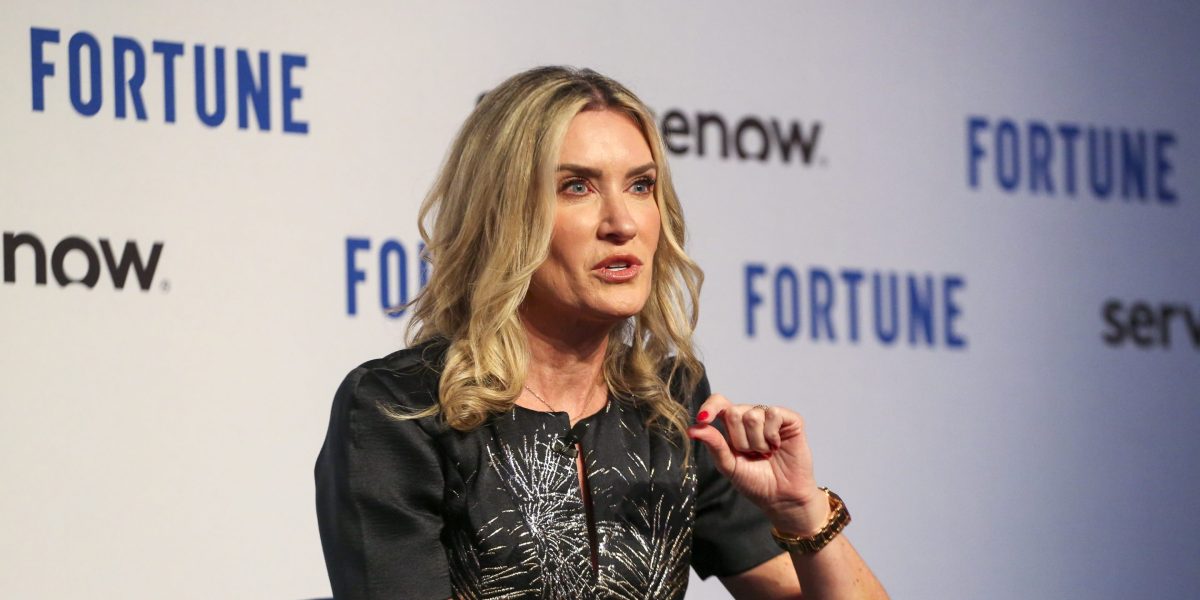





Ramya Ganti is the founder and CEO of Oprox, a VC-backed AI-native revenue intelligence platform for healthcare providers.
Every day, physicians make treatment decisions that cannot move forward until an insurer approves them. That approval process, known as prior authorization, has become one of the most expensive administrative workflows in American healthcare. It sits at the intersection of three competing priorities: providers trying to deliver care, patients trying to access it and payers trying to control costs.
The healthcare industry has spent years accelerating prior authorization submissions. The real challenge is reducing denials and recovering the ones that should never have happened. According to KFF, in Medicare Advantage, only 11.5% of denied prior authorization requests are appealed. Yet when appeals are filed, 80.7% are overturned.
Think about what that means. Nearly 9 out of 10 denials are never challenged, despite the fact that most challenges succeed. If the denials were largely correct, appeals should rarely work. If appeals are successful more than 80% of the time, why are so few filed? Something about this system doesn’t make sense. And it matters because prior authorization is not just an administrative headache. It is one of the largest sources of friction in American healthcare.
The process consumes an estimated $35 billion annually across the healthcare system. Physicians and their staff spend roughly 13 hours every week navigating prior authorization requirements.
The consequences extend beyond provider burnout and administrative cost. According to the American Medical Association, 78% of physicians report that prior authorization delays have led patients to abandon recommended treatment. When 88% of denials go unchallenged, what gets abandoned is not paperwork. It’s care.
Over the last several years, healthcare AI has poured enormous energy into solving prior authorization. New products emerged. Workflows became increasingly automated. The dominant bet was speed. Extract information from the chart faster. Complete forms faster. Submit requests faster. But the data suggests that speed-focused automation has largely optimized the wrong layer of the problem.
The industry has been solving the wrong problem. Prior authorization is not fundamentally a form-filling challenge. It is a reasoning challenge at the front end and a recovery challenge at the back end. Most healthcare AI solutions have improved the mechanics of submission while leaving both of those challenges largely untouched.
The first failure point happens before a request is submitted. Payer authorization criteria are dynamic, payer-specific and constantly changing. The same procedure may be approved by one insurer and denied by another based on differences in clinical documentation, medical necessity language, benefit design, policy revisions or supporting evidence requirements. Yet most automation tools treat the form itself as the work.
They focus on gathering data, populating fields and accelerating submission. What they do not do is replicate the reasoning process that determines whether a payer reviewer is likely to approve the request in the first place. The result is predictable. Providers submit requests faster, but many continue to experience the same denial rates they did before. Administrative effort shifts earlier in the workflow without fundamentally changing outcomes.
A faster fax machine is still a fax machine. Most prior authorization tools automate data movement. Real automation must automate decision-making. That requires systems that can reason across clinical documentation, payer policy requirements and supporting evidence simultaneously at the point of submission. The objective is not to accelerate requests through the same process. It is to increase the likelihood that those requests are approved in the first place.
The second failure point occurs after a denial arrives. The data suggests that many denials are recoverable. Yet most are never appealed. According to the AMA, 62% of physicians report not appealing because they do not believe the appeal will succeed, while 48% cite insufficient staff time and resources. Those reasons reinforce one another. Practices that have spent years battling denials become worn down by the process. They often lack the staff, systems and operational capacity required to pursue appeals consistently. Revenue that could be recovered is written off. Treatments are delayed. Patients move on.
Most healthcare AI solutions stop at submission. They automate the easy half of the workflow and leave the highest-value half largely untouched: analyzing denial patterns, generating appeals, learning from outcomes and continuously improving future performance.
The next generation of healthcare AI must address both sides of the problem. First, systems must reason at the point of submission. They need to understand clinical context, payer requirements and documentation quality simultaneously so that requests reflect the logic a payer reviewer is likely to apply.
Second, systems must close the feedback loop after denial. Every denial contains information. A modern AI-native authorization platform should learn from outcomes, identify recurring denial patterns, refine future decision-making and generate appeals when appropriate. Each denial should become a training signal rather than a write-off.
These are not product features. They are architectural requirements. Speed alone was never going to solve prior authorization. Speed without reasoning on the front end and learning on the back end is precisely the architecture that helped create today’s $35 billion problem.
Across my career in healthcare technology, I’ve worked on automation systems that touch millions of dollars in provider revenue. One lesson has remained consistent: The hardest part of prior authorization is not moving information between systems. It is understanding how decisions are made and improving outcomes over time. If more than 80% of appealed denials are overturned, the problem is not simply that denials occur. The problem is that the healthcare system has accepted denials as the end of the workflow when they should be treated as the beginning of a feedback loop.
The future of prior authorization will be defined by how intelligently systems reason before submission and how effectively they learn after denial.
The organizations that win will not be the ones that submit the most prior authorizations. They will be the ones that prevent denials before they happen, learn from the denials that occur and ensure that recoverable care is never abandoned simply because no one had time to fight back.
Forbes Technology Council is an invitation-only community for world-class CIOs, CTOs and technology executives. Do I qualify?


