


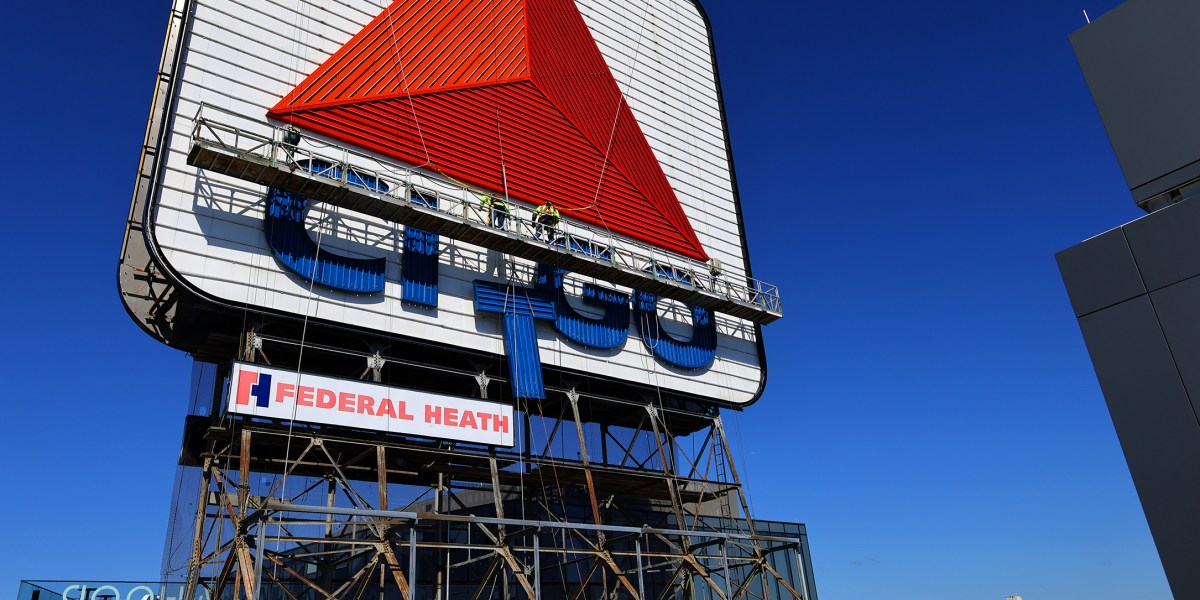
Early this year, it seemed all but certain that Citgo Petroleum—the Houston oil refiner familiar to American drivers, but little known as a Venezuelan subsidiary—was about to fall into the hands of a U.S. activist hedge fund.
In November 2025, a Delaware federal judge ordered the sale of the company to Elliott Management and its affiliate startup, Amber Energy. The court ruled that Citgo could be held liable for the Venezuelan government’s debts, and approved a sale that would send $9 billion to pay off a small number of Venezuela’s numerous creditors. All that was needed to close the sale was a green light from the Trump administration, at which point Citgo and its U.S. refineries would come under American ownership for the first time in nearly 40 years.
In the weeks after the dramatic ouster of former Venezuelan leader Nicolás Maduro in early January, that approval appeared close at hand. Energy Secretary Chris Wright applauded the forced sale to Elliott and its GOP megadonor founder, Paul Singer. It was seen as a win-win deal. The court-ordered sale—opposed by the Venezuelan government—would reduce Venezuela’s massive debt pile while giving a U.S. company the opportunity to expand the Gulf Coast’s refining capacity, including churning more Venezuelan crude, which could help drive down gas prices. “I think that’s fantastic,” Wright said.
But eight months later, that approval is nowhere in sight. The Treasury Department has extended Citgo’s protection from the sale six times since January, raising questions over whether November’s court-ordered sale to one of Trump’s wealthiest allies could be undone by geopolitics. After all, a now U.S.-friendly interim Venezuelan government still doesn’t want to give up its crown-jewel assets in Citgo, and the Trump administration may be more amenable to that sentiment from Caracas.
“There’s an open question now as to whether or not the Citgo sale is a requirement,” said Richard Nephew, a sanctions expert at Columbia University’s Center on Global Energy Policy who helped broker sanctions negotiations in the Obama administration.
Keeping in place Citgo’s protection from being sold avoids disrupting the ongoing cooperation between the U.S. and Venezuela, said Jose Ignacio Hernandez, a Harvard law professor and former special counsel for Venezuelan opposition leader Juan Guaidó. The Trump administration’s public policy towards Venezuela is the three-step strategy espoused by Secretary of State Marco Rubio—stabilization, recovery and transition. “Any license authorizing the [Citgo] sale order will definitely disrupt these three phases,” Hernandez said.
Hedge fund versus state oil
The ongoing delay allows Venezuela to strengthen its last-ditch effort to save its cash cow from Elliott’s clutches.
Attorneys representing Venezuela and its state-owned oil company, PDVSA, appealed Delaware District Judge Leonard Stark’s sale order, arguing the court-appointed neutral adviser, who designed the auction process and selected Elliott’s winning bid, wasn’t so neutral. The appeals court should vacate the sale order, PDVSA and a rival bidder argue, because the adviser hired outside consulting firms that had earned $170 million in fees from clients tied to Elliott. Oral arguments are scheduled for October.
But the 3rd Circuit Court of Appeals hasn’t ruled favorably to the Venezuelan parties in nearly a decade of attempts. The higher court has a streak of affirming Stark’s rulings or dismissing Venezuela’s challenges to his decisions, causing skepticism among several legal analysts about Venezuela’s prospects for victory.
A denial would place the fate of Citgo, its three U.S. refineries, and its pipeline network solely in the hands of the Treasury Department’s Office of Foreign Assets Control (OFAC), which can grant a sale license and deprive Venezuela of its most valuable asset, or deny the license and allow Citgo to be a part of the nation’s revitalization. So long as the decision hangs in the balance, the Trump administration can wield Citgo as a key piece of leverage in its dealings with Venezuela’s interim president, Delcy Rodriguez.
“What does Trump gain if he keeps the [Citgo] protection in place? He gets a bargaining chip that is very powerful, that says, ‘Don’t deviate from this path or you’ll pay for it,’” said Jose Enrique Arrioja, managing editor of the Americas Quarterly journal. “It gives you big leverage in negotiating with that partner.”
Treating Citgo as a bargaining chip may prove useful when dealing with an interim government still led by the Chavista political machinery, which has ruled Venezuela and defied U.S. hegemony in the region since the turn of the century.
Rodriguez, whose hold on power depends on support from the Trump administration, has all but become a Trump proxy for now as she navigates this delicate diplomatic moment. Yet the Chavismo political apparatus she commands remains nearly intact. In March, Rodriguez appointed Asdrúbal Chávez, cousin of the former president, Hugo Chávez, to lead Citgo’s parent company despite his U.S. visa being revoked in 2018. Recently, OFAC issued a rule preventing any further leadership changes to Citgo and its parent companies.
“Now, the interest is trying to make sure Venezuelan oil is getting to market, and we get our cut, and that Delcy is in a position to do whatever we want,” Columbia University’s Nephew said.
Citgo’s dual status
Reminders of Citgo’s dual citizenship abound outside the company’s corporate headquarters in Houston, where a Venezuelan flag flies alongside the stars and stripes.
Citgo, a company founded 116 years ago in Oklahoma, saw 50% of its stake purchased by PDVSA in 1986 and the remainder in 1990 to secure its access to the U.S. market. The Venezuelan national oil company quickly upgraded Citgo’s two Gulf Coast refineries to process Venezuela’s distinct grade of heavy sour oil.
By the early 2000s, Citgo was refining roughly one-third of all Venezuelan oil exports to the U.S., transforming the nation’s raw, peanut butter-like crude into fuels, petrochemicals and asphalt. Citgo’s refineries in Texas, Louisiana, and Illinois were producing roughly 5% of the United States’ refined products, creating a reliable stream of cash for Chávez’s government.
But as Venezuela’s debts mounted, Citgo and its profitability became a target for the nation’s numerous creditors. Companies whose assets were seized by the Chávez regime—including Citgo’s Houston neighbor, ConocoPhillips—sought control of Citgo shares after convincing U.S. courts that the company is an “alter ego” of the Venezuelan government. Bondholders, too, are owed shares of the company after Maduro’s subsequent government failed to make payments on loans.
After years of legal battles, all those creditors may be on the verge of recouping some of their losses. The Delaware court’s auction awarded control of Citgo to Elliott and its newfound affiliate, Amber Energy. Judge Stark accepted the hedge fund’s bid to pay $5.9 billion to a handful of creditors whose assets were expropriated under Chávez, and up to $2.8 billion to holders of the defaulted bonds.
For a company whose profits reached nearly $3 billion in 2022, the deal was widely considered a bargain for Amber, albeit not without risk. And it attracted immediate condemnation from the Venezuelan government. Days after the bid was approved—and a month before a U.S. invasion—Rodriguez went on television calling the sale “a vulgar and barbaric expropriation of a Venezuelan asset in U.S. territory through a fraudulent process.”
Citgo’s U.S. value
For all its importance to the Venezuelan government, the company is increasingly critical to the U.S. refining sector.
At a time when U.S. refiners are pushing their limits to supply a global economy juggling two overlapping crises—the prolonged closure of the Strait of Hormuz and Ukraine’s continuous drone strikes on Russian refineries—Citgo’s refining assets are proving critical in a tightening market of record-high diesel and gasoline costs.
It’s little wonder why Secretary Wright, tasked with strengthening U.S. energy security, is interested in shifting Citgo’s ownership to the U.S. Doing so would sever the company’s ties to a nation with a track record of political instability and mismanagement of its state oil company. Elliott’s Amber Energy pledged to sink $11 billion into modernizing and expanding Citgo’s operations, including a $1 billion expansion of its Texas refinery that would produce an additional 2 billion gallons of fuels per year. All that’s needed, Amber executives have said, is a single government approval from the Treasury Department to “set Citgo free.”
Elliott Management and Amber Energy declined to comment specifically for this story.
However, there are equally compelling reasons to protect Citgo from the hedge fund takeover, analysts said. The company’s value has inflated since the Iran war sent fuel prices through the roof. Like many refiners, Citgo’s income quintupled between the first and second quarter this year.
The nearly $9 billion auction price is a terrible deal for the embattled country, Venezuelan parties say. In May, PDVSA attorneys cited a valuation of over $15 billion thanks to increasing refining industry revenues. Anything less, they argue, would diminish Venezuela’s ability to stick to the three-step stabilization, recovery, and transition strategy.
“Transferring it to a U.S. investor would be depriving Venezuela of a strategic asset, and to solve what?” said Julian Cardenas Garcia, a member of PDVSA’s ad hoc board. “We turned Citgo from a company that was sunk in debt into a profitable company now with excess cash and operational excellence. You’d be using Citgo as a disposable asset instead of using Citgo as a part of the solution.”
Venezuela’s sovereign debt load was most recently pegged at $240 billion, composed of government bonds, expropriation claims, unpaid trade debts, and loans from China, Russia, and development banks. There is a wide range of Venezuelan assets that can service these liabilities, from state-owned enterprises to developed oil fields. As the nation’s crown-jewel energy asset, Citgo’s sale may be one of the most immediate ways Venezuela can reduce its debt. Yet its auction price only would resolve a negligible 4% of the debt pile, at the cost of an economic lifeline that could be instrumental to the nation’s financial recovery.
If Elliott were to acquire the company before the nation undergoes its debt restructuring, it would get hold of an asset before it flows into a pool of assets that could be properly divided.
“They would get the cherry on top, and everybody else would have to do with the rest of the cake,” said Martin Muhleisen, a senior fellow at the Atlantic Council who previously implemented debt relief frameworks for the International Monetary Fund. “That would not be helpful, because [other creditors] would really try to squeeze Venezuela even harder for what’s left.”
“Giving Citgo away too easily without broad integration into the process would be horrible for Venezuela,” Muhleisen said.
Trump’s leverage
There may be another, subtler reason for the Trump administration to protect Citgo from creditors, one that has less to do with Venezuela and more to do with Trump’s ambition to strengthen presidential power.
If the 3rd Circuit ultimately affirms the Delaware court’s sale order, the fate of Citgo is at the discretion of the Trump administration. Any outcome other than granting a license for the sale runs the risk of attracting a lawsuit from Amber or creditors, potentially setting the administration on a collision course with a constitutional challenge.
This challenge could claim that the Trump administration’s possible denial of the license interferes with the Delaware court’s ability to enforce its sale order, creating a separation-of-powers dispute between the executive and judicial branches, legal and policy experts said.
Such a case could play into Trump’s broader push to expand executive power under the “unitary executive theory”—the legal paradigm the administration has invoked for unfettered control over congressionally created independent regulatory agencies.
“I’m absolutely sure the Trump administration will try desperately to move the case towards the Supreme Court, which, under current circumstances, will probably decide in favor of President Trump,” Hernandez said. “That will be another reason for the administration to preserve Citgo. [It] could be a case to reinforce the unitary executive theory.”
At this stage, Citgo shifts from the geopolitical chessboard to the domestic one. “It doesn’t have anything to do with Venezuela. It has everything to do with domestic politics,” Hernandez said.