


Close Menu
Alpha Leaders
  • Home
  • News
  • Leadership
  • Entrepreneurs
  • Business
  • Living
  • Innovation
  • More
    • Money & Finance
    • Web Stories
    • Global
    • Press Release
What's On
Current price of oil as of July 13, 2026

Current price of oil as of July 13, 2026

13 July 2026
Why Its  Billion Ad Bet Needs More Inventory

Why Its $3 Billion Ad Bet Needs More Inventory

13 July 2026
The escalating U.S.–Iran war is rewriting the CEO playbook again

The escalating U.S.–Iran war is rewriting the CEO playbook again

13 July 2026
Facebook X (Twitter) Instagram
Alpha Leaders
newsletter
  • Home
  • News
  • Leadership
  • Entrepreneurs
  • Business
  • Living
  • Innovation
  • More
    • Money & Finance
    • Web Stories
    • Global
    • Press Release
Alpha Leaders
Home » Who Pays for Tariffs
Business

Who Pays for Tariffs

Press RoomBy Press Room12 February 20255 Mins Read
Facebook Twitter Copy Link Pinterest LinkedIn Tumblr Email WhatsApp
Who Pays for Tariffs

A pillar of President Trump’s policies has been tariffs, which are taxes on products imported from other countries.

He has imposed or threatened to impose them as a way to influence global supply chains, raise revenue and extract concessions from other countries. But what can often be lost amid proclamations targeting other countries is who ultimately pays for tariffs. It often isn’t the country itself.

Understanding who will end up paying for the higher costs means understanding how manufacturing, trade and supply chains function — and how costs build along each step of the complex process. Take shoes, for example.

Step 1: Manufacturing overseas

The majority of shoes bought in the United States are made in China

Nearly all shoes sold in American stores come from other countries, with imports recently making up more than 95 percent of the market. Over the years, shoe manufacturing gradually moved to China, Vietnam and Indonesia, among other countries, where production costs are lower. For the United States, China remains the dominant source, producing more than half of all footwear imports.

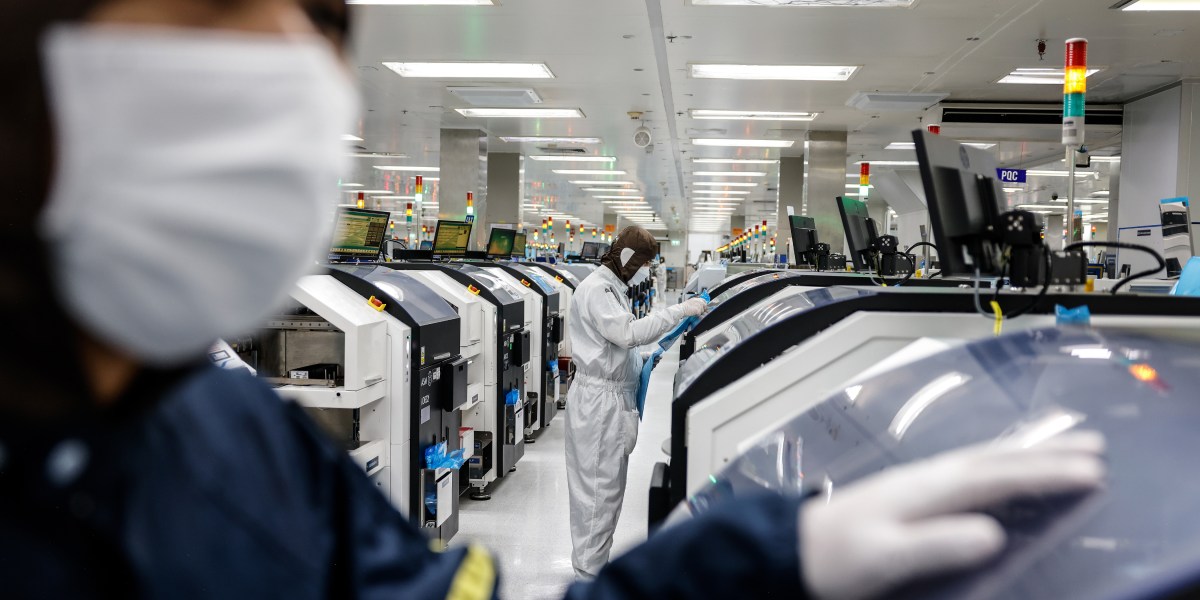
The production process starts in Chinese factories where workers assemble the sneakers. The final production cost can vary, depending on the materials. It can typically average around $14 per pair, which also covers labor and factory overhead plus manufacturer margin.

Step 2: Export preparation

Almost all goods sent to the United States have been subject to some tariffs

To prepare the finished product for export, the shoe producer consults a wonky system run by the U.S. International Trade Commission known as the Harmonized Tariff Schedule, which determines tariff rates for different products and categories.

Even before Mr. Trump imposed new tariffs when he started his second term, most products that entered the country were subject to some amount of tariffs.

Tariff rates on imported shoes can vary, with over 430 different classifications based on materials and styles. Non-leather sneakers imported from China, for example, typically had a 20 percent tariff, according to Matt Priest, the chief executive of the Footwear Distributors and Retailers of America.

Step 3: Shipping

Shipping and logistics add to import costs

Sneakers are shipped to one of the U.S. ports. This adds around $3 per pair for shipping and another $3 for other logistics costs.

Step 4: Tariff point

Before the shoes can enter the country, the importer pays a tariff to U.S. Customs

Once the product reaches the U.S. port, the importing company typically works with a licensed customs broker to handle the tariff payments to U.S. Customs and Border Protection.

These specialists manage all customs documentation and compliance requirements on behalf of the importer. While the previous 20 percent tariff resulted in a $24 import price, an additional 10 percent tariff Mr. Trump imposed on Chinese goods now adds $2 per pair, bringing the total import price to $26.

What happens next

Who pays for the increased price?

Most trade policy experts agree that the American economy will most likely bear the cost of the additional tariffs, which can occur in several ways.

Scenario 1

Consumers

To offset higher import costs, retailers often increase prices, passing the burden on to consumers. As a result, consumers effectively pay for the tariff, reducing their purchasing power.

“Even though the legal burden of tariffs fall on the importer, what we see is that the full economic burden is more often passed to the U.S. economy. And consumers often end up paying for the higher costs,” said Erica York, a tax policy analyst at Tax Foundation.

Scenario 2

American retail and manufacturing companies

American companies and manufacturers that use imported materials face higher costs, whether they continue sourcing from China or switch to more expensive domestic suppliers. While they may absorb these costs to maintain competitive prices, doing so reduces their available capital for other business investments and operations, ultimately affecting the broader U.S. economy.

Scenario 3

Foreign manufacturers

The U.S. economy can sometimes avoid the burden of tariffs, which instead primarily harm the companies in the targeted country. Manufacturers in countries where tariffs are imposed sometimes choose to reduce their prices and accept lower profit margins so they can stay competitive in the American market. This strategy, however, has rarely emerged in similar situations, experts said.

Scenario 4

American exporters

Imposing tariffs on imports can drive up the value of the U.S. dollar, making American exports more expensive and less competitive. As a result, U.S. exporters may suffer and indirectly pay the cost of the tariffs.

While these are some of the many scenarios, tariffs rarely affect just one group, as their effects ripple through the entire supply chain, with manufacturers, retailers and consumers often sharing the burden in different ways.

As companies try to adapt to minimize these costs, some importers may start shifting their production to countries without high tariffs. Meanwhile, consumers can change their buying habits, switching to different brands or alternative products that haven’t been hit by price increases.

Though researchers and policymakers can predict some of these effects, the full scope of market reactions often unfolds in unexpected ways, shaped by factors like local competition and how quickly companies can change their supply chains.


China Customs (Tariff) International Trade and World Market Shoes and Boots
Share. Facebook Twitter Pinterest LinkedIn Tumblr Email Copy Link

Related Articles

States Prepare Lawsuit to Block Paramount’s Merger With Warner Bros.

States Prepare Lawsuit to Block Paramount’s Merger With Warner Bros.

12 July 2026
VW Reforms Lack Clarity As China Threat Accelerates; Toyota Not Immune

VW Reforms Lack Clarity As China Threat Accelerates; Toyota Not Immune

12 July 2026
US-Iran War: Trump is following similar playbook to China in first term

US-Iran War: Trump is following similar playbook to China in first term

9 July 2026
Anduril’s billionaire founder warns U.S. colleges are falling behind China—where students are learning AI

Anduril’s billionaire founder warns U.S. colleges are falling behind China—where students are learning AI

9 July 2026
Chinese companies are ditching Nvidia’s advanced accelerators for domestic AI suppliers

Chinese companies are ditching Nvidia’s advanced accelerators for domestic AI suppliers

8 July 2026
Rosie Rios And Others Celebrate

Rosie Rios And Others Celebrate

8 July 2026
Don't Miss
Unwrap Christmas Sustainably: How To Handle Gifts You Don’t Want

Unwrap Christmas Sustainably: How To Handle Gifts You Don’t Want

By Press Room27 December 2024

Every year, millions of people unwrap Christmas gifts that they do not love, need, or…

Exclusive: DeFi platform Azura launches after raising .9 million from Initialized

Exclusive: DeFi platform Azura launches after raising $6.9 million from Initialized

22 October 2024
Sam Altman’s World Wants To Scan Your Eyes To Prove You’re Human

Sam Altman’s World Wants To Scan Your Eyes To Prove You’re Human

22 October 2024
Stay In Touch
  • Facebook
  • Twitter
  • Pinterest
  • Instagram
  • YouTube
  • Vimeo
Latest Articles
SpaceX and Amazon are tech dopplegangers worth .5 trillion—and they’re headed for a collision

SpaceX and Amazon are tech dopplegangers worth $4.5 trillion—and they’re headed for a collision

13 July 20262 Views
Big-Time AI Law Kicking Into Gear Requiring Chatbots To Tell You They Are AI, But Might Not Move The Needle

Big-Time AI Law Kicking Into Gear Requiring Chatbots To Tell You They Are AI, But Might Not Move The Needle

13 July 20262 Views
Cheaper AI Tokens Do Not Guarantee Cheaper Enterprise Agents

Cheaper AI Tokens Do Not Guarantee Cheaper Enterprise Agents

13 July 20262 Views
Claude Fable 5 Extends To July 19. 7 Days, 7 Power Moves

Claude Fable 5 Extends To July 19. 7 Days, 7 Power Moves

13 July 20262 Views

Recent Posts

  • Current price of oil as of July 13, 2026
  • Why Its $3 Billion Ad Bet Needs More Inventory
  • The escalating U.S.–Iran war is rewriting the CEO playbook again
  • Tencent’s Hy3 Bets On AI Agents Over Model Size
  • SpaceX and Amazon are tech dopplegangers worth $4.5 trillion—and they’re headed for a collision

Recent Comments

No comments to show.
About Us
About Us

Alpha Leaders is your one-stop website for the latest Entrepreneurs and Leaders news and updates, follow us now to get the news that matters to you.

Facebook X (Twitter) Pinterest YouTube WhatsApp
Our Picks
Current price of oil as of July 13, 2026

Current price of oil as of July 13, 2026

13 July 2026
Why Its  Billion Ad Bet Needs More Inventory

Why Its $3 Billion Ad Bet Needs More Inventory

13 July 2026
The escalating U.S.–Iran war is rewriting the CEO playbook again

The escalating U.S.–Iran war is rewriting the CEO playbook again

13 July 2026
Most Popular
Tencent’s Hy3 Bets On AI Agents Over Model Size

Tencent’s Hy3 Bets On AI Agents Over Model Size

13 July 20262 Views
SpaceX and Amazon are tech dopplegangers worth .5 trillion—and they’re headed for a collision

SpaceX and Amazon are tech dopplegangers worth $4.5 trillion—and they’re headed for a collision

13 July 20262 Views
Big-Time AI Law Kicking Into Gear Requiring Chatbots To Tell You They Are AI, But Might Not Move The Needle

Big-Time AI Law Kicking Into Gear Requiring Chatbots To Tell You They Are AI, But Might Not Move The Needle

13 July 20262 Views

Archives

  • July 2026
  • June 2026
  • May 2026
  • April 2026
  • March 2026
  • February 2026
  • January 2026
  • December 2025
  • November 2025
  • October 2025
  • September 2025
  • August 2025
  • July 2025
  • June 2025
  • May 2025
  • April 2025
  • March 2025
  • February 2025
  • January 2025
  • December 2024
  • November 2024
  • October 2024
  • September 2024
  • August 2024
  • July 2024
  • June 2024
  • May 2024
  • April 2024
  • March 2024
  • February 2024
  • January 2024
  • December 2023
  • March 2022
  • January 2021
  • March 2020
  • January 2020

Categories

  • Blog
  • Business
  • Entrepreneurs
  • Global
  • Innovation
  • Leadership
  • Living
  • Money & Finance
  • News
  • Press Release
© 2026 Alpha Leaders. All Rights Reserved.
  • Privacy Policy
  • Terms of use
  • Advertise
  • Contact

Type above and press Enter to search. Press Esc to cancel.