





A year already marked by record-smashing heatwaves, catastrophic storms, and deadly flash floods is forcing business leaders to reckon with an unsettling question: What happens if the federal government pulls back from disaster response? The idea of handling disasters without FEMA is not an abstract worry.
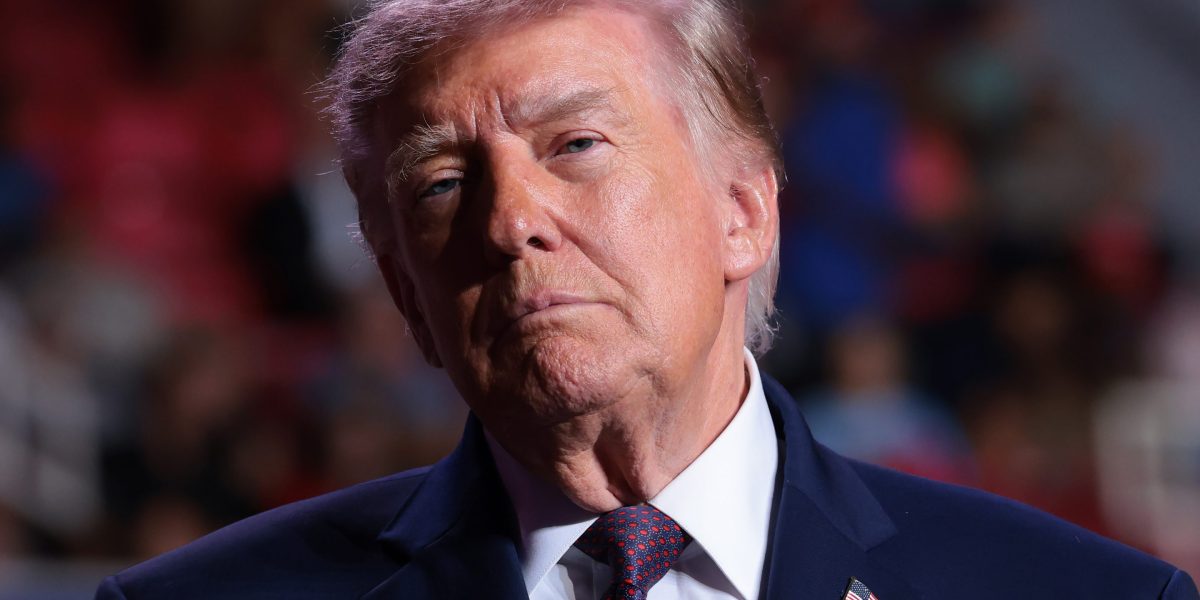
In recent weeks, political debates have intensified over proposals to reduce federal spending on disaster relief or even eliminate the Federal Emergency Management Agency (FEMA) after the 2025 hurricane season, as reported by NBC News. Former President Trump and some congressional leaders have floated plans to shift primary responsibility for disaster recovery to state governments—a move that could leave businesses navigating a patchwork of legal systems without the backstop they’ve come to rely on for decades.
This uncertainty comes as disasters batter communities from coast to coast. In the first half of 2025 alone, the U.S. suffered at least 15 billion-dollar weather disasters, including historic flooding, tornado outbreaks, and prolonged heat waves, according to Yale Climate Connections. Just this past weekend, flash floods devastated Kerr County, Texas, forcing rescues and shutting down businesses in a region still recovering from earlier storms.
For business owners, investors, and insurers, this brewing shift raises urgent questions: If FEMA disappears, can state laws and budgets fill the gap? Will private enterprises have to shoulder more responsibility for disaster planning and recovery? And which states are prepared—or dangerously unprepared—to protect their residents and economic lifelines in a post-FEMA landscape?
A Federal Safety Net Under Threat
Since its founding in 1979, FEMA has been the cornerstone of America’s disaster response. It funds emergency shelters, debris removal, rebuilding grants, and cash assistance for displaced families. Critically for businesses, FEMA programs like the Building Resilient Infrastructure and Communities (BRIC) grant fund projects that reduce future risks, a crucial buffer as extreme weather grows more frequent.
Yet the agency has long faced political crossfire, with critics labeling it bloated or inefficient. Earlier this year, a lawsuit was filed against the Trump administration’s previous halt to BRIC funding for certain states, highlighting how political swings can upend even well-established federal programs.
If proposals to wind down FEMA proceed, business leaders would be left relying on a fragmented patchwork of state disaster laws—many of which, my research suggests, lack the resources or legal frameworks to handle large-scale crises.
State Disaster Laws Are A Patchwork of Authority
Every U.S. state has laws empowering governors and local officials to declare emergencies and coordinate response efforts. Yet those powers vary widely in scope, funding, and legal protections for vulnerable communities.
- Southern States: Places like Florida, Georgia, and South Carolina concentrate disaster powers in the governor’s office. Only the governor can order evacuations or unlock statewide resources. Local governments often have limited independent authority.
- Mid-Atlantic States: States like Maryland and Virginia provide more robust local authority. Maryland, for example, requires every county and Baltimore City to have a local emergency management director, fostering coordinated planning. Virginia has even established an Emergency Management Equity Working Group to ensure plans account for vulnerable populations.
- Texas: Texas stands out for granting local jurisdictions significant powers to issue evacuation orders and coordinate responses. Recent reforms require Texas counties to plan for people with disabilities, low-income families, and the homeless—an increasingly vital mandate given repeated storms and floods.
Despite these structures, most states still rely heavily on FEMA for funding, specialized teams, and logistical support. Without FEMA, states would have to cover enormous costs themselves. For example, after Hurricane Harvey, Texas received over $13 billion in FEMA aid, money that state coffers alone could not match.
The Business Risks Of A FEMA Void
Businesses have more skin in this game than ever. Beyond humanitarian concerns, legal and financial risks loom if federal safety nets vanish.
1. Insurance Chaos and Higher Premiums
Federal aid often helps cover costs insurers won’t, such as temporary housing, debris removal, and infrastructure repair. Without that aid, insurance companies may face larger payouts or withdraw entirely from high-risk markets. In Florida, for example, multiple insurers have already exited the market due to hurricane risks, leaving businesses scrambling for coverage. A weakened federal role could mean higher premiums, stricter underwriting, or outright denial of coverage in disaster-prone regions, especially for small and midsize enterprises without deep cash reserves.
2. Liability and Legal Exposure
If state laws differ significantly on evacuation orders, business owners may be caught between conflicting mandates. For instance, if local officials order an evacuation, but state law vests that authority only in the governor, businesses face legal ambiguity about when to close operations, protect staff, or move inventory.
Disaster response gaps also raise potential civil rights issues. Federal laws like the Stafford Act prohibit discrimination in disaster aid based on race, disability, or language. Many states lack comparable mandates, meaning vulnerable communities—and businesses serving them—could fall through the cracks if federal oversight disappears.
3. Business Continuity and Supply Chain Disruptions
Companies with operations across multiple states face a regulatory minefield if FEMA’s uniform national standards vanish. Without coordinated federal logistics, restoring supply chains and reopening businesses could take longer, increasing downtime and losses.
Which States Are Ready? Which Aren’t?
Few states are fully prepared to absorb FEMA’s responsibilities. According to my analysis of disaster laws across the South and Mid-Atlantic, only a handful—like Virginia and Texas—have begun integrating equity planning, vulnerable population registries, and robust local emergency powers into state statutes.
Other states, particularly smaller ones with limited budgets, may lack:
- Funding reserves for large-scale recovery
- Trained personnel for managing complex emergencies
- Legal mandates for language access or disability accommodations
That leaves gaps businesses can’t ignore. A company operating in Virginia might navigate disaster recovery relatively smoothly, while the same company in Mississippi or Georgia could face a chaotic patchwork of legal obligations, prolonged closures, and community backlash.
What Business Leaders Should Do Now
While FEMA’s fate remains uncertain, businesses should:
- Audit their operations in every state. Know who can declare emergencies locally, and what laws govern evacuations, sheltering, and business closures.
- Review insurance coverage. Understand how policies might change if FEMA’s support disappears.
- Prioritize inclusive planning. Businesses should proactively incorporate language access, disability accommodations, and equity considerations into emergency plans—even if state laws don’t mandate them.
- Engage local emergency managers. Build relationships before disaster strikes.
FEMA’s potential dismantling would represent the biggest shift in American disaster management in generations. Businesses that fail to prepare for handling disasters without FEMA amidst a state-led disaster regime risk higher costs, legal headaches, and reputational damage. Disasters don’t respect state lines, but the laws governing them increasingly do. For business leaders, understanding those legal boundaries might be the key to survival in a future where the federal safety net is no longer guaranteed.


