

Close Menu
Alpha Leaders
  • Home
  • News
  • Leadership
  • Entrepreneurs
  • Business
  • Living
  • Innovation
  • More
    • Money & Finance
    • Web Stories
    • Global
    • Press Release
What's On
Four tribes partner with Kalshi to launch prediction apps—a move that undercuts Native American opposition to the industry

Four tribes partner with Kalshi to launch prediction apps—a move that undercuts Native American opposition to the industry

8 October 2026
Ozempic and Wegovy may be the newest breakthrough in Alzheimer’s prevention

Ozempic and Wegovy may be the newest breakthrough in Alzheimer’s prevention

8 October 2026
Trump’s red-dyed diesel order probably won’t lead to cheaper fuel, economists say

Trump’s red-dyed diesel order probably won’t lead to cheaper fuel, economists say

8 October 2026
Facebook X (Twitter) Instagram
Alpha Leaders
newsletter
  • Home
  • News
  • Leadership
  • Entrepreneurs
  • Business
  • Living
  • Innovation
  • More
    • Money & Finance
    • Web Stories
    • Global
    • Press Release
Alpha Leaders
Home » Can the Federal Reserve Look Past Trump’s Tariffs?
Business

Can the Federal Reserve Look Past Trump’s Tariffs?

Press RoomBy Press Room17 February 20256 Mins Read
Facebook Twitter Copy Link Pinterest LinkedIn Tumblr Email WhatsApp
Can the Federal Reserve Look Past Trump’s Tariffs?

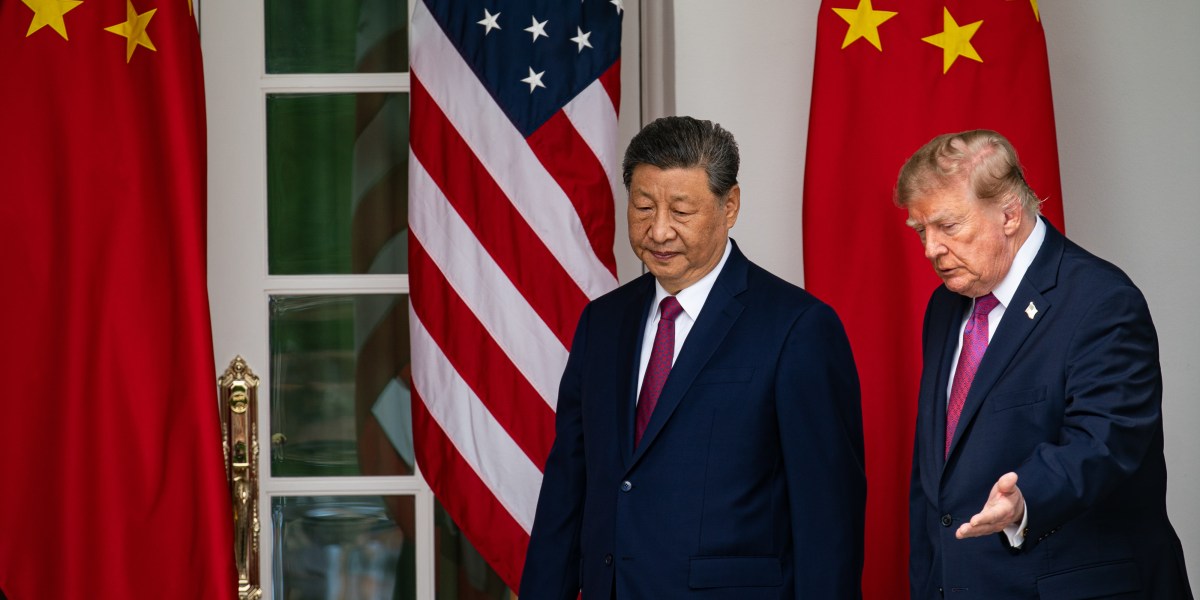
As President Trump’s efforts to restructure the global trade system with expansive tariffs begin to take shape, one question continues to dog officials at the Federal Reserve: How will these policies impact the central bank’s plans to lower interest rates?

One influential Fed governor made clear on Monday that he did not expect Mr. Trump’s policies to derail the Fed’s efforts to get inflation under control, suggesting instead that fresh interest rate cuts are still in play this year.

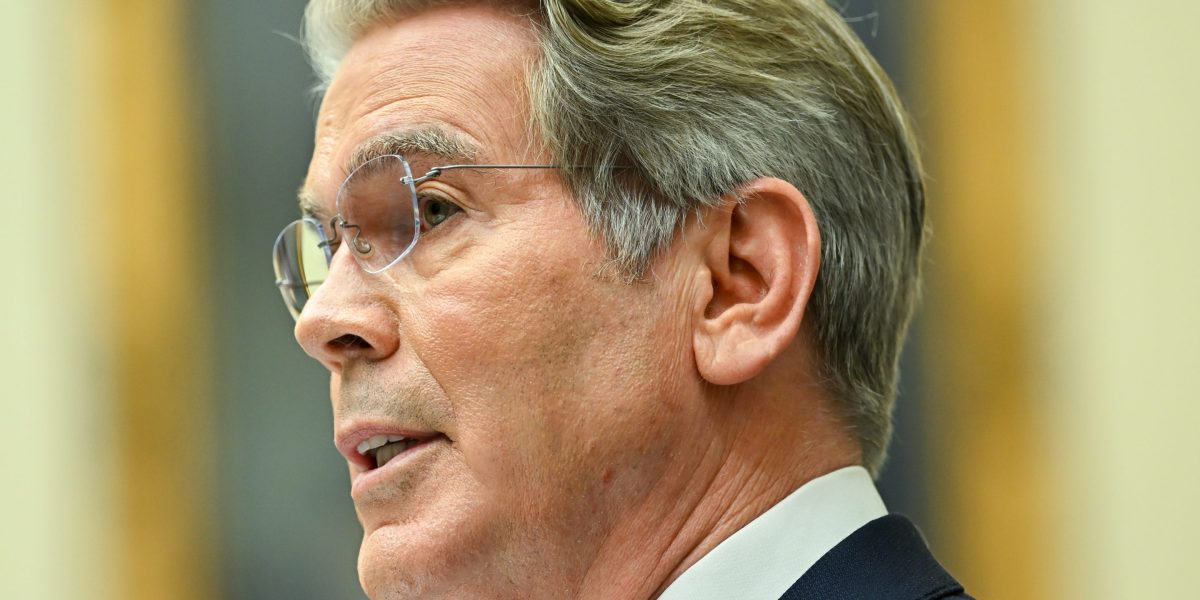
“My baseline view is that any imposition of tariffs will only modestly increase prices and in a nonpersistent manner,” Christopher J. Waller, the official, said in remarks at an event in Australia Monday evening. “So I favor looking through these effects when setting monetary policy to the best of our ability.”

Economists are concerned that tariffs, which are essentially taxes on American consumers, will increase prices in the United States, at least temporarily, and over time slow economic growth.

Mr. Waller acknowledged that the economic impact of the tariffs could be larger than anticipated depending on how they are structured and later put in place. But he suggested that any uptick in prices from tariffs could be blunted by other policies, which could have “positive supply effects and put downward pressure on inflation.”

Mr. Waller’s views matter given that he is one of the seven officials who make up the Board of Governors and votes at every policy meeting.

In addition to tariffs, Mr. Trump has made increasing domestic energy production, deregulation and tax cuts other pillars of his economic agenda. His administration is also pursuing mass deportations of illegal immigrants as well as government spending cuts by, in part, slashing the federal work force.

Fed officials so far have been hesitant to infer exactly what these changes will mean for the economy and ultimately the path forward for interest rates. Borrowing costs stand at 4.25 percent and 4.5 percent after the Fed opted last month against further cuts until it gained more confidence that inflation was indeed under control.

The last time the central bank had to deal with a prolonged tit-for-tat trade war was in 2018, during Mr. Trump’s first term in the White House. Yet, the economic backdrop then compared with today could not look more different.

Inflation was subdued and consistently undershooting the Fed’s 2 percent goal. Interest rates were much lower by comparison, hovering around 2 percent. The outlook for economic growth had also turned gloomy as businesses pulled back their big-ticket investments. This dynamic gave the Fed flexibility to respond pre-emptively to ward off a much bigger slowdown in the United States, and by the end of 2019 it had reduced interest rates by three-quarters of a percentage point.

That “looking through” playbook could hold this time around if concerns about a hit to growth from tariffs overshadow what could just be a temporary rise in consumer prices. But consumers are still feeling the aftereffects of the worst inflation shock in roughly four decades and remain on edge about future price increases, complicating the situation for policymakers.

Fed officials got more unwelcome news on the inflation front last week after the latest Consumer Price Index report showed that price pressures once again heated up in January. The main culprits were surging grocery prices, led higher by a 15 percent jump in egg prices because of the ongoing bird flu outbreak, and rising energy costs.

Even once stripping out those volatile items, so-called “core” inflation rose at its fastest pace on a monthly basis in roughly two years.

Alarm eased after the release of the Producer Price Index, which tracks what companies pay in goods and services in order to make what they sell. That index suggested that overall inflation, as measured by the Fed’s preferred Personal Consumption Expenditures index, was more subdued than initially feared.

Mr. Waller characterized the data as “mildly disappointing” and said that inflation overall was still well above the Fed’s target amid “excruciatingly slow” progress toward that goal over the past year.

But, he raised doubts about what signals to draw from the most recent data. Consumer price growth tends to run high at the start of the year before slowing in the second half, which Mr. Waller and other economists think could be attributed to seasonal quirks that may obscure the real pace.

Research from the central bank’s economists show that this dynamic has occurred in 16 of the last 22 years. In a separate speech on Monday, Patrick Harker, president of the Federal Reserve Bank of Philadelphia, also noted that C.P.I. inflation in January has exceeded expectations nine out of 10 times over the last decade.

“If this wintertime lull in progress is temporary, as it was last year, then further policy easing will be appropriate,” Mr. Waller said in his remarks. “But until that is clear, I favor holding the policy rate steady.”

Michelle Bowman, another Fed governor, affirmed her support on Monday for a “cautious and gradual” approach to additional rate cuts. Ms. Bowman said that while she was waiting for further evidence that inflation was moderating, she still expected that to happen this year. That is a stance most officials at the central bank have adopted to some degree, emboldened by a solid labor market.

Ms. Bowman said she also wanted “clarity” on what the Trump administration has planned.

“It will be very important to have a better sense of these policies, how they will be implemented, and establish greater confidence about how the economy will respond in the coming weeks and months,” she said. Ms. Bowman, like Mr. Waller, was appointed to the Fed by Mr. Trump during his first term.

The president and his staffers have adopted a more measured tone when talking about their capacity to tame inflation, after having vowed to vanquish it on “Day 1.”

Kevin Hassett, the director of Mr. Trump’s National Economic Council, told CBS News on Sunday that the administration has a “multifaceted plan to end inflation,” specifically flagging tax cuts, efforts by the billionaire entrepreneur Elon Musk to reduce government spending, deregulation and increased energy production.

Still, investors have scaled back their expectations for how much the Fed will lower rates this year. They have also pushed back the timing of those moves on concerns that taken together, Mr. Trump’s policies will lead to higher inflation. Now, futures markets point to a cut of just one quarter point in December.

Mr. Harker said on Monday he was “optimistic” not only that inflation would decline over time but that interest rates would “be able to decline over the long run.”

“This does not mean that there aren’t areas of potential concern,” he added. “In fact, the only thing I can say with any certainty is that there are many uncertainties.”

Christopher (1959- ) Consumer Price Index Customs (Tariff) Donald J Federal Reserve System Fees and Rates) Inflation (Economics) Interest Rates International Trade and World Market Prices (Fares Protectionism (Trade) Trump United States United States Economy Waller
Share. Facebook Twitter Pinterest LinkedIn Tumblr Email Copy Link

Related Articles

Workers feared AI would kill jobs. Instead, 72% of employers say they’ll pay more for AI skills

Workers feared AI would kill jobs. Instead, 72% of employers say they’ll pay more for AI skills

6 October 2026
U.S.-China rivalry risks ‘over-securitization of almost everything,’ says Chinese strategist

U.S.-China rivalry risks ‘over-securitization of almost everything,’ says Chinese strategist

29 September 2026
The 10-year Treasury yield just hit 5% for the first time since 2007 — is a 1970s-style ‘stagflation’ on the return?

The 10-year Treasury yield just hit 5% for the first time since 2007 — is a 1970s-style ‘stagflation’ on the return?

22 September 2026
Global Economy Is Running Out of Wiggle Room

Global Economy Is Running Out of Wiggle Room

17 September 2026
The Fed just delivered a unanimous rate hike, the first in three years, and no cuts through 2027

The Fed just delivered a unanimous rate hike, the first in three years, and no cuts through 2027

16 September 2026
Fortune

Fortune

11 September 2026
Don't Miss
Trump’s Tariffs Will Make AI Data Centers More Expensive

Trump’s Tariffs Will Make AI Data Centers More Expensive

By Press Room4 April 2025

Donald Trump’s administration has gone all-in on AI: A day after his inauguration, the newly-elected…

Unwrap Christmas Sustainably: How To Handle Gifts You Don’t Want

Unwrap Christmas Sustainably: How To Handle Gifts You Don’t Want

27 December 2024
Sam Altman’s World Wants To Scan Your Eyes To Prove You’re Human

Sam Altman’s World Wants To Scan Your Eyes To Prove You’re Human

22 October 2024
Stay In Touch
  • Facebook
  • Twitter
  • Pinterest
  • Instagram
  • YouTube
  • Vimeo
Latest Articles
‘This is not sustainable’: Families with young kids are fleeing NYC’s high cost of living

‘This is not sustainable’: Families with young kids are fleeing NYC’s high cost of living

8 October 20260 Views
Why Identity Must Become The Enterprise Control Plane

Why Identity Must Become The Enterprise Control Plane

7 October 20260 Views
Why China’s AI startups will need to turn to IPOs and private credit

Why China’s AI startups will need to turn to IPOs and private credit

7 October 20261 Views
The Case For Healthy Skepticism In The Age Of AI

The Case For Healthy Skepticism In The Age Of AI

7 October 20260 Views

Recent Posts

  • Four tribes partner with Kalshi to launch prediction apps—a move that undercuts Native American opposition to the industry
  • Ozempic and Wegovy may be the newest breakthrough in Alzheimer’s prevention
  • Trump’s red-dyed diesel order probably won’t lead to cheaper fuel, economists say
  • OpenAI publishes solutions to more than 370 outstanding math challenges. Math may never be the same
  • ‘This is not sustainable’: Families with young kids are fleeing NYC’s high cost of living

Recent Comments

No comments to show.
About Us
About Us

Alpha Leaders is your one-stop website for the latest Entrepreneurs and Leaders news and updates, follow us now to get the news that matters to you.

Facebook X (Twitter) Pinterest YouTube WhatsApp
Our Picks
Four tribes partner with Kalshi to launch prediction apps—a move that undercuts Native American opposition to the industry

Four tribes partner with Kalshi to launch prediction apps—a move that undercuts Native American opposition to the industry

8 October 2026
Ozempic and Wegovy may be the newest breakthrough in Alzheimer’s prevention

Ozempic and Wegovy may be the newest breakthrough in Alzheimer’s prevention

8 October 2026
Trump’s red-dyed diesel order probably won’t lead to cheaper fuel, economists say

Trump’s red-dyed diesel order probably won’t lead to cheaper fuel, economists say

8 October 2026
Most Popular
OpenAI publishes solutions to more than 370 outstanding math challenges. Math may never be the same

OpenAI publishes solutions to more than 370 outstanding math challenges. Math may never be the same

8 October 20260 Views
‘This is not sustainable’: Families with young kids are fleeing NYC’s high cost of living

‘This is not sustainable’: Families with young kids are fleeing NYC’s high cost of living

8 October 20260 Views
Why Identity Must Become The Enterprise Control Plane

Why Identity Must Become The Enterprise Control Plane

7 October 20260 Views

Archives

  • October 2026
  • September 2026
  • July 2026
  • June 2026
  • May 2026
  • April 2026
  • March 2026
  • February 2026
  • January 2026
  • December 2025
  • November 2025
  • October 2025
  • September 2025
  • August 2025
  • July 2025
  • June 2025
  • May 2025
  • April 2025
  • March 2025
  • February 2025
  • January 2025
  • December 2024
  • November 2024
  • October 2024
  • September 2024
  • August 2024
  • July 2024
  • June 2024
  • May 2024
  • April 2024
  • March 2024
  • February 2024
  • January 2024
  • December 2023
  • March 2022
  • January 2021
  • March 2020
  • January 2020

Categories

  • Blog
  • Business
  • Entrepreneurs
  • Global
  • Innovation
  • Leadership
  • Living
  • Money & Finance
  • News
  • Press Release
© 2026 Alpha Leaders. All Rights Reserved.
  • Privacy Policy
  • Terms of use
  • Advertise
  • Contact

Type above and press Enter to search. Press Esc to cancel.