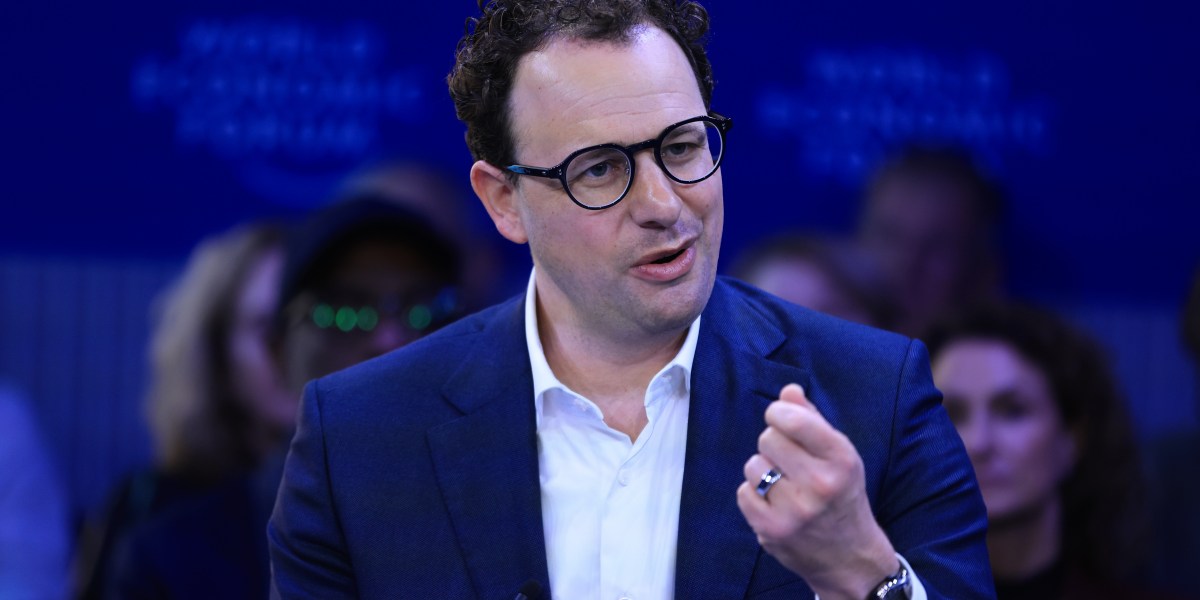





Chief Information Officer Stephen Franchetti has enthusiastically embraced a wide array of artificial intelligence tools to bolster workflow automation for the tech firm’s 4,100 employees.
At tech firm Samsara, Franchetti has authorized Anthropic’s Claude, Google’s Gemini, OpenAI’s ChatGPT, and the AI coding agent Cursor, while also developing an internal system that monitors all AI expenses that can be tracked on a daily basis. More recently, Samsara has capped usage for some non-technical employees, while some groups like research and development—which need AI for more intensive coding and data analysis—have more room to experiment.
“It took us a while to settle on the right caps, to make sure everyone was well served,” says Franchetti. “But it puts people in the position where they’re kind of in control and they can make choices as to which models they use.”
With global AI spending projected to total $2.5 trillion this year, a 44% increase from prior-year levels, CIOs and other technology leaders within the C-suite are finding themselves in a delicate moment on their AI journey. After years of promoting AI adoption with training courses and hackathons, and making AI coding tools, agents, and chat assistants widely accessible for their employees, some are tightening up how frequently these tools can be used and retraining staff to better understand smaller and cheaper AI models that can handle many workplace tasks.
Some companies have reported that their 2026 AI budgets have blown past what they expected at the beginning of the year, without producing any corresponding value to the business. AI hyperscalers are hearing the complaints too, and have responded by rolling out cheaper models or have cut prices.
“2026 is the year of everyone finding out that AI is actually really hard,” says Will Sommer, a quantitative modeling and economic forecasting expert at research firm Gartner. “It’s not a free lunch. It requires a lot of thought and effort to get right.”
Sommer warns that companies can easily spend thousands of dollars per head on AI tools whose output is essentially junk and doesn’t bolster productivity. In June, Gartner also issued a bearish report that warned AI coding costs would overtake the average developer’s salary by 2028, due to rising token consumption and a shift to consumption-based fees.
“We’ve taken this very seriously, both in the internal use case and we are propagating those learnings externally,” says Sagnik Nandy, the chief technology officer at electronic-signature software company Docusign.
Internally, Nandy lauded that every engineer has embraced AI tools and that 75% of the code that they develop is initiated by AI. But, Nandy says he quickly realized that AI code agents were built to tap Docusign’s entire code base for context before executing a task. “That’s a lot of tokens, because you’re trying to read everything,” he says.
Nandy has adjusted these AI coding agents so that the default setting is that they only pull the context that’s relevant to a narrow task a developer is working on, which has reduced token usage by almost 50%.
Jim Dausch, the chief digital and technology officer at Yum Brands, says AI token usage isn’t yet “a material number, but the trajectory was one that we’re watching.” Earlier this year, he did notice that both AI token usage and expenses were rising at the KFC and Taco Bell restaurant operator.
But, Dausch contends that a vast majority of tasks that AI tools are asked to perform—perhaps even as high as 95%—can be handled by more basic, less expensive models. That has led Yum to promote more training on AI model usage and advise business leaders to closely manage their digital spending the same way they budget for a department’s headcount.
“We’re trying to kind of democratize where the costs live and how they’re managed, so it isn’t just an IT line item,” says Dausch.
At Cigna Group, the healthcare giant casts a wide net and has embraced multiple AI hyperscaler vendors to allow the company’s workforce to utilize small language models or earlier, cheaper versions for some tasks that don’t require a lot of reasoning capabilities. “The way you really run up costs is you use the most expensive models with no guardrails around them,” says Katya Andresen, Cigna’s chief data, digital, and AI officer.
Cigna has authorized more than 70 different AI models for internal purposes, and while Andresen says compute and AI token usage has increased, total spending isn’t rising at the same pace, due to this multimodal approach.
Shay Artzi, CTO at real-estate brokerage Compass, says his AI investments have focused on three worker groups: engineers, the company’s AI Assistant tool that automates tasks for real estate professionals, and the general corporate population. Engineers were the first to use AI expansively, but Artzi says he was cautious about AI token spending early on and didn’t mandate that code always needed to be written with AI.
Compass piloted several AI coding tools and settled on partnerships with two giants in the space, Anthropic and Google, with some financial-focused limitations. “We also put budgets for every engineer, so they are aware of how they’re spending,” says Artzi.
John Kell
NEWS PACKETS
Meta’s busy AI week. On Monday, Meta debuted its newest family of AI models called Muse Glimmer, an open-weight model that can run locally on a laptop. CEO Mark Zuckerberg wrote a lengthy, 6,500-word essay that lamented how some rivals keep their models restricted and contended this approach results in AI being controlled by just a few companies. Zuckerberg doesn’t name names, but Anthropic, OpenAI, and Google—which CIOs and CTOs have taken to calling the “Big Three”—all keep their most advanced frontier models and, perhaps not coincidentally, are also well ahead of Meta in the AI race. Thus, escalating the open-versus-closed AI debate gives the social-media giant a differentiated position. Last week, Meta also launched its first AI coding agent, a new attempt to generate more revenue from AI as the company’s capital expenditures are on track to hit $130 billion in 2026.
Chipmakers tap Wall Street. Nvidia and Intel separately announced new financial maneuvers this week as demand for AI continues to soar. Six investment behemoths, including Apollo Global Management and Blackstone, have partnered with Nvidia to line up $500 billion in financing for AI infrastructure for the AI chipmaker’s customers. As Bloomberg reports, details in the press statement were fairly sparse: the capital will be deployed “over time,” i.e., with no set timetable, and the structure of the financing also isn’t clear. Nvidia says it will work with the financial firms to create “dedicated pools of capital at significant scale at attractive rates for Nvidia customers.” Meanwhile, Intel on Tuesday raised the size of its stock offering to $20 billion, with the proceeds planned to go to capital expenditures and working capital.
Anthropic addresses investor concerns, OpenAI buys back shares. On Monday, the Wall Street Journal reports that as Anthropic moves toward an initial public offering that could take place this fall, the Claude maker is fielding questions from investors that have focused on a frosty relationship with the Trump administration, heightened competition from cheaper AI alternatives produced in China, and backlash in America to the construction of data centers that are vital to support the industry’s future. Bloomberg reports that OpenAI, which is also preparing for an IPO, bought back $7 billion of employee shares in a deal that valued the ChatGPT maker at $852 billion, the same valuation as its most recent funding round in March.
AI hacks are becoming a viral problem for the tech industry. “We need to chill the hype a little bit,” Lior Div, CEO at cybersecurity startup 7AI, told CNBC regarding all the fanfare around the Hugging Face hacking incident. And yet, these incidents continue to capture worldwide attention. In Australia, a single and fairly innocuous incident in which an AI assistant apparently hacked a gym’s online system to get a man into an over-booked pilates class raised further questions about what nefarious actions AI agents may take next. Meanwhile, Fortune reports that a video of two OpenAI staffers discussing how the company’s agents hacked Hugging Face has gone viral, while last week, Meta separately disclosed that one of its AI models hacked another company.
ADOPTION CURVE
AI-related cyber risks are still a human problem. While AI misuse is becoming a more prevalent concern among chief information security officers, a new mid-year survey published by cyber risk vendor Resilience found that no incurred losses among its customers were due to AI-specific attacks, which include model exploitation or prompt injection. Instead, the report found that 85% of incurred losses in the first half of 2026 traced back to an employee who believed a voice, message, or request looked legitimate, up from 17.7% two years ago.
Judson Dressler, the head of Resilience’s Risk Operations Center, advises employers to go beyond mandating standard annual cybersecurity training courses. Instead, he says companies should share real-life case studies of cyber threats that a company has thwarted to highlight how hackers are acting in the real world.
“We’re still humans, we’re going to make mistakes,” says Dressler. “You have to understand that attackers are going to get into your network.”
Vendor-related losses, meanwhile, declined to just 2.3% of incurred losses, down from 33.5% in the first half of 2025.
Courtesy of Resilience
JOBS RADAR
Hiring:
– Gellert Global Group is seeking a CIO, based in Elizabeth, New Jersey. Posted salary range: $325K-$375K/year.
– Compass is seeking a CISO, based in New York. Posted salary range: $350K-$400K/year.
– AXA XL is seeking a chief technology, infrastructure, and product engineering officer, based in Stamford, Connecticut. Posted salary range: $275K-$300K/year.
– 92nd Street Y is seeking a SVP of AI, technology and enterprise transformation, based in New York. Posted salary range: $250K-$275K/year.
Hired:
– Target announced the appointment of Chandhu Nair as the retailer’s first-ever chief AI officer. Nair joins Target from home improvement retailer Lowe’s, where he worked for six years, most recently as SVP of stores, data, AI and innovation. Nair also spent nearly a decade at office supply retailer Staples, where he served as a senior director and general manager.
– Somos appointed Shannon Donohue as CTO, joining the telecommunications data company after having served on its advisory board. Donohue joins Somos from cloud communications company Vonage, where she served as VP of global connectivity and operations. Donohue also previously held leadership roles at Proximus Global, Telesign, and EZ Texting.
– West Shore Home named Brian Nabet as CTO, while his predecessor Danny Fisher will move into the newly created position of chief systems officer. Nabet joins the home remodeling services provider after most recently serving as CIO at ceiling and wall systems manufacturer Armstrong World Industries. He also previously served as CTO at investment firm Campbell and Company.
– Render Networks appointed John Sullivan as CTO, where he will steer the AI and platform architecture at the software firm. Previously, Sullivan served as CEO of Australian electric vehicle charging network startup Chargefox, CTO at battery financing company Brighte, and held leadership roles at Amazon Web Services.
– Brightfin announced the appointment of Preeti Shukla as chief product and AI officer, a newly created role at the software-as-a-service company. Previously, Shukla served as chief technology and product officer at grant application platform JustFund and online home decor marketplace Homevibbe.
– Kailera Therapeutics named Nur Nicholson as CTO, effective August 31, as the clinical-stage biotechnology company develops weight-loss treatments through Phase 3. Prior to joining Kailera, Nicholson served as chief technical operations officer at Apellis Pharmaceuticals and as head of global supply chain and VP at Swiss pharmaceutical company Galderma.
– Ionic Mineral Technologies appointed Kelton Smith as CTO, joining the rare-earth mining startup effective August 3. Previously, Smith served as operations manager and engineering manager at Molycorp, a rare-earth mining company that filed for bankruptcy in 2015, and held engineering leadership roles at Tetra Tech, NioCorp Developments, and Compass Minerals.