In 1993, James Carville, an advisor to President Clinton, mused that if he were reincarnated, he wouldn’t choose to return as an elite athlete or historic figure—he’d come back as the bond market.
“You can intimidate everyone,” he reasoned.
At the time of writing, 30-year Treasuries remain over 5.1%. Yields tipped over 5.2%—a benchmark that hasn’t been hit since late 2007—upon the conclusion of this week’s rate-setting Federal Open Market Committee (FOMC) meeting. Elsewhere, 10-year Treasuries have nudged over 4.65% while rate-sensitive two-year Treasuries have slumped.
Upward volatility at the long end of the yield curve doesn’t make for a fantastically stable outlook: it means that major borrowing by governments and households is likely to become more expensive, and long-term inflation expectations are rising. Unease in the bond market sets the tone across the broader macro picture—as Treasury Secretary Scott Bessent has previously said, the bond market is “ultimately” the most important.
Yet the outcome of the FOMC meeting was precisely what analysts and investors had expected: a hold of the base rate at 3.5%-3.75%, with a few dissenters favoring a hike.
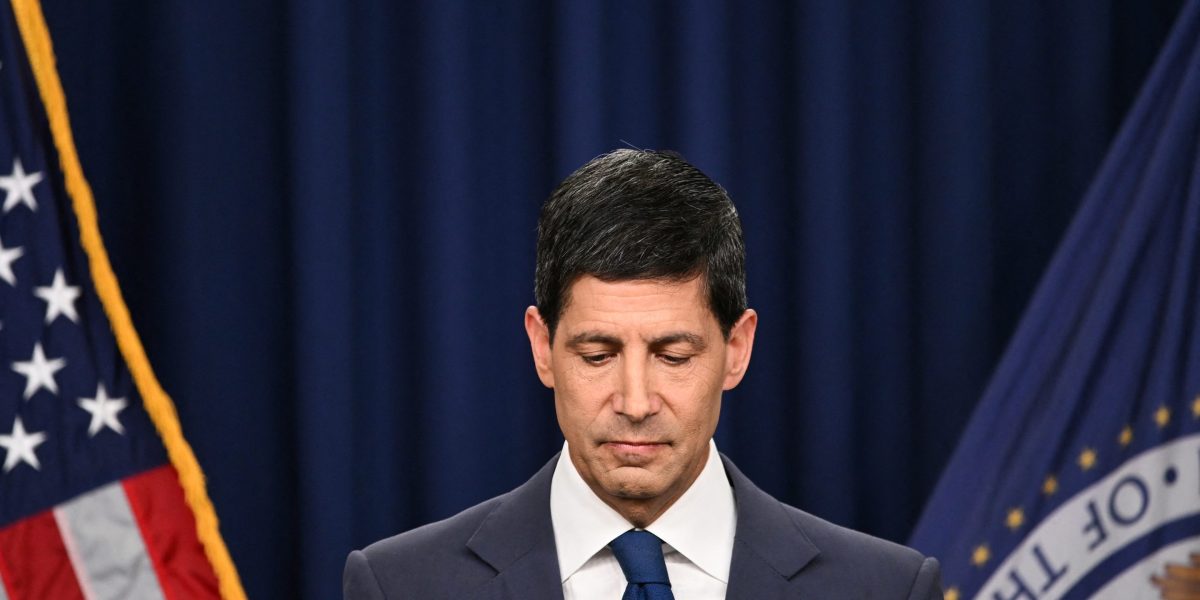
Warsh also remained resolute in the Fed’s commitment to a 2% inflation target, and softer June inflation data bolstered the case for the anticipated hold.
So why the angst?
Bring the action
The discomfort stems, in part, from Warsh’s post-FOMC conference remarks, in which he indicated that patience with above-target inflation is wearing thin, while also suggesting that tightening of financial conditions was already underway, courtesy of rising yields on long-dated bonds.
“Markets are now questioning the Fed’s willingness to follow through on market pricing of hikes,” Alex Wolf, global head of macro and fixed income strategy at J.P. Morgan Private Bank, tells Fortune. “The perception … of the market doing the work for the Fed in terms of tightening financial conditions leaves a little bit of doubt around on the Fed’s willingness to then follow through on markets pricing hikes.”
The market is also being asked to digest meaningful shifts in Fed policy—the crown jewel of U.S. financial institutions—Wolf highlights: “Some doubts [are] creeping in because we have a new Fed chairman, we have many new structures in terms of the committees of the Fed, so you’re dealing with the Fed that the market is still trying to understand.”
Compounding the uncertainty is Warsh’s reluctance to provide “forward guidance” (giving markets a steer on the longer-term path of monetary policy). As a result, analysts and investors have a reduced sense of when this tough talk might translate into a policy response.
Nikolai Roussanov, a professor of finance at the Wharton School of the University of Pennsylvania, told Fortune that the Fed’s promise to hit 2%, while being “vague” on when or how, unsettled markets that have become accustomed to guidance. He said: “That practice has been fairly successful in the last decade and a half, giving markets some certainty [of] what the path of interest rates would be. Not having that obviously [adds] to the uncertainty about inflation and the more uncertainty there is, the more volatility you can expect as the market is digesting the news.
“That’s why we see long-term yields rising quite a bit, because the long-term yields reflect mostly expectations about inflation and uncertainty about inflation— that shows up in the inflation risk premium.”
Further doubt sprung from Warsh’s response to a question about what measure the FOMC was using when discussing the 2% inflation target. The “proper, standard answer” is PCE, the chairman confirmed, referring to the Personal Consumption Expenditures Price Index, which reports changes in the prices of goods and services purchased by consumers in the U.S.
“Who knows, come after next January, what we might say about strategy,” Warsh continued. Suspicion that the measure of inflation may change next year also knocked confidence, as Fed alumni Claudia Sahm wrote yesterday: “Warsh keeps invoking first principles. Here’s one: commit to PCE, stand by it, and deliver on it.”
Donovan highlighted that both the Banks of England and Japan had also held rates steady this week, quipping: “Neither decision prompted a U.S.-style selloff in longer-dated bonds. Bank of England governor Bailey knows how to communicate with markets.”
It could be argued that it’s not the central bank’s job to be palatable to markets: Its legal mandate is maximum employment and inflation of 2% over the long run. Warsh has previously expressed that moving markets with “Fed incantations is tempting, but unhelpful to the Fed’s deliberations, and ultimately, to its mission.”
Henry Wu, co-head of U.S. Bond Strategy at Alpine Macro, suggests Warsh has managed “thread the needle” by “staying tight-lipped on the prospect of a hike cycle while reiterating the Fed’s commitment to the 2% inflation target.”
Wolf believes, either way, “there’s no reason to panic” over the outcome. He highlights that markets are also digesting a number of other factors: Reescalation of the conflict in the Middle East and the resulting oil supply shock, which is driving up prices. AI demand and capex is another. Indeed, huge volumes of corporate debt issuance could “actually suck some capital away from the bond market,” Wolf said, pushing up yields as a result.
“We’re in a somewhat higher-yield environment,” he said. “The 30-year is at cycle highs, the 10-year is still below cycle highs, and so I think seeing long-end rise a bit isn’t a reason for panic. We’re just in simply somewhat of a higher-yield environment.”
A backseat Fed
Warsh has consistently talked about building a Fed that conducts policy without fanfare, saying the central bank “should find new comfort in working without applause and without the audience at the edge of its seats.”
Given the political furor that came with Warsh’s appointment as Trump’s nominee (following an unprecedented campaign by the White House for lower rates) the question of the first few months of his tenure was always going to be credibility.
To answer this, “actions speak louder than words,” Prof. Roussanov suggested. The guiding hand of the bond market has reversed the course of policymakers in the White House since President Trump returned, and it’s “possible” Warsh will feel the need to do the same, the Ivy League academic added.
“Markets don’t capitulate easily, so while it remains to be seen what is it gonna take for Warsh to change his tune, I think he will at some point have to establish credibility either with words or probably with actions,” Prof. Roussanov said. “Maybe there is quite a bit of uncertainty in the markets [about whether] he will even hike in the next meeting, although most people don’t expect him to do so.”
While it seems a communication curtail is only adding to the markets’ consternation at present, Wolf erred away from “overanalyzing” whether the Fed is attempting to recast its role in markets.
The Fed “has been largely consistent and will continue to focus on its dual mandate,” he said. “The bigger questions are how do they interpret the data that we’re trying to interpret, how do they think about forward guidance, how do they think about interpreting inflation data, and all the indicators of predominance, are they losing patience or are they not?”