



Good morning. The English are coming. So are the Dutch, Germans, Danish, Swiss and other Europeans driving growth in foreign direct investment in the U.S. right now. FDI rose by $266 billion to $5.86 trillion at the end of 2025, with Europe accounting for much of the increase and manufacturing remaining the largest target.
We know why it’s happening: Companies want access to the world’s deepest consumer market and pool of capital, along with U.S. talent—and, of course, manufacturing on American soil is a hedge against tariffs. It’s good news for policymakers looking for tangible wins.
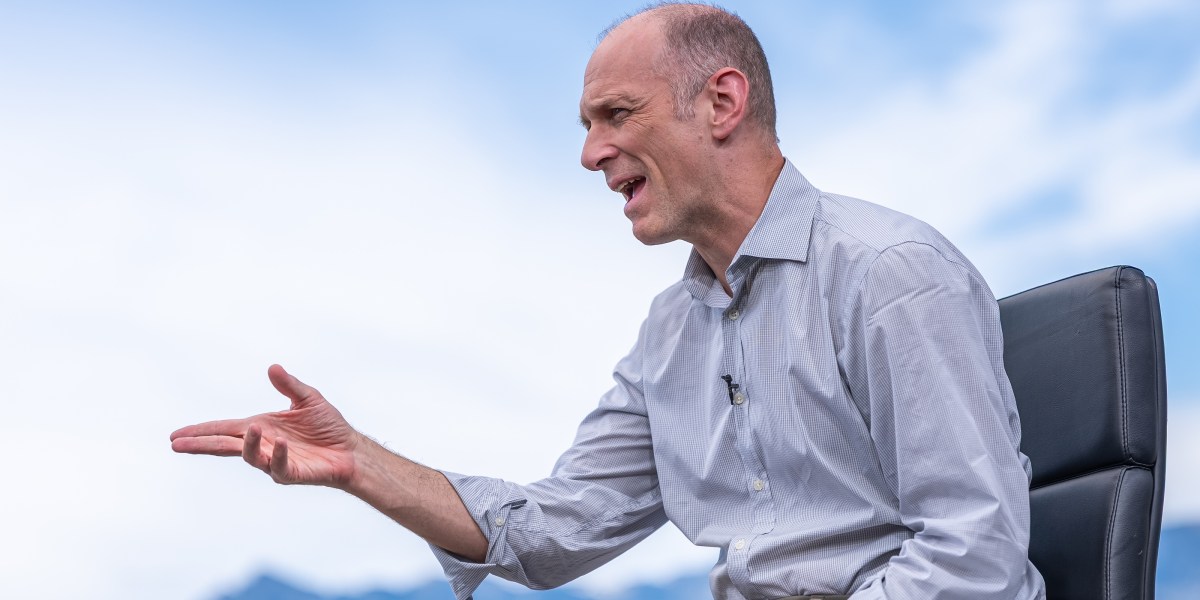
Several European CEOs have told me their goal is to build deeply-rooted American businesses. Galderma is a case in point. The Swiss dermatology company, whose brands range from Cetaphil and Alastin to injectable fillers such as Sculptra and Restylane, generated $5.24 billion in revenue last year. The U.S. accounted for 40% of those sales and is its fastest-growing market. Galderma announced last year that it will invest more than $650 million in U.S. manufacturing through 2030. “If you want to succeed, you have to succeed in the U.S.,” CEO Flemming Ørnskov told me.
Ørnskov’s first priority was access to R&D talent. “The business was in Fort Worth, and I said, ‘If we want to be competing against Sanofi and everybody else, let’s move it to Boston.’” (The French drugmaker Sanofi’s Dupixent competes with Galderma’s Nemluvio in treating skin conditions such as eczema.)
Galderma’s big competitive target is AbbVie-owned Allergan Aesthetics, the U.S. injectables leader that makes Botox and Juvéderm. “Until we have closed the gap to Allergan in market share, I won’t think we’ve succeeded,” said Ørnskov.
That’s why geography matters: For Galderma’s U.S. headquarters, he picked Miami because it serves a fast-growing consumer market and is a gateway to Latin America. He’s also building a presence in Orange County, Calif., because, he says, “the aesthetic business is dependent on expertise and that expertise is so concentrated there.” Fort Worth remains an important distribution hub.
Of course, there are also some challenges for companies seeking a foothold in the U.S., Ørnskov said: “The bar for aesthetic products approval is the highest in the U.S.—by far the highest—and it’s become even tougher … but it’s such an important market that we have to do whatever it takes.”
Contact CEO Daily via Diane Brady at diane.brady@fortune.com
Top leadership news
Do CEOs actually matter?
The Pulitzer Prize-winner author of Guns, Germs, and Steel examines that question in his forthcoming book. In an excerpt from Profits, Prophets, Coaches, and Kings, Jared Diamond explains that CEOs have more discretion in certain industries, such as computers, soap and perfume, games and toys, motion pictures, and clothing for young people. But CEOs have less discretion in public utilities, steel, shipbuilding, railways, and gas transmission.
OpenAI limits access to Astra’s top cyber tools
OpenAI’s Astra is substantially more capable than its current frontier AI model, GPT-5.6 Sol, which itself is highly capable at cyber tasks. But only a handful of partners will get access to its most advanced cybersecurity capabilities as OpenAI works to balance helping companies prevent cyberattacks while not empowering attackers at the same time.
New bill would tax AI tokens to fund jobs
A new House proposal would impose an excise tax on major AI companies and automatically increase the levy if unemployment climbs, funneling the money into creating jobs in areas from housing construction and infrastructure to child and elder care. The bill proposes a bifurcated taxation: either tax the value of the tokens or tax revenue from AI services and certain transactions with affiliated companies, whichever yields the higher sum.
The markets
S&P 500 futures are down 0.25% this morning. The STOXX Europe 600 was down 0.63% in early trading. The U.K.’s FTSE 100 was down 0.52% in early trading. The Nikkei 225 is down 2.85%. South Korea’s KOSPI is down 3.99%. China’s CSI 300 was down 1.38%. Hong Kong’s Hang Seng was down 0.07%. India’s NIFTY 50 was down 0.72%. Bitcoin is down at $77k.
Around the watercooler
The Pentagon is giving 3 million military and civilian workers access to ChatGPT and Grok through a secure AI platform built for ‘warfighter needs’ by Marco Quiroz-Gutierrez
IKEA is spending $1.4 billion to cut prices, joining Walmart and Target in a race to win back shoppers by Mia Osmonbekov
Once a champion for physical media, Sony is now telling PlayStation customers they don’t actually own the digital video games they paid $70 for by Sasha Rogelberg
As Gen Z flocks back to accounting, EY is investing $100 million in bonuses for employees who prove they have human skills by Preston Fore
From a Singapore airport soundtrack to new AI-powered PCs, HP is looking for a new rhythm in Asia by Angelica Ang
CEO Daily is curated and edited by Joseph Abrams, Jason Ma, Claire Zillman, and Lee Clifford.