



As President Trump uses tariffs as a weapon in his quest to even the score on trade with the world, Asia is emerging as target No. 1. And it’s not just because of China.
Asia is home to seven countries that run the biggest trade surpluses with the United States, Mr. Trump’s go-to yardstick. It has some of the biggest exporters of goods that Mr. Trump promised to tax, like Japanese and South Korean cars, Taiwanese chips and Indian drugs. Many of the region’s countries have become top destinations for Chinese goods and investment, evidence that Mr. Trump cites to accuse China of using a backdoor into the U.S. market.
Mr. Trump’s plan to upend the rules of world trade could hurt Asia because the region relies so much on the global economy. But it will also scramble supply chains and trade flows that are already undergoing change as companies have sought alternatives to China as the source of their goods.
The result could be a domino effect of protectionism, with countries turning inward and raising tariffs in response to American trade barriers, experts said. The upheaval could also generate a new cast of regional alliances and ultimately a reduction in the importance of the United States in trade with Asia.
“There is a risk that the U.S. really overplays its leverage,” said Simon Evenett, a professor at IMD Business School in Switzerland. “The U.S. market is still the biggest in the world but proportionally it is lower than it was 20 years ago.”
Since taking office a month ago, Mr. Trump has enacted a 10 percent tariff on imports from China and is poised in coming weeks to add wider import taxes of 25 percent or higher on cars, steel and aluminum, semiconductors, pharmaceuticals and lumber. He is also holding tariffs over Mexico and Canada, both of which have been stitched into American trade for decades by treaties, most recently by one signed by Mr. Trump in his first term.
Most strikingly, Mr. Trump has also promised “reciprocal tariffs,” which typically refer to one-for-one taxes on individual countries. He has said he will also base those tariffs on other factors that he says hurt the United States, such as a country’s currency exchange rates, tax policies and domestic subsidies to business.
The damage, economists warn, would be severe. Tariffs that have been announced on autos, semiconductors, energy and pharmaceuticals account for a quarter of the total exports from Asia, according to Morgan Stanley. Economic growth in the region will slow to 3.7 percent this year from 4 percent last year, according to Moody’s.
The outcome of Mr. Trump’s threat of “reciprocal tariffs” is less certain, because his proposal is potentially so far-reaching and depends on which misdemeanors the administration chooses to hone in on for any particular country.
The United States last year placed China, Japan, South Korea, Singapore, Taiwan and Vietnam on a watch list of countries believed to be manipulating their currencies, typically by keeping them low to bolster their exports at the expense of the United States, which last year imported a record $1.2 trillion more on than it exported.
Indonesia, Japan and Malaysia have tariffs on imported goods in certain sectors that are higher than American tariffs on those same goods. When it comes to Chinese investment in another Asian country, Vietnam sticks out. It has been one of the world’s biggest beneficiaries of factories moving out of China in recent years.
Some countries are responding by trying to soften the blow and, in some cases, lay the groundwork for deals with Washington. Vietnam has floated the possibility of importing more American soybeans and other agricultural products. India has cut its tariffs on bourbon. In South Korea, the government pledged $249.3 billion of trade financing to help its exporters that are hit by tariffs.
In the background is the constant threat of a new tariff from Mr. Trump — keeping governments, companies and experts on edge and potentially paralyzing global commerce. Markets have lurched up and down. Wall Street banks have diverted teams to run different tariff scenarios, spit out figures and quantify future risks. Economists are pulling their hair out — one likened the uncertainty to the early days of the global financial crisis when policymakers would wake to find that Washington had made major decisions like financial bailouts overnight.
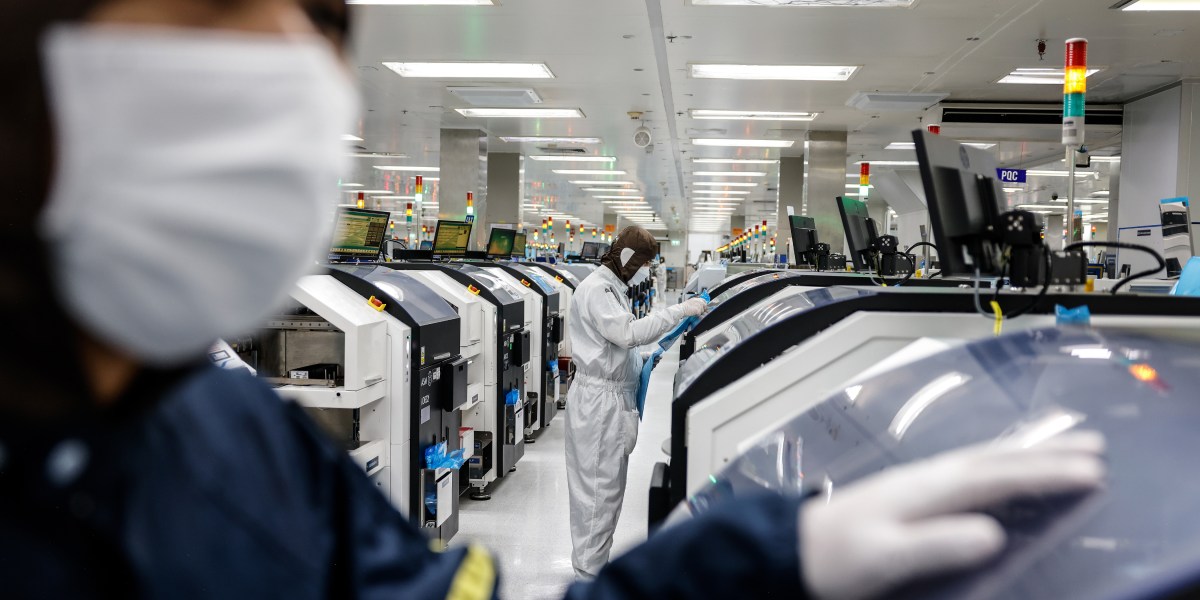
As if these pressures were not enough, many Southeast Asian countries are contending with the fallout of a bruising, yearslong trade war between the United States and China that has shut out much of the U.S. market for Chinese goods, resulting in Chinese goods flooding into other markets. From Thailand to Indonesia, thousands of factories and firms have been put out of business by Chinese competitors. Some countries have responded with tariffs aimed at stemming the flood of goods from China.
“Now we have the biggest rival in our backyard and we have to worry about what are the reciprocal measures that are coming from the United States,” said Priyanka Kishore, an economist in Singapore and the founder of Asia Decoded, a consulting firm.
But the presence of cheap Chinese goods can also help Southeast Asian businesses reduce their costs, while providing an option for cheaper components than are available locally. Along the way, Chinese factories are setting up supply chains, hiring local employees and paying taxes in those countries. The risk is that Chinese companies end up dominating industries like Thailand’s electric vehicle sector.
Countries like Malaysia, Thailand and Vietnam, which have signed trade agreements with multiple countries, might even benefit from having Chinese companies move in to set up manufacturing bases, said Manu Bhaskaran, a partner at Centennial Group, a policy advisory group.
It could risk the ire of Mr. Trump, who has railed against countries that are serving as a backdoor into the United States but these concerns are overblown, he said.
“If it is the case that a Chinese producer brings goods into a warehouse in Vietnam and then changes the labels, that is blatant bypassing of trade rules,” said Mr. Bhaskaran, who is based in Singapore.
On the other hand, he added, a company from China that opens a factory in a country like Vietnam and buys a large chunk of its goods locally is not typically seen as “bypassing tariffs.”
Some clear winners are emerging from the existing realignments of trade.
A recent economic trade zone established between Singapore and Malaysia has attracted both American and Chinese companies that can no longer manufacture in China because of tariffs.
But if other countries choose to turn inward as Mr. Trump is doing with the United States, throwing up trade barriers and tariffs, things will get more complicated.
“In Asia, we’re seeing supply chains becoming more regional,” said Albert Park, the chief economist for the Asian Development Bank in Manila. “So, if countries in the region stay open to trade and investment amongst themselves, then that’s a measure of safety or protection.”
These countries are growing the fastest and account for a much larger share of the global economy than before, he added. “You may just see more focus on investments catering to those markets, because they’re more stable.”
River Akira Davis contributed reporting from Tokyo.