

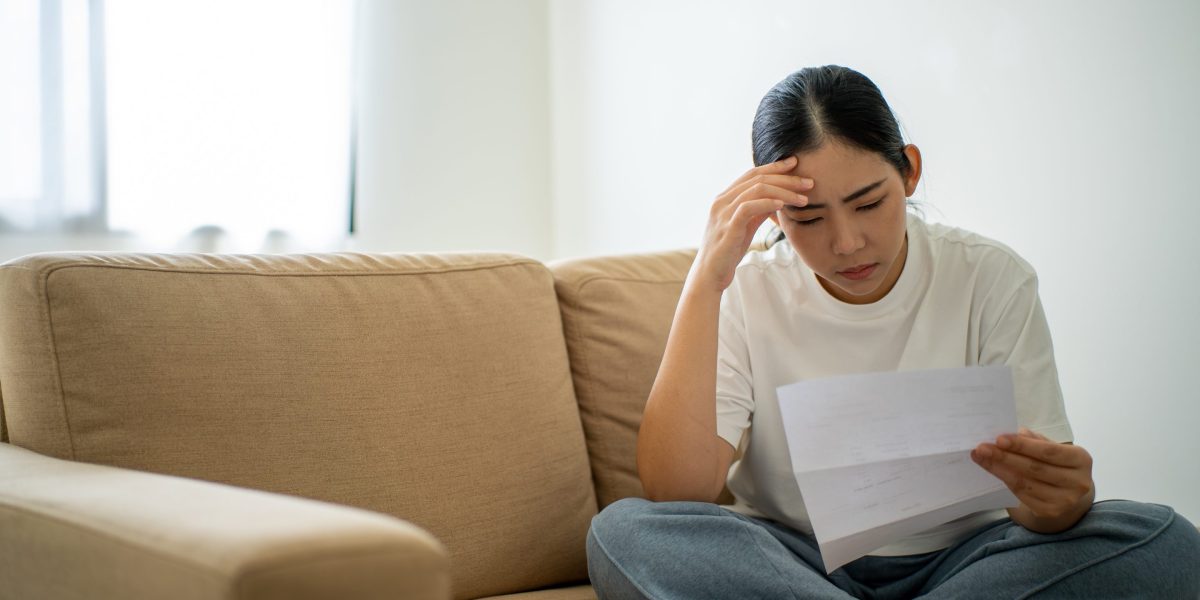




This time of year, everyone asks what you like least about your life, but they phrase it as, “What’s your New Year’s resolution?”
My biggest regret of 2023 was my relationship to my smartphone, or my “tech appendage” as I’ve named it in my iPhone settings. My Apple Screen Time reports regularly clocked in at more than five hours a day.
That’s only an hour more than the average American, but I still found it staggering to think that I spent the equivalent of January, February and half of March looking at that tiny screen (April too, if we only count waking hours).
Sure, some (much?) of that time was gainfully spent on activities that enrich my life or are unavoidable: work, family text threads, reading the news and keeping up with far-flung friends. But I reached for the device more than 100 times each day according to my report. And that grasping was increasingly accompanied by the kind of queasy regret that I associate with unhealthy behavior — that feeling I get after I drink too many glasses of wine, finish the whole bag of sour gummies or stay at the poker table when I’m on tilt.
So this December, I made a radical change. I ditched my $1,300 iPhone 15 for a $108 Orbic Journey — a flip phone. It makes phone calls and texts and that was about it. It didn’t even have Snake on it.
It may seem strange to go retro in the age of ChatGPT, artificial intelligence-powered personal stylists and Neuralink brain implants. But with advanced technology poised to embed itself more deeply in my life (not my brain, though — please, never my actual brain), it seemed a perfect time to correct course with the existing tech that already felt out of my control.
The More Boring, the Better
Making the switch was neither easy nor fast. The decision to “upgrade” to the Journey was apparently so preposterous that my carrier wouldn’t allow me to do it over the phone. I had to go to the store.
My 7-year-old stared in disbelief at the technological relic on display beside a collection of sleeker devices with touch screens. “That’s the phone you want? Are you joking?” she asked, rubbing her fingers over the Orbic Journey’s plastic keys.
It wasn’t my first choice. The Journey has been panned by “dumbphone” connoisseurs. Not only is the battery life laughably short, it loses service when it’s on the move and has to be rebooted to reconnect. But it was the only so-called minimalist phone that my low-budget carrier supported. (Ask your own carrier about what models it will support if you embark on a similar journey.)
There are superior options with reliable service available, and some even have mapping capabilities, music players and voice to text. The minimalist market has expanded in recent years, said Jose Briones, who created a “dumbphone finder” to help people choose from 98 models he has tried. (The Journey did not make the list.)
“People are digitally fatigued after the pandemic, after having to be online all the time,” said Mr. Briones, 28, who is still online enough to manage the Dumbphone subreddit and regularly post reviews of the devices on YouTube.
Mr. Briones still uses a smartphone during work hours, but at night, on weekends and during vacations, he switches to a $299 Light Phone II.
That device was “designed to be used as little as possible” by two founders put off by tech developers who measure success by how many hours users spend glued to their apps. The credit card-size phone can text, make calls, keep a calendar, play music and podcasts, but doesn’t do much more than that.
Both the Light Phone and Mr. Briones’s smartphone, the $480 Hisense A9, have e-ink screens, like a Kindle’s.
“I have found personally that the more boring the screen,” Mr. Briones said, “the easier it is to not be addicted to it.”
(Research bears that out. Simply switching a smartphone to grayscale mode helped people reduce their screen time by 18 percent in one study.)
The Journey’s level of boringness was reassuring. Its main screen was tiny and dull; a smaller one on the outside displayed the time. When I got it home, I had trouble switching my service from the iPhone’s eSIM to the flip phone’s physical one. But soon, I was slowly typing out texts and emoticons using just 9 keys. :-/
Texting anything longer than two sentences involved an excruciating amount of button pushing, so I started to call people instead. This was a problem because most people don’t want their phone to function as a phone.
On my first afternoon, I needed to ask a parent friend for a complicated logistical favor, so I called her and explained the situation to her voice mail. I didn’t hear back and realized why when I opened my personal MacBook that evening. She had texted me, but Apple had routed it to my iMessages rather than my phone. (Clawing back my communications from Apple required signing out of FaceTime on every one of its devices.)
At least she had listened to my voice mail. Others I left were never acknowledged. It was nearly as reliable a method of communication as putting a message in a bottle and throwing it out to sea.
When friends and family did pick up the phone, the conversations went far deeper than a text exchange would have. I had a heart-to-heart with a college friend one morning while walking my dog. She sent me a lengthy text afterward thanking me for some advice I had given her.
I replied with a simple <3. On a dumbphone, your emotions are all straightforward — no complicated emoji shrimp-meets-smirk-meets-crown to decipher.
Flip Phone February?
Colleagues, friends, and loved ones who saw the device in my hand or noticed my text bubbles go green were equal parts skeptical and envious. “I wish I could do that,” was a refrain I heard so often that I now think Dry January should be followed by Flip Phone February.
My black clamshell of a phone had the effect of a clerical collar, inducing people to confess their screen time sins to me. They hated that they looked at their phone so much around their children, that they watched TikTok at night instead of sleeping, that they looked at it while they were driving, that they started and ended their days with it.
In a 2021 Pew Research survey, 31 percent of adults reported being “almost constantly online” — a feat possible only because of the existence of the smartphone.
This was the most striking aspect of switching to the flip. It meant the digital universe and its infinite pleasures, efficiencies and annoyances were confined to my computer. That was the source of people’s skepticism: They thought I wouldn’t be able to function without Uber, not to mention the world’s knowledge, at my beck and call. (I grew up in the ’90s. It wasn’t that bad. ¯_(ツ)_/¯)
“Do you feel less well-informed?” one colleague asked.
Not really. Information made its way to me, just slightly less instantly. My computer still offered news sites, newsletters and social media rubbernecking.
True, being deprived of the smartphone and its apps was sometimes highly inconvenient:
-
I’ve got an electric vehicle, and upon pulling into a public charger, low on miles, realized that I could not log into the charger without a smartphone app.
-
Planning ahead was a necessity without Google Maps because I typically use it to get anywhere more than 15 minutes away. I had to look up routes in advance and memorize the directions, reinvigorating a navigational part of my brain that had long been neglected.
-
I received a robot vacuum for Christmas … which could only be set up with an iPhone app.
-
Midway through the month, I got an “alert” email from my bank: I’d overdrawn my checking account. I usually monitor my balance on the bank’s smartphone app, and move money from a high-yield savings account when it’s getting low. I’d forgotten about this, and had also been procrastinating on a trip to the bank to deposit a paper check — something I usually do by snapping a photo of it in the mobile app. Whoops!
-
Many of my online accounts, including the New York Times one that allows me to sign into its content management system to draft stories, require two-factor authentication via a smartphone app. Since you are reading this story, I clearly cheated on this one by turning on my smartphone and using it on Wi-Fi to get the code I needed.
Despite these challenges, I survived, even thrived during the month. It was a relief to unplug my brain from the internet on a regular basis and for hours at a time. I read four books. I did a very cool, “magic” jigsaw puzzle. I went on long runs with my husband, during which we talked, rather than retreating into separate audio universes with AirPods. I felt that I had more time, and more control over what to do with it.
After about two weeks, I noticed I’d lost my “thumb twitch” — a physical urge to check my phone in the morning, at red lights, waiting for an elevator or at any other moment when my mind had a brief opportunity to wander.
“Your face looks less stressed,” my husband observed, when I asked him if he’d noticed any changes in me.
I struggle with middle of the night wake-ups. The night before the switch to the flip phone, I woke up at 1 a.m. and reached for my iPhone. I was then up until 4 a.m. holiday shopping and reading a long yarn about the mysterious deaths of two mountaineers in 1973.
But the Journey held no midnight enticements and my sleep improved dramatically. I still woke up but regularly fell back asleep within a few minutes.
“Our health is competing with many of these services and companies that are vying for our time and our energy and our attention,” said Matthew Buman, a professor of movement sciences at Arizona State University.
Dr. Buman just completed a study funded by the National Institutes of Health into strategies to get people off screens and moving more, from motivational messages when they’ve been on the screen too long (“You’re close to your goal. You can do this!”) to awarding screen time based on hitting exercise goals.
He hopes that the smartphone giants Apple and Google will make their screen time and well-being apps more effective by incorporating strategies that are proved to work. Dr. Buman’s program helped reduce the screen time of the 110 people in the two-year study, but he’s still assessing the findings to figure out which strategies were the most effective.
I told Dr. Buman about my own strategy — the flip phone. He said it probably made my mind feel more free and feel as if I had more time (both true), but that “in our society, it’s hard to sustain that in the long term.”
Dr. Buman, meet Logan Lane, 19. She first got an iPhone when she was 11, but came to hate how it made her feel so she switched to a flip phone. In 2021, when she was in high school in Brooklyn, she founded the Luddite Club for fellow students who wanted to distance themselves from technology and social media. Now a freshman at Oberlin College in Ohio, she is still a proud owner of a TCL FLIP. She told me that she hoped to remain smartphone-free for the rest of her life and to one day be a “mom with a flip phone.”
Breaking Bad Habits
I asked my 7-year-old what she thought of this “flip phone mom.”
“I like it better. You don’t look at your phone as much and you spend more time playing with me,” she said, making me feel both wonderful and terrible.
The part of my brain that wanted to Instagram every cute moment with my daughters withered away over the course of the month. I could just enjoy those moments rather than trying to capture them for others. I did take a handful of low-resolution, often-blurry photos with the Journey’s subpar camera. In this way, it reminded me of my own childhood. I have four good photos from Christmas this year rather than 100 or so.
My social circle shrank for the month. I didn’t send a blast of “Happy New Year” texts (too hard via flip) and I disappeared from Instagram (causing one friend to send me an “are you OK?” message). You might think I would have FOMO, but I didn’t — maybe because all the interactions I was having felt richer.
As much as I loved my flip phone life and the mental reset it provided, I think I might get fired if I failed to respond in a timely manner to Slack messages and emails as often as I did in the month. (Editor’s note: This is unfounded projection, clearly masking a deep and uncontrollable desire to return to the smartphone.) So I do plan to return to my iPhone in 2024, but in grayscale and with more mindfulness about how I use it.
What doesn’t help people control their screen time is simply keeping track of it, Laura Zimmermann, an assistant professor at IE Business School in Madrid, told me. She does research on consumer technology interaction and has been studying Google’s and Apple’s tools since they came out five years ago. Beyond tracking, the tools allow users to set time limits on particular apps, but these limits are easily overridden.
So much of our smartphone use is mindless, she said. We open the phone to do one thing, and then wind up checking five apps in a loop — and then do it all again a few minutes later.
“You really want to tackle the habit formation process,” she said.
With that in mind, I created a designated spot for my phone at home — a little coffee table with a plant and a charger. I’ll keep it there when I’m not working, so that it’s not on my person all the time and I can’t thoughtlessly paw at it. That’s where it will live at night, too, so it’s not by my bedside disrupting my sleep. I hope the sense of well-being this brings suffices as an enforcement mechanism.
Some tech critics, however, are skeptical that individual strategies are the way forward.
“More and more people are starting to see that these platforms, these products are intentionally designed to be addictive,” said Camille Carlton, a policy manager at the Center for Humane Technology, a nonprofit in California founded by former tech employees to raise awareness about the negative effects of the kinds of products they worked on.
Ms. Carlton compared smartphones and social media apps to junk food and tobacco, and suggested that lawmakers should regulate the design of these products to protect our health. Britain’s rules for tech products aimed at children, discouraging the use of infinite scroll, autoplay and addictive design features such as Snapchat streaks, were “fantastic,” she said. (Similar laws in the United States have been challenged by tech companies as unconstitutional.)
For now, though, it’s up to us.
And if you decide to do a February Flip Phone detox, I’d love to hear about it: [email protected]. 🙂
Audio produced by Tally Abecassis.


