


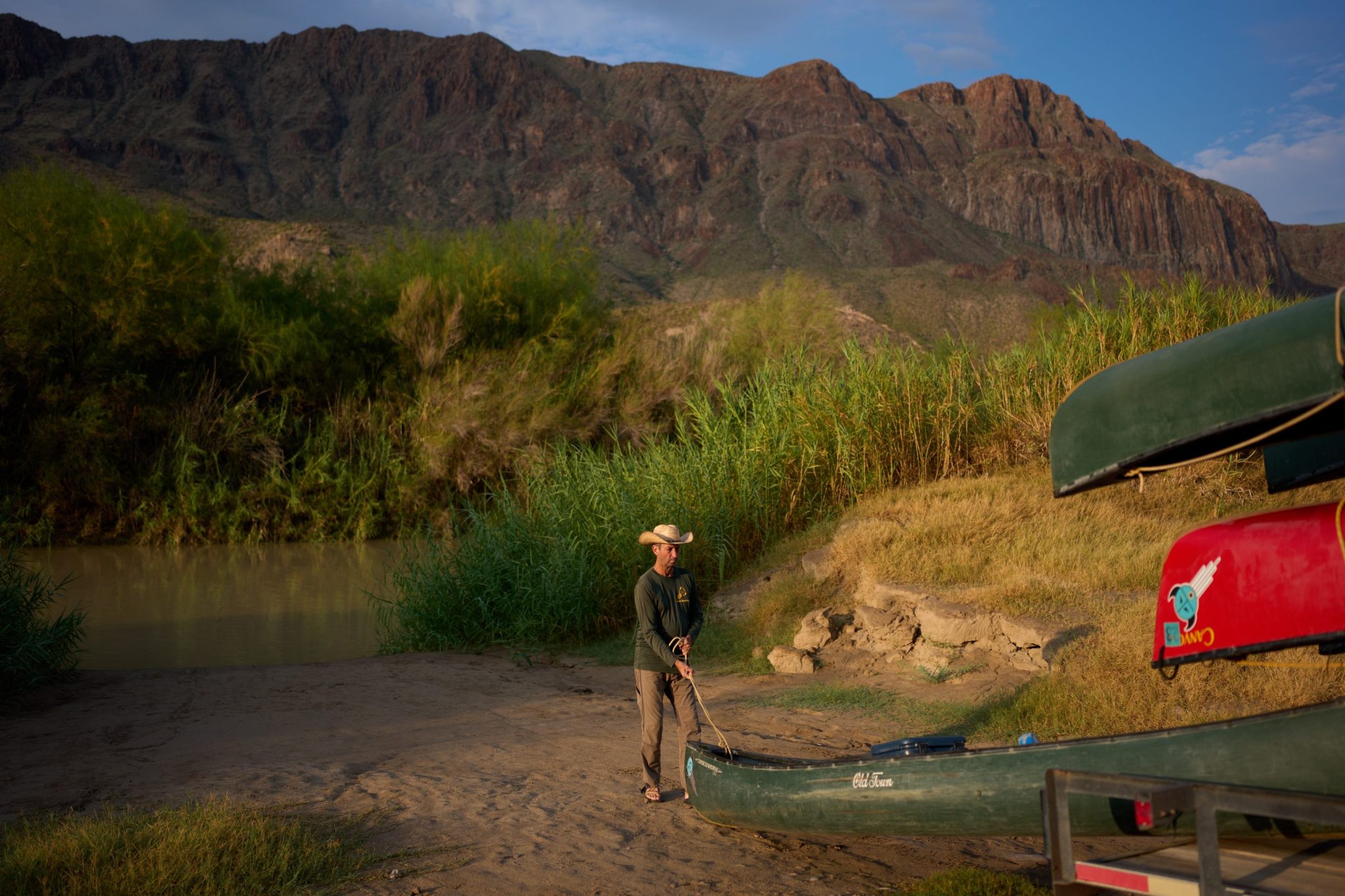
The message from the Trump administration has been clear: It is moving ahead with a $46 billion border wall project stretching from the Pacific Ocean to the Gulf of Mexico.
But in Texas’ Big Bend region, the administration has run up against intense opposition from landowners, many of whom are unwilling to cede parts of their property for what they see as a waste of taxpayer dollars.
That resistance is complicating President Donald Trump’s signature infrastructure project in a fight that has become a test of just how far the administration will go to fulfill its vision of a fortified southern border.
The administration has committed billions of dollars and waived environmental and other protections to plow ahead with the project despite the region’s historically low illegal crossings, its formidable natural barriers and a surge of bipartisan opposition that has scrambled traditional border politics.
The federal government has sweeping authority to force the project through. But a judge has now paused construction across the region, giving a major boost to landowners who have sought to impede the wall by refusing to cooperate with government surveyors, protesting at county meetings and gearing up for court battles.
“Landowner resistance has slowed this project to a crawl,” said David Keller, a landowner suing to stop the Big Bend border plans. The administration, he added, was “woefully unprepared for the hornet’s nest they stirred up.”
Trump has long pledged to build the border wall
Building a wall along the U.S.-Mexico border has long been a key campaign promise for Trump. And the administration pushed ahead with it after Republicans last year approved $46 billion for the border wall as part of a sweeping immigration enforcement package.
Although illegal crossings have plummeted under Trump, the administration says walls, vehicle barriers, surveillance technology and patrol roads are needed to keep them low.
Customs and Border Protection says it’s building an average of about 12 miles or 20 kilometers of barrier a week and had recently hit a milestone of more than 200 miles (320 km) of new walls built under the second Trump administration.
In Big Bend, where construction began in September, the administration plans to spend $7.5 billion to fortify the border along a region stretching more than 500 miles (800 km).
In August, the Border Patrol arrested 8,870 people along the southern border. In Big Bend, which makes up roughly one quarter of the entire U.S.-Mexico border, it arrested 161.
“The American people have already seen the consequences of an unprotected border,” said CBP Commissioner Rodney Scott after a lawsuit filed by landowners against the Big Bend project. “We cannot allow any region — including Big Bend — to be exploited again.”
Landowners gird for court battles
Unlike in other border areas, much of the land in Texas is privately or state owned.
The government must acquire authorization from owners to survey and build and if they refuse, can take them to court. The process by which the government takes someone’s property for public use in exchange for compensation is known as eminent domain and courts generally defer to the government in these cases.
That hasn’t stopped Dianna and Dan Burbach.
The Burbachs began receiving paperwork in July seeking permission to survey their property, along with a map showing where the project would run behind their house. An August letter said the government had an “immediate need” to enter and warned that it could go to court within 90 days.
Dianna, 63, and her husband, 79, arrived 25 years ago and raised four children in their orange adobe house on property stretching to the Rio Grande. Now retired, they worry construction could worsen flooding and leave 15 acres (6 hectares) of their land behind the wall.
“We’re going to let them take us to court, do eminent domain,” Dianna said. “We’ll fight it that way.”
A Justice Department official said CBP has reached agreements with dozens of Big Bend landowners but that the administration has hired eminent domain attorneys in Texas in anticipation of the disputes. Across the southern border, about 70 such cases have been referred to the department during Trump’s second term, and 50 have already been resolved — none required going to trial, said the official, speaking on condition of anonymity under ground rules set by the government.
The No Big Bend Wall Coalition, which says its network includes more than 200 landowners, recently sued to block construction. The plaintiffs argue that Homeland Security is misusing its authority in a region with little illegal cross-border activity.
Lawsuits aiming to stop or slow the border wall projects have largely been unsuccessful. But in a major win for opponents, a federal judge temporarily barred wall construction in the Big Bend area. Plaintiffs argued the administration had overstepped its congressional authority by issuing sweeping waivers to bypass environmental and other regulations.
Keller said the judge’s ruling was “unqualified good news” but uncertainty over its future meant the landowners would continue their fight.
It’s not immediately clear how long the judge’s order will slow the government, which late Thursday asked the judge to put aside her order while they appeal.
The administration also argued in the court filing that leaving segments along the border without adequate border security infrastructure could lead to a funnel effect where illegal immigration or smuggling would flow to the area that was least fortified — specifically the Big Bend region.
Protesting contractors and lobbying local officials
Other opponents are pressing local governments not to assist contractors. Charlie Angell, a tourism operator notified that the government wanted access to his land for the border project, and his partner, Bibiana Gutierrez, attend county meetings throughout the region.
They and other land and business owners have staged protests, patrolled areas where contractors are working to look for possible violations, and hung signs telling contractors they’re not welcome at local hotels or restaurants.
In Terrell County, residents unsuccessfully urged officials not to lease airport land to a barrier contractor. In Jeff Davis County, a proposed agreement allowing another contractor to use a county road has so far not been approved.
The financial incentives for some of these cash-starved counties are clear and some local officials have argued they have little leverage on a federal plan.
“We’re not in control of the border wall. We’re not,” Terrell County Judge Dale Lynn Carruthers told a room crowded with people who had come to speak out against the airport lease. She said if they didn’t lease the land, the contractor would just buy it elsewhere. “We’re just a little old Terrell County.”
But Angell and Gutierrez argue that the local opposition has more strength than some might realize.
“If we had rolled over, the wall would be up,” Gutierrez said.
CBP said it continues seeking voluntary access agreements while completing the project’s design but will refer disputes to the Justice Department when necessary. Landowners will be compensated regardless of how access is obtained, the agency said.
The opposition has bipartisan support
After a yearslong surge in crossings at the southern frontier, border security and immigration were key reasons Republicans voted for Trump and his approval ratings on those issues are among his strongest.
But with illegal crossings plummeting, even some Republicans who voted for Trump on the issue of border security have questioned the need for the multi-billion dollar infrastructure through Big Bend.
Local sheriffs opposed the project early, and bulldozing in Big Bend National Park prompted Republican Sen. John Cornyn to press Homeland Security about Texans’ concerns.
Laura Allen, a Republican rancher who voted for Trump twice, is now receiving notices that a vehicle barrier will cross the property where her family raises sheep and goats. She credits Trump with shutting down the border but says spending billions on barriers in Big Bend is unnecessary.
“I didn’t vote for a wall,” she said. “I wanted our border secured. He accomplished that.”
Terrell County’s Republican sheriff, Thad Cleveland, who spent 26 years in the Border Patrol, is among those speaking out against the project in Big Bend. He said that in the rugged county he polices, drones and surveillance towers make more sense than a wall to find and stop illegal border crossers.
“We have the advantage of time and distance out here,” he said.
The land itself is a natural deterrent, critics say
In some areas, the river is flanked on both sides by steep limestone cliffs, and up and down the region, people have to trek through inhospitable desert terrain to get to the nearest paved road or pass through Border Patrol checkpoints.
Reaching Gary Grabowske’s land requires grinding along rocky mountain trails and through gullies carved by flash floods. From the top of a 450-foot cliff (137 meters), the Rio Grande is visible far below. There is no electricity, running water or internet and, Grabowske argues, no plausible route for a vehicle entering from Mexico.
“You can’t take a dirt bike to the bottom,” said Grabowske, gesturing to the canyon below. “You can’t take a mule to the bottom. You’re scrambling down there, hand over fist.” He added: “There’s no vehicle in the world that could cross any of this.”
Opponents say the fight reaches beyond whether a wall makes sense in Big Bend. They see it as a test of how far the federal government can go when landowners stand in the way of one of its priorities.
“We’re a pretty tough bunch,” said Allen. “But if we’re going to be run over and have our land taken by our own government, what makes anybody else in this United States think that they’re exempt?”
Ranchers try to resist
The Zuberbueler ranch in Val Verde County was founded in 1898. Brothers Bill and Patrick own and lease thousands of acres of the craggy land stretching to the river. Their Angora goats and Rambouillet sheep roam over the land, stopping at a network of water troughs.
Bill remembers when, back in February, he first got the letter giving him five days to respond to a request to access his property for construction and raising the possibility of the government using eminent domain. He worries about how the construction will affect his livestock, especially their water supply. And while his animals could pass through the vehicle barriers, the cowboys herding them could not.
“There’s not a lot of grass out here, but every square foot is important to my bottom line,” said Bill.
They have so far refused to allow anyone onto their land to survey or build. They feel the weight of their family’s legacy and the sacrifices previous generations made to build the ranch up.
“Regardless of what happens, we have to say we tried,” said Patrick.
__
Associated Press writer Alanna Durkin Richer contributed from Washington.
This story was originally featured on Fortune.com