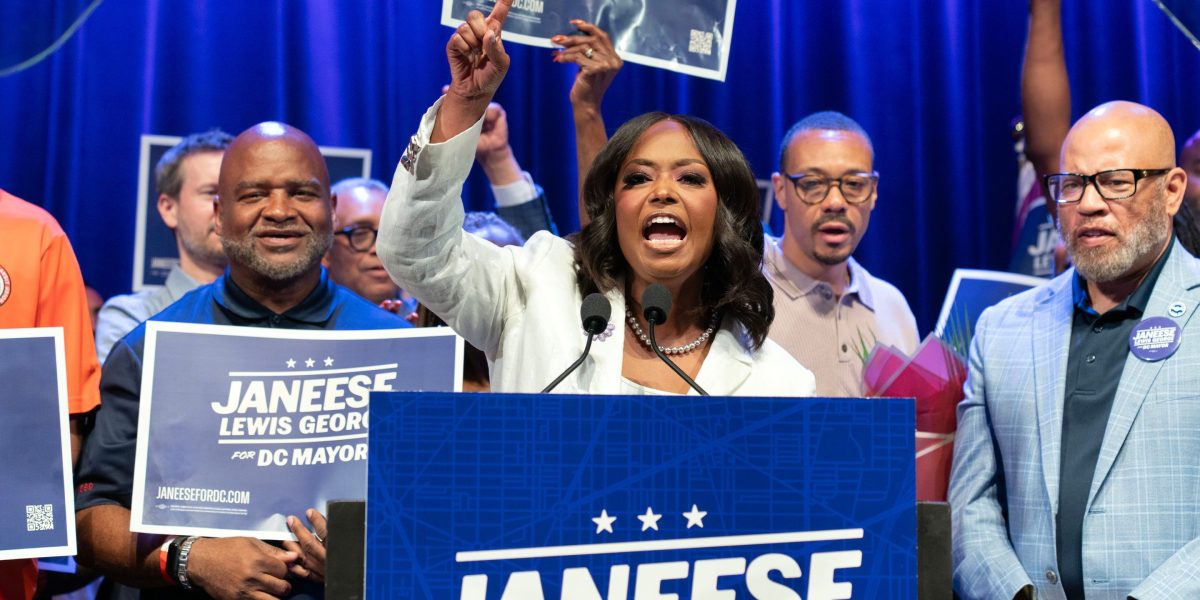




Zohran Mamdani’s populist victory in New York’s mayoral primary is a local tremor signaling a national earthquake. While pundits dissect the political implications, it’s important not to miss the signs of a deeper societal dynamic, one articulated with stark clarity by Mamdani’s fellow democratic socialist Bernie Sanders: “Take on the billionaire class. Take on the oligarchy. That’s how you win elections.”
This sentiment is not confined to the left, and the strategy doesn’t work only in New York. Populists on the right and in blue but smaller cities echo a similar formula, railing against a “cosmopolitan elite” and the “party of Davos,” who they argue have globalized the economy to their own benefit while leaving communities behind.
If Americans are divided on social issues, they are increasingly united in their antipathy toward those at the very top of an unequal economy rivaling the Gilded Age. This is the combustible force fueling upsets of establishment leaders on both sides of the aisle. The revolting social media cheers following the murder of United Healthcare’s CEO on a Manhattan street, as well as the success of anti-elite entertainment like HBO’s Mountainhead, are cultural signposts of this profound dissatisfaction.
Looking at the data
The data confirms the imbalance the public is rebelling against. The wealthiest 10% of American households now own roughly 90% of all business equity, while half of all households own virtually none. This isn’t a static picture; it’s a widening chasm. From the late 1980s to the present, the wealthiest 1% of the population have seen their share of the nation’s wealth climb to 26%. Conversely, the bottom 80% have experienced a decline, with their wealth share dropping from 40% to a mere 30% during the same period. We can also see this playing out with the number of ultra-high-net-worth (UHNW) individuals in the U.S. swelling from just over 101,000 in 2020 to nearly 148,000 in 2023, and their collective wealth skyrocketing from $11.3 trillion to $17.1 trillion.
Yet, as this wealth has concentrated, philanthropic giving from the growing group of UHNW individuals and families has remained flat at approximately $85 billion annually. This means their rate of giving has actually declined, from about 0.75% of their wealth in 2020 to just 0.5% in 2022. This vast, under-tapped reservoir of private capital could be a powerful engine for change.
The stakes are frightening. Historian Walter Scheidel, in his seminal work The Great Leveler, delivers a grim warning from the past. Throughout history, he finds, the immense gaps between the rich and everyone else have rarely been narrowed by peaceful reform. Instead, the great compressions of inequality have been driven by what Scheidel calls the “Four Horsemen”: mass-mobilization warfare, transformative revolution, state collapse, and catastrophic pandemics. If we fail to proactively build a more equitable distribution of economic gains, history teaches that violent shocks may do it for us.
Action is essential
This is where a new form of voluntary action by the ultra-wealthy becomes essential. Crucially, some of the people best positioned to chart this new path are the very ones who have reached the pinnacle of the current system. In the U.S., the vast majority—nearly 80%—of individuals with a net worth over $30 million are self-made, having built their fortunes in their own lifetimes, very often through business ownership. These are entrepreneurs who understand risk, see opportunity, and know how to build things that scale. This uniquely American entrepreneurial class has accumulated not only immense financial wealth but also substantial social, political, and intellectual capital.
Meaningful giving involves mobilizing all these forms of abundance in service of others. It means deploying networks, expertise, and influence right alongside financial investments. For an entrepreneur, this is a natural extension of their life’s work—drawing on the strategic, risk-aware mindset that built a company to now tackle an urgent societal challenge. This is the heart of “catalytic philanthropy,” an approach that brings all of a person’s assets to bear and, in doing so, creates both profound social impact and a deep sense of personal fulfillment. Three concrete opportunities to deploy capital right now show what this looks like in practice:
1. Pre-distributing the Gains of Automation. The rise of artificial intelligence is not a distant threat; it’s a present reality that could negatively impact over 110 million U.S. workers, or two-thirds of the workforce, while concentrating economic gains even more narrowly. A recent study by Telescope and Gallup found that while 99% of Americans have used an AI-enabled product in the last week, most have a negative view of AI’s potential impact on society, particularly on the availability of good jobs. In response, Telescope, an organization dedicated to ensuring new technology serves everyone, has developed the Telescope Tech Offset Program (TTOP). TTOP is creating a new financial instrument—an “AI Credit”—that allows businesses and government to pool resources and price the risk of tech-driven job transitions. Companies implementing AI that leads to displacement could purchase these credits, which would in turn fund a competitive marketplace of high-quality support services for workers, including retraining, education, and relocation assistance. This market-based mechanism directly answers the public’s call for both business and government to take responsibility for managing AI’s effects. A philanthropic investment in TTOP is a venture-style bet to build entirely new social and financial infrastructure, creating a self-sustaining system to manage one of the most profound economic transformations of our time.
2. De-Risking Social Innovation. Governments spend billions on social services but are often hesitant to fund innovative programs due to the political and budgetary risk of failure. Pay-for-Success (PFS) contracts, or Social Impact Bonds, flip this model by having government pay only for verified successful outcomes. A UHNW individual can catalyze these projects by supporting a proven intermediary organization. For example, Social Finance structured the $12.4 million Massachusetts Pathways to Economic Advancement Project, which funded vocational training and career coaching for over 2,000 English-language learners. The Commonwealth of Massachusetts only paid for the program after an independent evaluation confirmed it led to significant, measurable increases in participant earnings. Philanthropy was essential, providing grants for the complex structuring work and “first-loss” capital that de-risked the investment for institutions like Bank of America. An investor today could provide a grant to Social Finance to cover the feasibility work for a new project, or invest in one of their funds to support a diversified portfolio of these innovative contracts across the country.
3. Democratizing Business Ownership. The coming “Silver Tsunami” will see millions of retiring baby-boomer business owners exit their companies. Many will close or sell to private equity, which can lead to job losses and wealth extraction. In many cases, there is a better way: facilitate the sale of these businesses to their employees. Employee-owned firms are more resilient, and their workers have dramatically higher incomes and household wealth—a potent tool for closing racial and economic wealth gaps. The primary barrier is the lack of flexible financing for these transitions, as employees often can’t make a down payment. Catalytic capital is perfectly suited to fill this gap by investing in nonprofit intermediary funds, like the Employee Ownership Catalyst Fund, that provide the specific loans needed to get these deals done.
The Mamdani victory is the latest alarm sounding for America’s richest and the political establishment they have propped up. The populist anger at a system perceived as rigged is not a passing storm; it is a change in the political climate. For America’s wealthiest citizens, this is a moment of decision. They can be the targets of that anger, or they can become vital partners in building a more equitable and resilient economy. By strategically deploying their personal resources—financial and otherwise—not as simple charity, but as catalytic, market-making investments, they have a profound opportunity to help build a more broadly prosperous American commonwealth, charting a course away from the four horsemen and the grim specter of violence and social disintegration as the Great Leveler.
The opinions expressed in Fortune.com commentary pieces are solely the views of their authors and do not necessarily reflect the opinions and beliefs of Fortune.