



The most important question in business isn’t always “What’s next?” Often, it’s “What won’t change?”
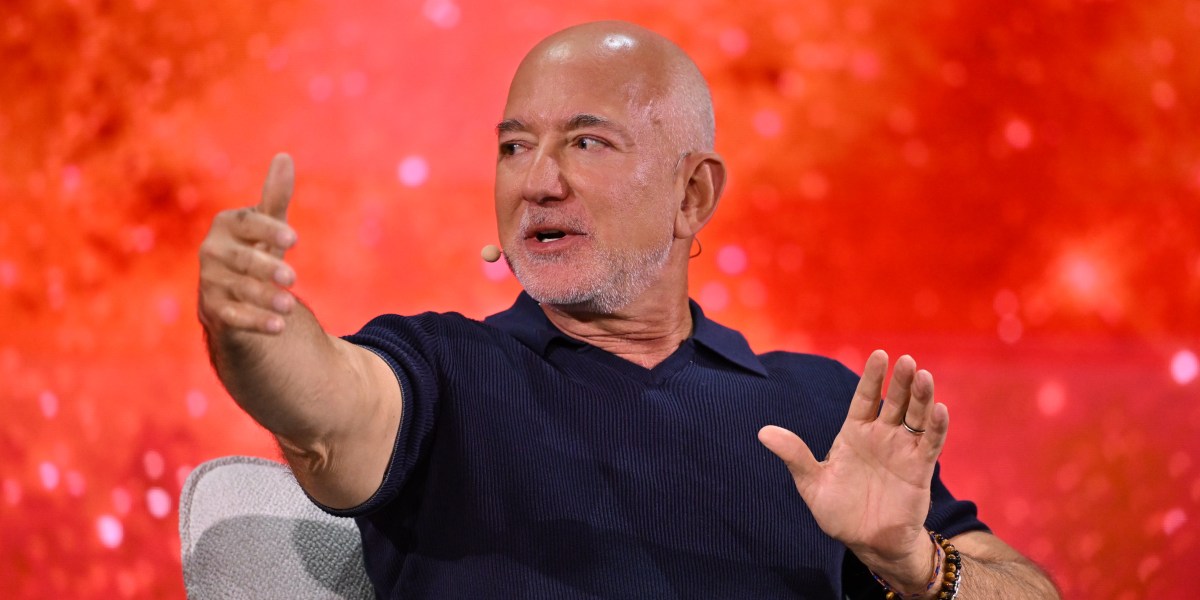
That question sits at the heart of my colleague Kristin Stoller’s profile of Jeff Bezos at a pivotal moment for Amazon. The company, which recently bested Walmart for the No.1 spot on the Fortune 500 and Global 500, is pouring unprecedented sums into artificial intelligence as it races to establish its next engine of growth.
What’s exceedingly clear in Stoller’s profile is one recurring thread running through every chapter of Amazon’s evolution: a commitment to a small set of principles that outlast every new technology cycle.
Across three decades, Amazon has expanded from an online bookstore into a sprawling enterprise spanning retail, cloud computing, entertainment, advertising, healthcare, logistics, and now AI infrastructure. Although the businesses have changed dramatically, the operating philosophy has remained remarkably consistent.
Throughout Stoller’s interview, Bezos returns to the same handful of ideas. Customers will always want lower prices. They will always value faster delivery. They will always appreciate greater selection. Those constants shape every major investment Amazon makes, whether the company is launching Prime, building AWS, or developing custom AI chips.
Many organizations approach innovation as a sequence of strategic pivots. Amazon’s history suggests a different model, wherein the company adds new capabilities while reinforcing a stable foundation. In essence, innovation becomes an extension of its core principles.
That discipline becomes especially important during periods of technological disruption. Artificial intelligence is reshaping nearly every industry, and executives understandably feel pressure to move quickly. At Amazon, Bezos argues that customer needs have always provided the anchor. New technologies, however, expanded the ways those needs can be met.
Of course, every company wants to predict what’s next. It appears Bezos and his successor as CEO, Andy Jassy, have spent a combined three decades asking a different question: What will never change?
That may be the more valuable leadership habit.
Ruth Umoh
ruth.umoh@fortune.com
Smarter in seconds
Management myth. Despite China’s 996 culture, DeepSeek founder Liang Wenfeng says his workers don’t do overtime or even have KPIs: ‘No one manages them’
Billion bound. He was homeless at 16. Now, he sits on the board of David Beckham’s wellness company and his business is about to hit $1 billion in revenue
Off duty. Crumbl CEO says he shuts shop on Sundays and prioritizes game nights with his 7 kids in pursuit of balance: Life can’t be ‘just go, go, go’
Leadership lesson
Amazon founder Jeff Bezos: “If we ever stop obsessing over customers, if we ever stop inventing, if we start making short-term trades, we could probably coast for a while, but we would lose.”
News to know
Iran is using Trump’s latest pullback from military escalation to strengthen its strategic position, experts say. Fortune
SpaceX’s blockbuster IPO is fueling a startup boom in the space economy, with investors pouring record funding into these ventures. Fortune
Karen Carter, Dow’s first woman and Black CEO, is leading a major turnaround that has already delivered the company’s strongest quarterly profit in four years. Fortune
Ikea is retraining thousands of employees for higher-value sales and design roles as chatbots take over routine customer service. Fortune
Nissan’s turnaround effort has become a test of whether a global automaker can survive in an era of tariffs, geopolitical tensions, and regional competition. Fortune
SLB, the $70 billion oilfield services leader, is positioning itself to benefit from AI’s massive energy needs and a resurgence in oil exploration. Fortune
Mayor Mamdani’s city-owned grocery stores could be a counterproductive, business-crushing fix for New York’s high food prices. Fortune