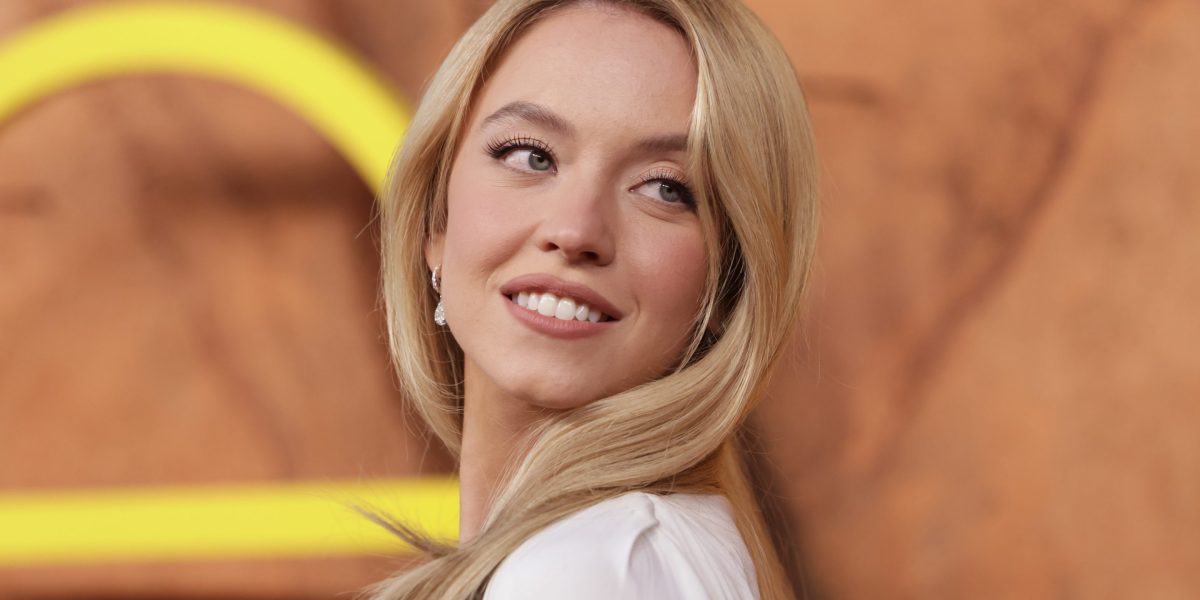





Kalshi is now worth $11 billion, making both its founders billionaires and Luana Lopes Lara the world’s youngest self-made woman billionaire.
Luana Lopes Lara graduated from Massachusetts Institute of Technology with a degree in computer science, spent college summers working for Ray Dalio’s Bridgewater Associates and Ken Griffin’s Citadel and built an $11 billion startup in just six years. Yet the Brazilian native still calls high school the “most intense years of her life”: Her ballet teachers at Bolshoi Theater School in Brazil held lit cigarettes under her thigh while she extended a leg to her ear—it was a test to see how long she could keep that leg up without getting burned. Fellow dancers would hide glass shards in each other’s shoes to get ahead, and the cutthroat program required her to take academic classes from 7 a.m. to noon and ballet classes from 1 p.m. to 9 p.m.
The rigor and intensity of ballet training was just a small part of her grander ambitions: wanting to become the next Steve Jobs. In part inspired by her math teacher mother and electrical engineer father, Lopes Lara would study well into the night for academic competitions, winning gold at the Brazilian Astronomy Olympiad and bronze at the Santa Catarina Mathematics Olympiad. For nine months following high school graduation (in December), she performed as a professional ballerina in Austria before hanging up her pointe shoes to begin her next journey in America.
Now, at age 29, Lopes Lara has just become the youngest self-made woman billionaire on Earth, unseating 31-year-old Scale AI cofounder Lucy Guo who took the title from Taylor Swift in April. She and her cofounder, Tarek Mansour, also 29, both moved into the three comma club after their prediction market firm raised $1 billion at an $11 billion valuation. Crypto-focused venture capital firm Paradigm led the round, announced Tuesday, which also included investors Sequoia Capital, Andreessen Horowitz and Y Combinator among others.
The company—which allows users to bet on the outcome of future events such as elections, sports games and pop culture happenings—was worth $5 billion less than two months ago, after raising $300 million in October. In just six months, its valuation has jumped more than fivefold from $2 billion in June—enough for the young cofounders, who each own an estimated 12% of Kalshi, to be worth some $1.3 billion apiece.
“There’s a lot of other people wanting a piece of this business now that Kalshi has shown how big it is,” says Ali Partovi, CEO of venture fund Neo, which was a seed investor in the firm. Since July, notional trading volume on Kalshi has jumped eightfold, reaching $5.8 billion in November, according to the company. Trades on its chief competitor Polymarket, whose own valuation has shot up to $9 billion, have more than tripled since July to $4.3 billion, according to Dune Analytics.
Lopes Lara and Mansour, who grew up in Lebanon, met at MIT where they were part of the same friend group of international students and took similar classes, both majoring in computer science. Mansour, who lived through the 2007 Lebanon conflict and taught himself English while studying for the SATs, remembers how Lopes Lara would always sit in the front row at lectures. The two became close after he began sitting next to her in class to learn from her and became even closer after both landing internships at Five Rings Capital in New York City in 2018. It was on their walks back home to their intern apartments in the Financial District one night that the idea of a prediction market business clicked. “We saw that most trading happens when people have some view about the future, and then try to find a way to put that in the markets,” Lopes Lara previously told Forbes. Traders and investors would factor in external events—such as the result of an election or the likelihood of a natural disaster—into their investment decisions, she added.
With the conviction that there should be a way to directly trade on the probability of events rather than indirectly trading them through traditional financial markets, they applied to the startup accelerator Y Combinator and got accepted in 2019.
But the legality of prediction markets was unclear, and the cofounders soon faced an uphill battle. Michael Seibel, partner emeritus at Y Combinator, recalls the early days of working with the pair: When they realized they needed federal approval to legally operate prediction markets, they reached out to over 40 law firms for help, but none of them were willing to help because the founders were too young and their company was too small.
“Right out of college, we were taking on an insane amount of risk. It was two years without a single product—nothing launched—and if we didn’t get regulated, the company would just go to zero,” recalls Lopes Lara, who was trying to build the business from London during the pandemic while Mansour was back home in Beirut. (He was there during the city’s deadly port explosion that killed over 200 people, spending weeks working on Kalshi by night and helping clean up his neighborhood and search for survivors by day.)
All it took was one lawyer to say yes to them: Jeff Bandman, who had worked for the CFTC, helped the founders work through the application for federal approval and wrangle with their regulators when they pushed back. And in November 2020, Kalshi received CFTC approval to operate as a designated contract market (DCM), which categorized their prediction markets as a type of derivative known as an events contract.
The approval also set them apart in the competitive landscape. Blockchain-based Polymarket was not federally regulated, and was fined $1.4 million by the CFTC for operating unregistered markets in 2022. All this gave Kalshi an edge—for a while. (Polymarket received approval to launch in the U.S. in September. Its founder Shayne Coplan is one of the youngest billionaires at age 27, thanks to a recent $2 billion investment from New York Stock Exchange parent company.)
Still the regulatory struggle didn’t end there. It was Lopes Lara who came up with the idea to sue the CFTC in late 2023, when the regulators rejected Kalshi’s election contracts ahead of the 2024 U.S. presidential election on the premise that election contracts resembled gambling. “All of the other investors in the company said that that would be a terrible idea,” Partovi recalls. But the duo did so anyway.
In September 2024, the U.S. District Court judge ruled in favor of Kalshi, and the company made history as the first regulated election contracts in the U.S. in over a century. “We really wanted to do things the right way because our vision was to build the biggest financial exchange in the world,” Lopes Lara said. “Doing it legally was something we couldn’t compromise on.” In the lead up to the election, Kalshi’s user count doubled as users bet more than $500 million on either President Trump or Kamala Harris. Its users correctly predicted President Trump’s win a month prior to election night. (Polymarket users bet a total $3.6 billion on the presidential election.)
“There are few better trainings for being told ‘no’ and pushing through anyway than being a professional ballerina—an injury or even a short rest could mean losing your spot,” says a16z partner Alex Immerman. “Luana learned persistence with grace early on…and she’s carried that same calm confidence into building Kalshi.”
Despite initial doubts that it could keep up momentum after the presidential election, Kalshi says trading volume now surpasses $1 billion every week, with more than 90% of its volume driven by sports contracts. In January, Donald Trump Jr. joined Kalshi’s advisory board in January. (Trump Jr. also joined their rival Polymarket’s advisory board in September.)
Kalshi is now integrated with brokerages like Robinhood and Webull, and even onboarded hedge fund Susquehanna International Group to add liquidity to its markets. More recently, Kalshi has inked partnerships with companies from the National Hockey League to online marketplace StockX, and has even made major pushes into crypto by integrating with blockchain platform Solana. The company said the new funding will be used to expand its integration with brokerages and strike new partnerships with news outlets.
Yet it still faces regulatory heat from states that have been taking legal action against Kalshi’s sports contracts, which they argue should be regulated and taxed on the state level. But having seen the company successfully overcome regulatory hurdles that once seemed impossible, Kalshi’s investors remain bullish on the founders’ ability to push through. For Seibel, who’s invested in more than a thousand companies in his career, the current moment is just the start: “I don’t know that we have funded a company that has as much potential impact on the world as this one.”