



Close Menu
Alpha Leaders
  • Home
  • News
  • Leadership
  • Entrepreneurs
  • Business
  • Living
  • Innovation
  • More
    • Money & Finance
    • Web Stories
    • Global
    • Press Release
What's On
Why AI Is Redistributing Power In Healthcare

Why AI Is Redistributing Power In Healthcare

28 May 2026
Wendy’s U.S. President: the CEO burger battles exposed a truth every brand leader needs to hear

Wendy’s U.S. President: the CEO burger battles exposed a truth every brand leader needs to hear

28 May 2026
How AI Has Changed The Way I Think

How AI Has Changed The Way I Think

28 May 2026
Facebook X (Twitter) Instagram
Alpha Leaders
newsletter
  • Home
  • News
  • Leadership
  • Entrepreneurs
  • Business
  • Living
  • Innovation
  • More
    • Money & Finance
    • Web Stories
    • Global
    • Press Release
Alpha Leaders
Home » Meet the world’s youngest self-made billionaire, who skipped finals to make an empire out of teaching AI ‘what only humans know’
News

Meet the world’s youngest self-made billionaire, who skipped finals to make an empire out of teaching AI ‘what only humans know’

Press RoomBy Press Room12 November 20255 Mins Read
Facebook Twitter Copy Link Pinterest LinkedIn Tumblr Email WhatsApp
Meet the world’s youngest self-made billionaire, who skipped finals to make an empire out of teaching AI ‘what only humans know’

In the spring of 2023, while his classmates at Georgetown were cramming for finals, Brendan Foody was busy testing out his new theory of work.

“I knew I wanted to drop out before finals my sophomore year,” he told Fortune. “I just didn’t go to finals.”

By then, Foody had already found something he couldn’t learn in a lecture hall. A few months earlier, at a hackathon in São Paulo, he and his co-founders had stumbled onto a simple but powerful model: match companies with skilled engineers abroad, handle the logistics, and take a small cut of each deal. Their first client agreed to pay $500 a week for a developer; Mercor paid the engineer roughly 70% and kept the rest as a service fee.

What began as a way to connect talent soon evolved into something more ambitious: a marketplace where humans could help train the AI systems that might one day replace them. Mercor now hires professionals—consultants, lawyers, bankers, and doctors—to create “evals” and rubrics that test and refine models’ reasoning.

“Everyone’s been focused on what models can do,” Foody said. “But the real opportunity is teaching them what only humans know—judgment, nuance, and taste.”

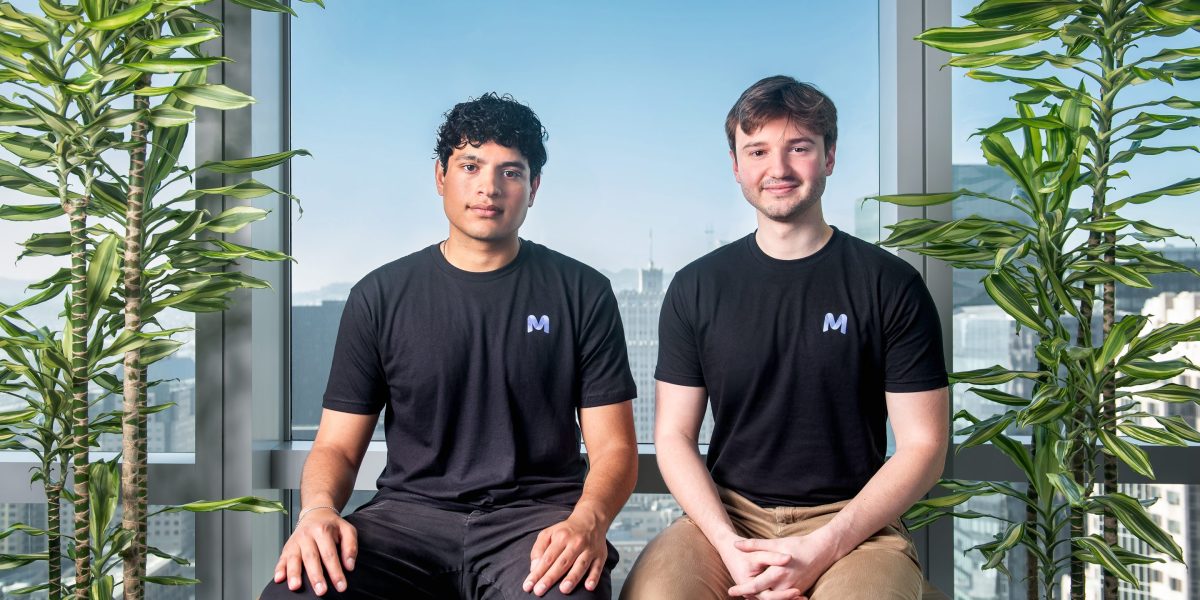
Within nine months, he and his co-founders—high school friends and debate teammates Adarsh Hiremath and Surya Midha—had turned that fledgling idea into a company with a $1 million revenue run rate. The trio’s early success was less a fluke than a proof of concept: that the same structured reasoning they once practiced on the debate circuit could be codified to teach machines how to think.

Two years later, Mercor has become a $10 billion company, turning the trio into the world’s youngest self-made billionaires. The product of that São Paulo experiment had transformed into one of the fastest-scaling startups of the AI era, attracting major investors who view it as a linchpin in the future of human-in-the-loop automation.

To Foody, the leap from college dropout to billionaire founder was rational.

“When I was in college, work was something I had to be disciplined to do,” he said. “When I started Mercor, it became something I couldn’t stop thinking about.”

Foody still hasn’t taken a day off in three years. He says even when he’s at the dinner table with his parents, he thinks about work, which, to him, doesn’t feel like work. 

“People burn out when they work hard on things that don’t feel compounding,” he explained. “I see the ROI of my time every day.”

That mindset has become the philosophical core of Mercor’s mission. In Foody’s view, AI isn’t eliminating labor: it’s reallocating it. As software automates repetitive white-collar tasks, humans will move up the value chain, teaching machines how to reason, decide, and create. 

“It’s like we have this bottleneck of only so much human labor in the economy,” he said. “That shape is going to change radically over the next decade.”

How is Mercor alleviating the bottleneck? Its platform allows enterprises to commission thousands of micro-tasks that measure model performance in real professional contexts: writing a financial memo, drafting a legal brief, or analyzing a medical chart. Human evaluators grade each output against detailed rubrics, feeding structured feedback back into the model. Every evaluation helps AI learn how people make decisions, and how they measure quality.

At the center of that system is APEX—the AI Productivity Index, Mercor’s proprietary benchmark for assessing how well AI performs economically valuable work. Rather than test abstract reasoning or mathematical puzzles, APEX evaluates large models on 200 tasks drawn from the workflows of investment bankers, lawyers, consultants, and physicians. To build it, Mercor enlisted a heavyweight advisory group that includes former Treasury Secretary Larry Summers, ex-McKinsey managing partner Dominic Barton, legal scholar Cass Sunstein, and cardiologist Eric Topol. Each helped design the evaluation rubrics and case structures to mirror the realities of high-stakes professional labor.

As the company puts it: “It’s great to have 10,000 PhDs in your pocket—it’s even better to have a model that can reliably do your taxes.”

The implications of Mercor’s success are sweeping. In Foody’s eyes, this new labor market could employ millions of people globally while accelerating AI progress. 

“We’ll automate maybe two-thirds of knowledge work,” he said. “And that’ll be incredible, because it lets us do things like cure cancer and go to Mars.”

For investors, Mercor’s growth story is irresistible. It sits at the intersection of two seismic shifts: the mainstreaming of AI and the rise of flexible, project-based work. Each corporate client adds new evaluators, and each evaluator helps refine more models, creating a flywheel of both data and demand. 

“We have one of the fastest revenue ramps of any company in history,” Foody said matter-of-factly.

Foody likes to describe it as the next industrial revolution. He knows people are afraid of being replaced by AI, and constantly fields questions on the ethics of training AI to replace jobs. Foody argues we ought to just bite the bullet. 

“It’s easy to fall into a Luddite mindset and see productivity gains as bad because they cause short-term job losses,” Foody said. “But every major technical revolution has ultimately made life better.”

After the industrial revolution, the economy went from 75% of Americans working as farmers to about 1%, and that freed people to do everything else, Foody said. 

“The challenge now is to be thoughtful about what comes next: the higher, better things humans will spend time on,” Foody said, “and how quickly we can help make that future real.”

AIG American workers Colleges and Universities Consulting doctors Gen Z Jobs labor Law lawyers The Future of Work
Share. Facebook Twitter Pinterest LinkedIn Tumblr Email Copy Link

Related Articles

Wendy’s U.S. President: the CEO burger battles exposed a truth every brand leader needs to hear

Wendy’s U.S. President: the CEO burger battles exposed a truth every brand leader needs to hear

28 May 2026
We gave our 5,000 employees a week to do nothing but learn AI. We learned the biggest blockers are human ones 

We gave our 5,000 employees a week to do nothing but learn AI. We learned the biggest blockers are human ones 

28 May 2026
America’s uninsured rate held at 8% in 2025. That’s about to change

America’s uninsured rate held at 8% in 2025. That’s about to change

28 May 2026
Why some CEOs still choose Europe over the U.S.

Why some CEOs still choose Europe over the U.S.

28 May 2026
America’s new AI map shows something surprising: ‘A lot of normal people are adopting AI’

America’s new AI map shows something surprising: ‘A lot of normal people are adopting AI’

28 May 2026
U.S. companies spend .7 billion annually to halt union formation 

U.S. companies spend $1.7 billion annually to halt union formation 

28 May 2026
Don't Miss
Unwrap Christmas Sustainably: How To Handle Gifts You Don’t Want

Unwrap Christmas Sustainably: How To Handle Gifts You Don’t Want

By Press Room27 December 2024

Every year, millions of people unwrap Christmas gifts that they do not love, need, or…

Exclusive: DeFi platform Azura launches after raising .9 million from Initialized

Exclusive: DeFi platform Azura launches after raising $6.9 million from Initialized

22 October 2024
Sam Altman’s World Wants To Scan Your Eyes To Prove You’re Human

Sam Altman’s World Wants To Scan Your Eyes To Prove You’re Human

22 October 2024
Stay In Touch
  • Facebook
  • Twitter
  • Pinterest
  • Instagram
  • YouTube
  • Vimeo
Latest Articles
How AI Can End Recessions As We Know Them

How AI Can End Recessions As We Know Them

28 May 20262 Views
America’s uninsured rate held at 8% in 2025. That’s about to change

America’s uninsured rate held at 8% in 2025. That’s about to change

28 May 20261 Views
AI Speeds Up IT Services. Quality Engineering Determines Who Wins

AI Speeds Up IT Services. Quality Engineering Determines Who Wins

28 May 20260 Views
Why some CEOs still choose Europe over the U.S.

Why some CEOs still choose Europe over the U.S.

28 May 20265 Views

Recent Posts

  • Why AI Is Redistributing Power In Healthcare
  • Wendy’s U.S. President: the CEO burger battles exposed a truth every brand leader needs to hear
  • How AI Has Changed The Way I Think
  • We gave our 5,000 employees a week to do nothing but learn AI. We learned the biggest blockers are human ones 
  • How AI Can End Recessions As We Know Them

Recent Comments

No comments to show.
About Us
About Us

Alpha Leaders is your one-stop website for the latest Entrepreneurs and Leaders news and updates, follow us now to get the news that matters to you.

Facebook X (Twitter) Pinterest YouTube WhatsApp
Our Picks
Why AI Is Redistributing Power In Healthcare

Why AI Is Redistributing Power In Healthcare

28 May 2026
Wendy’s U.S. President: the CEO burger battles exposed a truth every brand leader needs to hear

Wendy’s U.S. President: the CEO burger battles exposed a truth every brand leader needs to hear

28 May 2026
How AI Has Changed The Way I Think

How AI Has Changed The Way I Think

28 May 2026
Most Popular
We gave our 5,000 employees a week to do nothing but learn AI. We learned the biggest blockers are human ones 

We gave our 5,000 employees a week to do nothing but learn AI. We learned the biggest blockers are human ones 

28 May 20261 Views
How AI Can End Recessions As We Know Them

How AI Can End Recessions As We Know Them

28 May 20262 Views
America’s uninsured rate held at 8% in 2025. That’s about to change

America’s uninsured rate held at 8% in 2025. That’s about to change

28 May 20261 Views

Archives

  • May 2026
  • April 2026
  • March 2026
  • February 2026
  • January 2026
  • December 2025
  • November 2025
  • October 2025
  • September 2025
  • August 2025
  • July 2025
  • June 2025
  • May 2025
  • April 2025
  • March 2025
  • February 2025
  • January 2025
  • December 2024
  • November 2024
  • October 2024
  • September 2024
  • August 2024
  • July 2024
  • June 2024
  • May 2024
  • April 2024
  • March 2024
  • February 2024
  • January 2024
  • December 2023
  • March 2022
  • January 2021
  • March 2020
  • January 2020

Categories

  • Blog
  • Business
  • Entrepreneurs
  • Global
  • Innovation
  • Leadership
  • Living
  • Money & Finance
  • News
  • Press Release
© 2026 Alpha Leaders. All Rights Reserved.
  • Privacy Policy
  • Terms of use
  • Advertise
  • Contact

Type above and press Enter to search. Press Esc to cancel.