



Howard Graham Buffett farmed thousands of acres, carried a badge as an elected sheriff, photographed war zones and endangered species across more than 100 countries, and runs a foundation with over $1 billion committed to conflict-affected regions like Sudan and the Democratic Republic of Congo. He’s received the highest honor for foreign citizens from the governments of Mexico, Colombia and Rwanda, all for his foundation’s work in each country.
And now, he’s chairing a trillion-dollar conglomerate.
A sheriff and a farmer
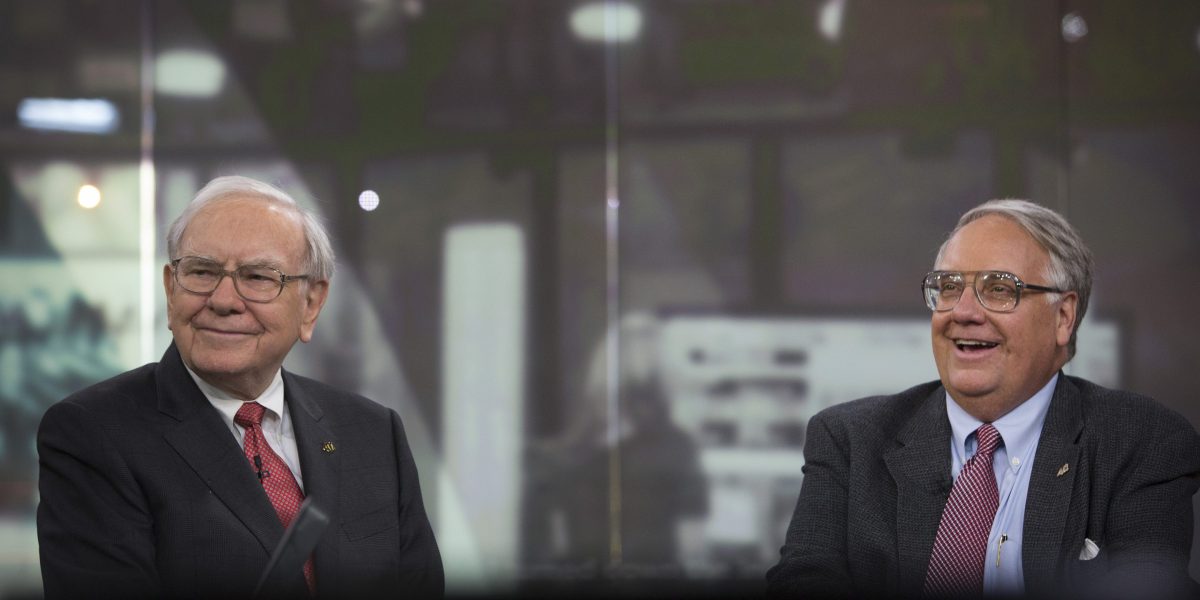
Howard’s been a Berkshire director for 33 years, since 1993. According to his dad Warren’s retirement letter, that’s longer than the “apprenticeship” he himself served before becoming Berkshire’s CEO at 34.
But Howard’s own career has run almost entirely outside finance. He operates a 1,500-acre family farm in Pana, Illinois, plus foundation-run research farms spanning more than 1,500 acres in Arizona and over 9,200 acres in South Africa. He’s also a vocal advocate for no-till conservation agriculture.
He’s held elected office twice: as a Douglas County, Nebraska commissioner from 1989 to 1992, and, more unusually, as Sheriff of Macon County, Illinois, from September 2017 to November 2018, after five years working as an auxiliary deputy. And he still holds a position today: he still serves as the county’s undersheriff.
Separately, he’s built a body of published photography from conflict zones—including the front lines of the Ukraine war—and wildlife habitats across roughly 130 countries, authoring several books along the way. Most of the work was tied directly to his foundation’s focus on food security, conservation and humanitarian response in unstable regions.
His role at Berkshire
Greg Abel, who took over as CEO in January, will continue running Berkshire’s operations day to day. Howard’s role, as Warren Buffett described it in Friday’s letter, is different: “Greg runs the company; Howard will guard its culture and values—both worth more than anything on our balance sheet.”
He continued: “Think of Howard as a policy the shareholders own and hope never to claim against.”
That’s nothing new and instead, has been part of Berkshire’s succession planning for years. Howard isn’t expected to weigh in on capital allocation or acquisitions. Rather, Abel has already shown he’ll move fast, already deploying $10 billion into Alphabet and paying $6.8 billion to acquire homebuilder Taylor Morrison within his first year (for a total enterprise value of $8.5 billion).
Instead, Howard’s job is to serve as a check against any future leadership that might try to unwind what makes Berkshire unusual: its buy-and-hold investment stance and the autonomy it gives the businesses it owns.
Former Yahoo President Susan Decker will continue as lead independent director, serving with Howard as well as his father, who remains on the board.
Giving away the fortune
Howard is also one of three siblings—alongside Susie and Peter—responsible for distributing most of Warren Buffett’s remaining fortune, listed at $145 billion on the Bloomberg Billionaires Index. Their father has said he abandoned earlier plans for a single sweeping philanthropic strategy in favor of handing the decisions to his children’s own foundations, which now distribute roughly $500 million a year combined.
Howard has spoken about the limits of that kind of giving. In a January conversation with CNBC with his siblings, he pointed to countries like Congo and Sudan, where he said funding alone can’t fix poverty if the rule of law has broken down.
“There’s a lot of things you can fund that will go nowhere,” he said. “If you’re not addressing the real issue of rule of law then you just can’t have success.”