


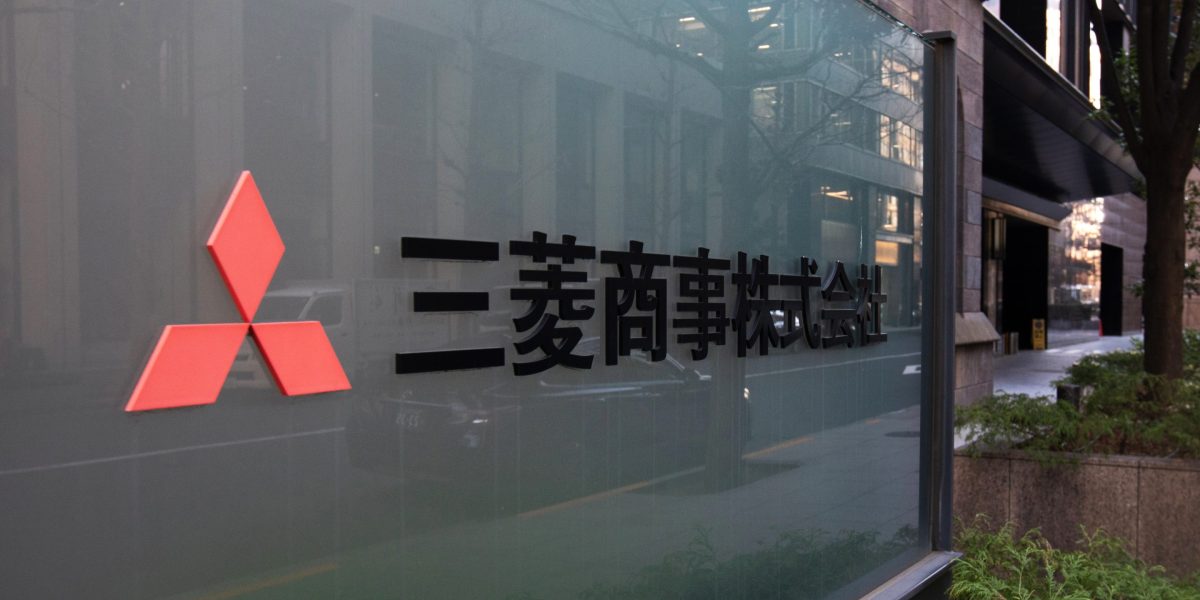
Mitsubishi officially became one of the largest natural gas producers in the U.S. on Wednesday, following a $7.5 billion deal that positions the Japanese giant to benefit from the surge in gas exports—especially to Japan—as well as from the AI data center boom that increasingly thirsts for more gas-fired power.
Mitsubishi closed on its largest acquisition ever July 15, scooping up the assets of Dallas-based Aethon Energy. Little-known Aethon was the nation’s third-largest, privately held energy producer in the U.S., and the biggest focused exclusively on natural gas.
The $7.5 billion deal continues the rapidly rising trend of Asian nations, especially the Japanese, investing directly in U.S. natural gas production, primarily in the Haynesville Shale region in northern Louisiana and eastern Texas that’s particularly gassy and geographically close to growing liquefied natural gas (LNG) exports hubs along the U.S. Gulf Coast. Aethon was heavily concentrated there.
Foreign countries from Europe to Asia to Australia have invested massively in U.S. LNG infrastructure, but doing so keeps them susceptible to the whims of volatile gas pricing. Buying the gas production—the land from which the natural gas is extracted as well as the processing facilities—gives them control of more of the supply chain and allows them to benefit from the data center surge as well.
Ahead of the deal, Mitsubishi created Adamas Energy—Greek for “invincible”—as its Dallas subsidiary. Aethon has agreed to buy back a 25% stake in Adamas, and Aethon managing director Gordon Huddleston will serve as the Adamas CEO, representing Mitsubishi’s interests.
“They recognize what a critical component the natural gas is,” Huddleston told Fortune. “The U.S. is blessed with a lot of gas, but those that are in the right places are going to benefit. I think behind-the-meter, power generation in the U.S. is going to surprise a lot of people about how big these numbers are on the AI side for [gas-fired power demand].”
And Japan is the world’s second-largest LNG importer after China.
“The Chinese would be here if they could be,” Huddleston said. “This is kind of the world’s energy basket, given what’s happened with LNG.”
‘Wake-up call’
In just a decade, the U.S. has grown from being a first-time net exporter of LNG to becoming the world’s leading shipper of the commodity, surpassing Australia and Qatar (which is now facing major facility repairs from the ongoing Iran war). The Mitsubishi deal, which includes $2.3 billion in debt, was in the works before the war broke out, but the conflict reinforces the investment case, Huddleston said.
“There’s a huge wake-up call about the need for [energy] supply diversity and resiliency,” he added. “The U.S. historically has been a very safe place to invest from a supply assurance standpoint.”
After Houston-based Expand Energy and Dallas Cowboys owner Jerry Jones’ Comstock Resources, Mitsubishi’s Adamas is now the top natural gas producer in the Haynesville region. Almost all the other key players there are now Japanese, except for Citadel’s recent jump into the region with its Apex Natural Gas.
Tokyo Gas has rapidly grown its TG Natural Resources in the Haynesville, and Osaka Gas’ Sabine Oil & Gas is a key player. Earlier this year Japan’s top power generator, JERA, bought big into the Haynesville, while Mitsui recently acquired a Haynesville position and Japan’s JAPEX moved into the gassy U.S. Rockies region.
Immediately following the Fukushima nuclear disaster in 2011, some Japanese firms hurriedly made U.S. shale gas investments on inflated price tags, later regretting the big buys, such as Sumitomo, which later exited its U.S. shale gas investments.
Now, Japanese firms are again buying U.S. natural gas producers, but this time at more reasonable prices.
“The challenge has been that, in some cases, foreign investors lost a lot of money,” Huddleston said. “By 2013, there was a lot of money put to work, and some of those deals did not turn out well. So, there’s been more of a wait-and-see approach, and there’s been a much more methodical, thoughtful way to invest in the space.”
And Mitsubishi didn’t make this move in haste, he said.
“They have a very long-term perspective,” Huddleston said. “Mitsubishi is thinking 10, 20 years out. It’s just a very different time horizon the way that they invest.”