



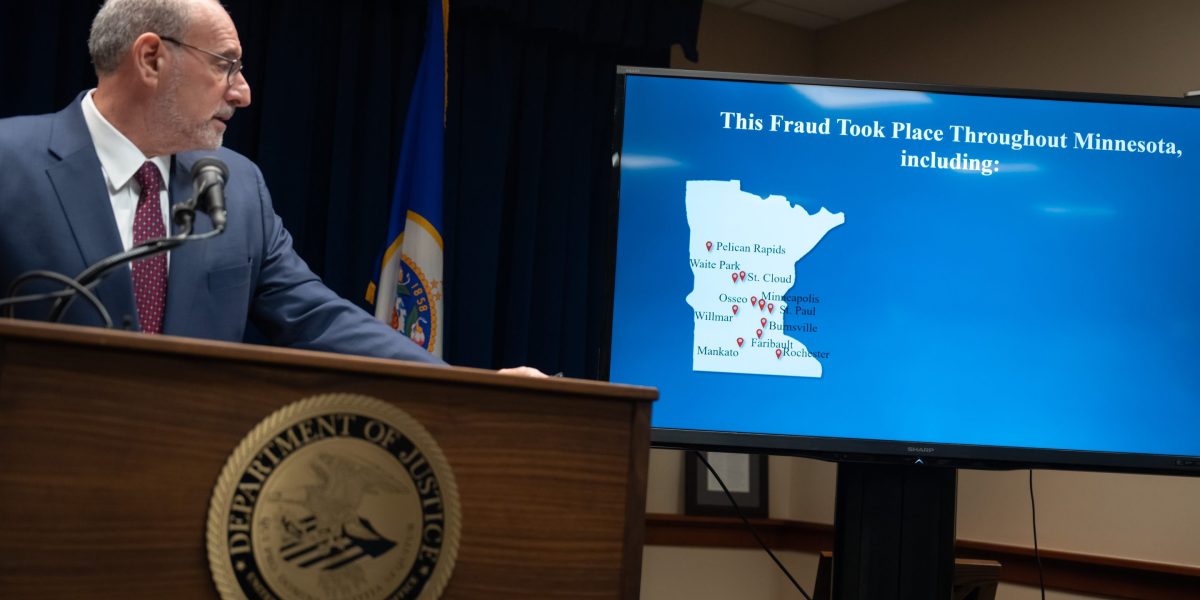
The defendants were found guilty in 2025, three years after the investigation began, of diverting funds by faking meal counts and submitting false reimbursement claims, then spending the money they got on luxury homes and cars. Other federal investigations of alleged fraud at nonprofits serving children in Minnesota are underway.
In April 2026, the Department of Justice under the Trump administration indicted the Southern Poverty Law Center, a civil rights nonprofit, on fraud charges that the center denies. That indictment has raised concerns about increased federal involvement in policing nonprofits – especially those that take actions the government may find objectionable.
The Department of Justice says it reached more than $6.8 billion in settlements and judgments in 2025 tied to the False Claims Act, the highest on record.
The False Claims Act, enacted in 1863, allows the government to pursue individuals or organizations who intentionally submit a “false claim” – baseless requests for taxpayer funds through a government grant or as reimbursement for services provided through a contract.
“Public money and tax-exempt status demand public accountability,” Treasury Secretary Scott Bessent has said in defense of the Trump administration’s nonprofit crackdown. The goal, he added, was to end “the days of hiding fraud, abuse and extremist activity behind complicated nonprofit arrangements.”
As an accounting professor who studies nonprofit fraud, I see the SPLC indictment and similar actions as a broader shift toward more aggressive government oversight of nonprofits and the policing of charitable activities.
More training needed
Despite Bessent’s suggestion, there is no clear data about how common nonprofit fraud is or how prevalent it is compared to corporate fraud or acts of fraud by people employed by government agencies.
The Association of Certified Fraud Examiners estimates that companies and nonprofits lose approximately 5% of their annual revenue to fraud, according to a 2024 report.
The report found a typical loss from a reported nonprofit fraud incident is around $76,000. That’s just over half the average cost of $145,000 for all fraud cases, which also include incidents affecting private companies and government agencies.
The Association of Certified Fraud Examiners also has found that nonprofits are less likely to be trained than their peers in other sectors to identify evidence of fraud risks. That can make their staff and leaders less prepared to spot and deal with fraud compared to private businesses and government agencies.
Only 52% of nonprofit staff members report receiving any training on fraud awareness and risk, versus 83% for the employees of publicly traded companies.
Internal vs. external fraud
Once charities, which must have a purpose the government accepts, such as education, religion, science or helping those in need, are established, they ask the IRS to grant them tax-exempt status.
All U.S. charities, except for churches, must then file mandatory annual 990 forms with the IRS to maintain their tax-exempt status. One of their responsibilities when they complete those forms is to report what the IRS calls any “significant diversion of assets” detected since filing the previous form.
Diversion of assets means that money has been taken from a nonprofit, decreasing the funds available for it to fulfill its mission.
The FBI has a more expansive definition of nonprofit fraud, which also includes the external kind. And it prosecutes people accused of committing them.
The most common kind of external nonprofit fraud is when people create or run fake charities – groups that solicit donations but in reality are either complete scams that spend little or no time and money on real charitable activities.
For example, a charity called “Providing Hope VA” raised over $9 million in 2023 to provide services to homeless veterans. Instead, the funds became a personal bank account for its president and sole board member, James Arehart. He was sentenced to 21 months in prison and ordered to repay the bilked funds in 2025.
Providing Hope VA shut down following Arehart’s fraud conviction.
The Donald J. Trump Foundation was another charity shuttered in the aftermath of fraud investigations. It ceased operations in 2019 after New York state authorities found that it had made illegal use of charitable contributions for political purposes.
Nonprofits are typically created when their founders file paperwork with state authorities. As a result, the responsibility for policing nonprofits generally falls to state attorneys general, rather than federal authorities. But state governments have historically devoted little staff time or money to policing nonprofits, limiting their oversight of the charitable sector. Only about 355 people worked to monitor charities in 48 out of 56 U.S. states and territories, according to the most recent comprehensive survey of state regulators from the Urban Institute and Columbia Law School, published in 2016. Most state offices employed fewer than 10 full-time workers. About 1 in 3 states didn’t even employ one staffer whose full-time job was to ensure that nonprofit funds were properly managed and that people in their states who ran nonprofits were upholding their financial and ethical duties, according to the survey. Some states are more engaged in watching out for and punishing nonprofit fraud. The New York attorney general’s office, for example, publishes an annual report analyzing hundreds of nonprofit fundraising campaigns. Called Pennies for Charity, it analyzes professional fundraising to calculate how much charities actually receive in funds after they pay fees to the hired professionals. The federal government plays a role, too. The IRS oversees nonprofits, to a degree, through its requirement that charities file 990 forms. And in some cases, it audits nonprofits. The IRS audited around 660 nonprofits that filed 990 forms in 2024 out of the nation’s estimated 1.9 million tax-exempt organizations. The IRS can also impose penalties or revoke a charity’s tax-exempt status for serious violations, such as failure to file a 990 form for three consecutive years, engaging in overtly political lobbying, or failing to use funds to support a public benefit. When the authorities encounter a large-scale case of suspected federal fraud, or a case that may have harmed people in several states, the federal government may step in. The Justice Department may investigate and prosecute in those instances. Federal investigations of suspected nonprofit fraud have been historically rare, making the SPLC indictment an unusual exception. In this case, the FBI and IRS led an investigation into the charity and referred the case to the Justice Department for prosecution. Separately, the Alabama attorney general later opened a civil investigation into the SPLC for potentially violating state charity laws. Several organizations rate nonprofits to help donors give wisely, including Charity Watch, Candid and Charity Navigator. Many of these groups consider the percentage of their funds that charities spend on overhead costs to be a way to assess a charity’s quality. Overhead includes fundraising, accounting, advertising, media outreach and other expenses that are required to ensure that a charity can get its work done and increase what donors call its “impact.” The salary and benefits of some employees may count as well, depending on their roles. This pressure to keep overhead spending low can lead U.S. charities to not make fraud prevention and detection a high priority. Nonprofits may also hesitate to report suspected fraud or theft because they worry that it could hurt their reputation among donors and by extension future funding. A research team found that donations declined after charities reported cases of nonprofit fraud, and fell even more when the news media covered those incidents. The study, published in 2023, also found that donors were less likely to cut funding when fraud-afflicted nonprofits demonstrated transparency, recovered stolen funds and took steps to prevent future misconduct. Likewise, the Association of Certified Fraud Examiners stresses the importance of disclosure and corrective action after fraud occurs in any context. The association also recommends that companies and nonprofits establish procedures to analyze their spending and set up whistleblower hotlines. Nonprofits would likely benefit from increased monitoring for fraud, but must weigh the benefit against spending funds to support their charitable mission. Sarah Webber, Associate Professor of Accounting, University of Dayton This article is republished from The Conversation under a Creative Commons license. Read the original article.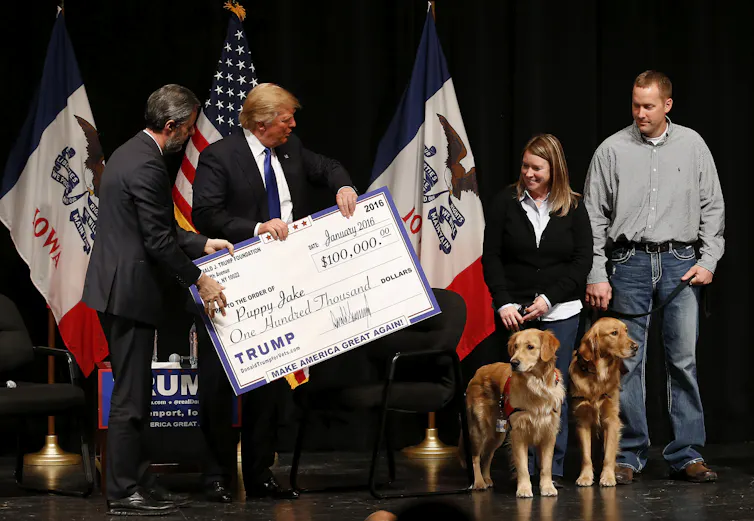
State of nonprofit fraud policing
Federal government’s role
Donor precautions can be counterproductive