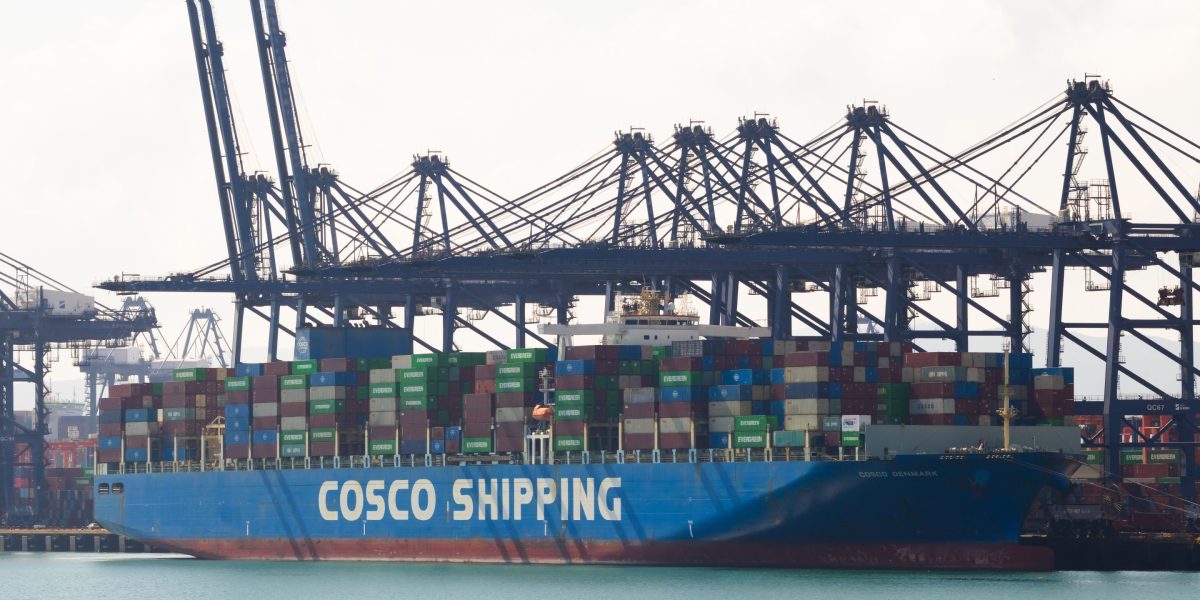




As we’ve seen in this series on electrifying everything everywhere all at once, bulk shipping will plummet with peak fossil fuel demand and batteries will power all inland and most short sea shipping. We’ve covered most of the bases that are seriously being considered, and some that are more romantic than practical. Now it’s time to knock a couple of fringe options off the seas.
About a year ago I created a series of sexy vs meh quadrants charts for different aspects of decarbonization, covering ground transportation, aviation & aerospace, electricity & grid storage, carbon drawdown, heat and most pertinently, the maritime industry.
When I first created the visual, it didn’t occur to me to add nuclear-powered ships to it. Having gone deep and wide on nuclear generation’s past and present, I knew that nuclear-powered ships were fit for purpose for a handful of affluent countries with big militaries, a subset of the ones with nuclear weapons.
There are still many nuclear-powered submarines and aircraft carriers on and under the seas. Surprisingly, the USA has eleven of the twelve aircraft carriers, with France’s Charles de Gaulle being the sole non-American example of the class. There are over a hundred nuclear-powered submarines, with the USA again having the most, but China, France, Russia and the United Kingdom all having vessels, although some are awaiting decommissioning at significant expense. Further, there are a handful of nuclear ice breakers operating in Arctic waters, all Russian.
I knew that the first commercial nuclear reactors were repurposed military vessel reactors and that they had proven deeply uneconomic, requiring scaling the small reactors up to gigawatt sizes to achieve thermal efficiencies for cheaper electricity. That’s part of the problem with the current hype around small modular nuclear reactors, that they forego that scaling for efficiency and hence are proving uneconomic, mostly recently with the cancellation of the NuScale deployment in Utah.
I knew that nuclear cargo ships had been tried 70 years ago, and failed miserably. Most ports wouldn’t accept them and New Zealand passed a law banning them that’s still on their books. And I knew that nuclear decommissioning was very expensive, for example with the UK nuclear submarine effort costing almost US$100 million per vessel.
So I was surprised when I was invited by Elisabet Liljeblad, Head of Climate & Energy Transition with Stena Teknik, to debate maritime decarbonization at a Stena technical leaders offsite to find that there was a proponent of nuclear-powered shipping participating, along with a methanol-industry representative and a battery electrification firm’s sales director.
Is it technically feasible to build a nuclear-powered container or bulk ship? Of course. But there are major headwinds facing it. The first is that the current interest is aligned with small modular nuclear reactors being commercialized and being able to be repurposed at relatively low cost for ships. As those reactors are almost entirely on the drawing board, with exactly one 200 MW version in commercial operation in China as of late 2023 and design progressing for a deployment in Ontario, it’s going to be a long wait with little likelihood of success.
One of the major problems that small modular reactors face is that they virtually all depend on high assay low enrichment uranium or HALEU. Over the past decades, the supply chain has devolved to the point where only Russia is a supplier of the material, with obvious concerns. At present the USA is attempting to develop a coalition of nations to create a new supply chain, but it’s frought.
The likelihood of small reactors being commercially viable for electricity is already low due to the thermal efficiency challenge, and there are far too many designs and technologies under development to make it possible for a single design to be built enough times to lower costs.
Every commercial nuclear reactor has seven circles of overlapping security around it, and with the exception of the Russian Arctic icebreaker fleet, where remoteness and harsh conditions provide security, those circles would have to be recreated for commercial vessels. Submarines depend on stealth, but air craft carriers travel in a fleet of escort vessels.
The cost of the reactor for a large commercial vessel is likely to be as high or higher than the rest of the ship, making current multi-million dual-fuel engine capital expenditures look like pocket change. And the owner vs operator conflict which makes any excess capital expenditures problematic would apply as well, with the operator accruing the benefits but the owner paying. That high decommissioning cost will also be prohibitive.
There is only one commercial nuclear cargo ship in operation at present, the Soviet-built Sevmorput. For context for the cost, the small 1,328 container capacity ship cost roughly US$265 million. By contrast, Maerk’s dual-fuel, 9,000 container capacity ships cost US$115 million each. The Sevmorput’s history is a cautionary tale as well. Multiple Soviet port cities refused to let it enter their ports over safety concerns. The Port of Vancouver refused entry as well as the port’s safety and emergency plans didn’t include nuclear accidents. It also has a history of maintenance issues. The combination has led to it being inactive more than active since built, and mostly it has been used to transport Russian military materiel to Arctic region bases.
This isn’t stopping various organizations from undertaking designs, but the likelihood of seeing nuclear-powered commercial ships on our oceans is low. Every port they entered would have to have security, operational and emergency upgrades, and so most will simply refuse entry.
Nuclear energy is a distraction, and it gets so little hype compared to foils, green hydrogen and green synthetic fuels that I’ve put it in the foolish and meh quadrant.
Also in that quadrant is something that I continue to get questions about, entirely from people who don’t seem to accept climate change, liquid natural gas — methane — powered ships. There are ships running on it now, mostly LNG carriers which have big tanks of the cryogenically refrigerated product and have to deal with boil off in any event, but also cruise ships and ferries.
It does burn more cleanly with less odor, fewer particulates and no sulfur than marine diesel, but it’s still a fossil fuel and still has carbon emissions. The advantages have led to a dominance in passenger and car ferries, with around 98% of larger ferries ordered in 2022 powered by it.
But burning fossil fuels for power is what we are moving away from with decarbonization. While we can synthesize methane from hydrogen and carbon, it’s just as expensive as synthesizing methanol or ammonia, and there are significant supply limitations for biologically sourced methane which should, in any case, be preserved for decarbonizing methanol. Finally, methane is a potent greenhouse gas, 29 times more potent than carbon dioxide over 20 years.
Using it as a fuel in the future makes little sense except for LNG tankers. Given that Fatih Birol, executive director of the International Energy Association asserted in mid-2023 that this decade would see peak coal, oil and gas demand, the coming decades will see a rapid decline in LNG ships.
While I see the reasoning for cruise ship and passenger ferry operators to like LNG as a fuel, in my projection both of those segments will be better served by batteries in the future. There are already multiple battery powered ferries and a 1,000 passenger Three Gorges cruising vessel in operation.
And so, the end of the also rans in my projection of maritime repowering. Batteries will be dominating inland and near shore shipping. Some oceanic shipping will be boosted by wind power, mostly parafoils in my opinion. Ammonia need not apply, with the minor exception of actual ammonia tankers, which won’t be growing in numbers. Nuclear and LNG power are distractions. Up next, the real decarbonization fuel of the future.