




A federal judge approved Paramount Skydance’s settlement with 12 states on Wednesday, clearing the final obstacle to its nearly $111 billion takeover of Warner Bros. Discovery. The companies now expect the deal to close Oct. 6. The states had sued to block the merger, and the settlement rests on a promise to release at least 30 films a year. Two penalties back that promise. The combined company must pay $30 million for every film it falls short each year, and it must sell its minority stake in Miramax, the once-eminent independent film distributor.
The settlement’s consent decree states, “During each Commitment Year, the Combined Entity shall cause to be released for Theatrical Release in the United States a minimum of thirty (30) Films for the first and second Commitment Years and thirty-two (32) Films for the third, fourth, and fifth Commitment Years.” A later subsection adds, “If, upon the expiration of the Theatrical Cure Period [defined as six months after the end of each year], the Combined Entity has failed to cure the shortfall, the Combined Entity shall divest its entire direct and indirect ownership interest in Miramax Studios.”
The decree attaches more conditions to that film count. In the first two years, at least 20 of the 30 films must be wide releases, meaning they open on at least 2,000 screens. That rises to 21 of 32 in years three through five. At least four films a year must be independent films, and at least half must be produced or co-produced by the combined company rather than merely acquired. Every film that counts toward the total must play exclusively in theaters for at least 45 days and stay off subscription streaming for 90.
The combined company must also spend at least $300 million more each year on U.S. production than Paramount and Warner Bros. spent in 2025, or $1.5 billion more over five years. If Congress passes an uncapped federal film tax credit of at least 20% during that period, at least 20% of the company’s film production must take place in the U.S. in the first two years, rising to 30% after that.
These terms could help preserve work for film industry professionals after the merger, and a $30 million penalty is a decent incentive to keep the cameras rolling. But questions remain over whether losing Miramax is a big enough threat to shape the combined company’s future.
The fine print softens the threat further. The commitment years don’t begin until 2027, the first full calendar year after closing. A shortfall triggers a six-month cure period. Only if the company fails to make up the missing films does the Miramax sale kick in, and the company then gets another 12 months to complete it. Under that timeline, a company that missed its 2027 quota wouldn’t have to finish selling Miramax until mid-2029. After the second year, the company can also petition the court to modify its obligations. The $30 million payments, by contrast, are due even if the shortfall is later cured.
The value of Miramax
Harvey and Bob Weinstein founded Miramax in 1979, and it became the Tiffany brand of independent film distribution. It bought buzzy titles at film festivals and turned them into awards darlings. Disney bought the company in 1993 and sold it to Filmyard Holdings in 2010 for $663 million. Filmyard owned it for six years before selling it to Qatar-based beIN Media Group in 2016.
In April 2020, Paramount (then ViacomCBS) closed its purchase of a 49% stake in Miramax in a deal valued at $375 million. It paid beIN roughly $150 million upfront and committed to invest $45 million a year in Miramax for five years to fund new film and TV projects. Paramount Pictures also gained an exclusive, long-term deal to distribute Miramax’s library of more than 700 titles.
Even in its 1990s heyday, though, Miramax was never a brand built on box office juggernauts. At its peak, it usually bought inexpensive pictures and expanded them to wide releases for profits and awards. Its most successful film is still 2002’s “Chicago,” which grossed $306.8 million worldwide. Its original films since the Paramount investment have been more modest. Only one Miramax movie of the 2020s has topped $200 million at the box office: this year’s “Scary Movie” reboot, which has grossed about $229 million worldwide.
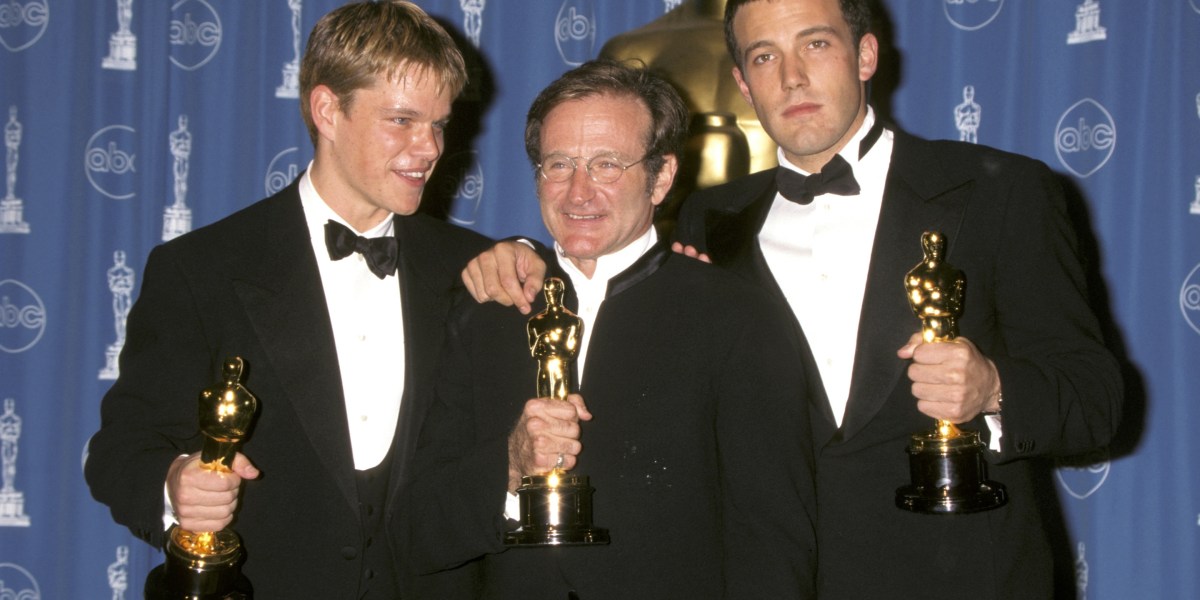
Miramax’s greater value likely lies in its library, which includes prestige pictures and cult classics like “Sex, Lies, and Videotape,” “Reservoir Dogs,” “Pulp Fiction,” “Good Will Hunting,” and “Gangs of New York.” Paramount can license these movies to other streamers or keep them exclusive to Paramount+ and Pluto TV. The decree’s divestiture language covers Paramount’s ownership stake. It doesn’t mention the separate library distribution deal. Either way, the catalog holds few titles that would be meaningful bargaining chips in a negotiation, and few of its indie dramas have franchise potential, “Scary Movie” aside.
Even in the indie space, Miramax is not what it once was. Specialty labels like Universal’s Focus Features and Disney’s Searchlight Pictures, along with standalone distributors A24 and Neon, now dominate today’s film markets and festivals. Miramax is a relic of a former era. It mostly co-produces small projects with other studios and rarely distributes films on its own. The brand also carries a dark legacy and an unshakable association with its disgraced co-founder, Harvey Weinstein.
In short, the 49% stake in Miramax likely benefits Paramount by deepening its catalog and supplying a few modest releases each year. But it is a contentious brand and hardly a valuable enough asset to shape the studio’s distribution strategy. The $375 million deal is a rounding error next to the $81 billion equity value of the merger, and Miramax pales beside the other brands in the deal: CNN, CBS, HBO, DC Studios, Nickelodeon, New Line Cinema, both studios’ flagship film divisions, and more.
The next test is at the box office
The $30 million penalty for each missing film carries more weight. The money would be split 50/40/10. Half would go to health care and retirement trust funds for production unions, including the WGA, IATSE, DGA, and Teamsters. Forty percent would go to the Motion Picture & Television Fund, and 10% to a National Association of Attorneys General fund for antitrust enforcement.
Avoiding that fee might be enough to keep production going. But an incentive is not a guardrail, and voluntary output pledges have a spotty track record.
The settlement has drawn scrutiny in the filmmaking community. Many critics say California Attorney General Rob Bonta, who led the states’ coalition, wasn’t aggressive enough. Seen that way, the Miramax ultimatum is a microcosm of the larger deal: it makes fair demands of the combined company but carries too small a stick to hold it accountable.
That criticism came to a head last week. On Thursday, Sept. 24, core members of the Block the Merger coalition won an emergency motion to weigh in on the settlement. Those groups are Free Press, the Committee for the First Amendment, the Freedom of the Press Foundation, the Future Film Coalition, and the International Documentary Association. They filed an amicus brief urging the court to reject the deal before the 12:01 a.m. PT deadline on Friday, Sept. 25. The coalition had already rallied thousands of industry professionals behind an open letter opposing the merger. The League of United Latin American Citizens (LULAC) filed its own brief against the settlement.
It wasn’t enough. On Wednesday, Judge Araceli Martínez-Olguín ruled that the consent decree was a “fair, reasonable, and good faith approach to address the competitive harms” the states alleged. She found that critics’ hopes for stronger terms did not amount to legal violations that would let her reject it. Minutes later, Paramount named Mattel CEO Ynon Kreiz co-CEO alongside David Ellison. The Miramax ultimatum’s real test now begins in 2027, on the release calendar rather than in a courtroom.