



More than a century ago, Hollywood legend Buster Keaton directed and starred in The Electric House, a silent film in which a home abundant with rewired electrical gadgets causes chaos for its visitors. But what was a short comedy of yesterday has become a prescient depiction of a contemporary problem: smart appliances that aren’t acting smart.
Samsung customers flooded an online community with dozens of comments this week about issues they’ve experienced with certain models of their not-so-smart AI-powered smart refrigerators.
On Tuesday and Wednesday, Samsung Electronics’ online community forums were filled with dozens of posts from “Samsung Members” claiming their refrigerators became inoperative following a firmware update from the company’s smart home platform “SmartThings.” The customers reported that following the update, refrigerators went offline, with internal lights not turning on, and cooling and freezing mechanisms not working.
“Samsung told me to update, so I did, but it broke down,” one user wrote in a post translated from Korean to English. “The meat and everything else is about to spoil. Where can I get compensation for this, and when is the refrigerator going to be fixed? I bought this this spring, and I can’t believe it’s already broken.”
The glitch is the latest example of consumers’ complicated relationship with smart home technology, which has correlated with growing anxiety over AI products more broadly, even as AI adoption continues to increase. A December 2025 survey of 5,000 U.S. homeowners by smart home security firm Vivant found that despite 85% of respondents own at least one smart home device. Still, unease about the category is apparent this year: Samsung’s decision to display ads on its smart fridges’ screens drew customer backlash earlier in 2026.
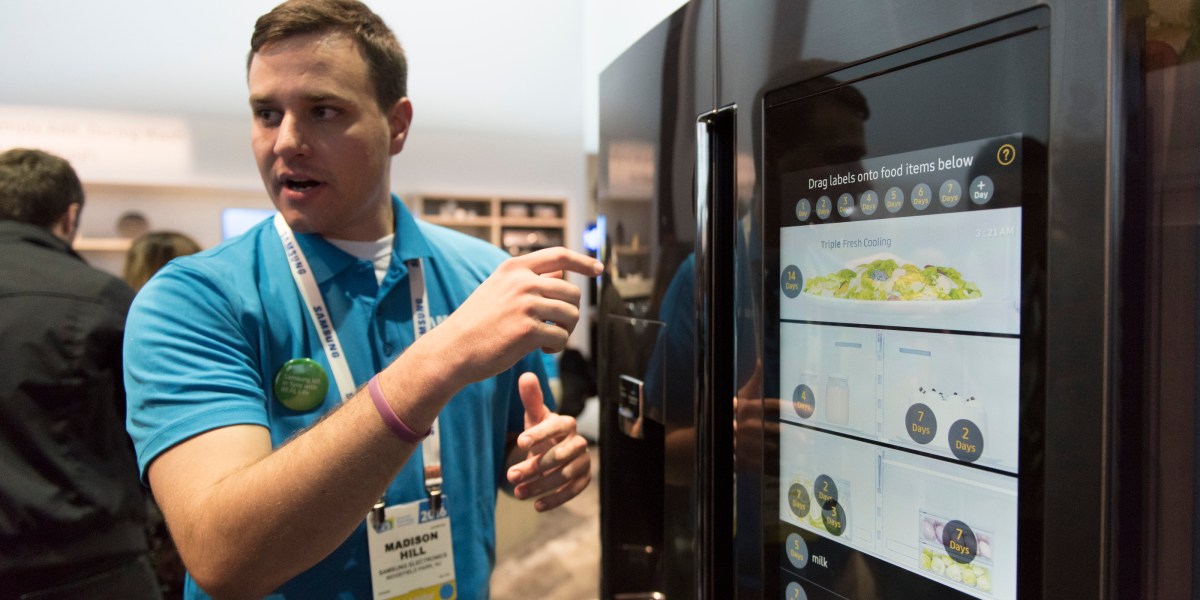
Samsung introduced the Family Hub Refrigerator in 2016, with a display screen on the front of the appliance allowing users to manage grocery shopping online, and check on stored food. The firmware update appeared to have adversely impacted the Bespoke AI 4-Door refrigerator series released on or after 2024.
The malfunction coincides with the major Korean holiday of Chuseok, a mid-autumn harvest festival that began Thursday and is usually celebrated with the preparation of an ancestor’s favorite meal.
One user claimed a service provider would not be able to fix the unit until Oct. 1, long after the holiday.
“When I asked [Samsung] if the response wasn’t too complacent considering the food ingredients for the holidays were all spoiling and melting,” the user wrote. “They said that quick action was impossible because everyone had already gone home.”
Samsung did not yet respond to Fortune’s request for comment. On Wednesday, a moderator for the online forum acknowledged the outage, saying the company is taking “emergency measures as a top priority” to resolve the issue.
“Yesterday (9/22), an error occurred during the testing process for a Samsung refrigerator software update. Abnormal symptoms have been observed in the refrigerator power and screen of some customers,” the moderator wrote. “We will do our best to ensure that our customers do not suffer any losses during the Chuseok holiday period.”
The smart home dilemma
Tech companies have continued to invest in AI technologies that integrate into household functions, including Amazon, which updated its Alexa+ to integrate with other Amazon devices like Ring security cameras to help remember household tasks, such as which pets were fed, as well as grocery orders.
The development of this technology has brought with it privacy concerns, such as cyberstalking, as well as the unwanted release of information, according to a 2023 meta-analysis of 63 studies on smart home technologies. The meta-analysis found that privacy intrusions were the most common type of harm identified, followed by hacking, malware and denial-of-service attacks. Researchers noted that users should be properly trained on how to use these devices, and companies should require multi-factor authentication to use the appliances safely.
Samsung has previously defended its “screens everywhere” approach to home appliances. In an interview with The Verge last April, Jeong Seung Moon, executive vice president and head of research and development for the Digital Appliances Business at Samsung Electronics, said digital displays on the home appliances were intended to improve accessibility and increase efficiencies of household tasks.
“First, carrying out household tasks often involves the use of multiple appliances located in different areas of the home,” he said. ”Managing these different tasks across multiple devices can waste time, but the screen resolves these issues by acting as a central control hub that seamlessly connects the home’s appliances. For users, this means they get to control their home environment from wherever they are, saving time and effort.”