


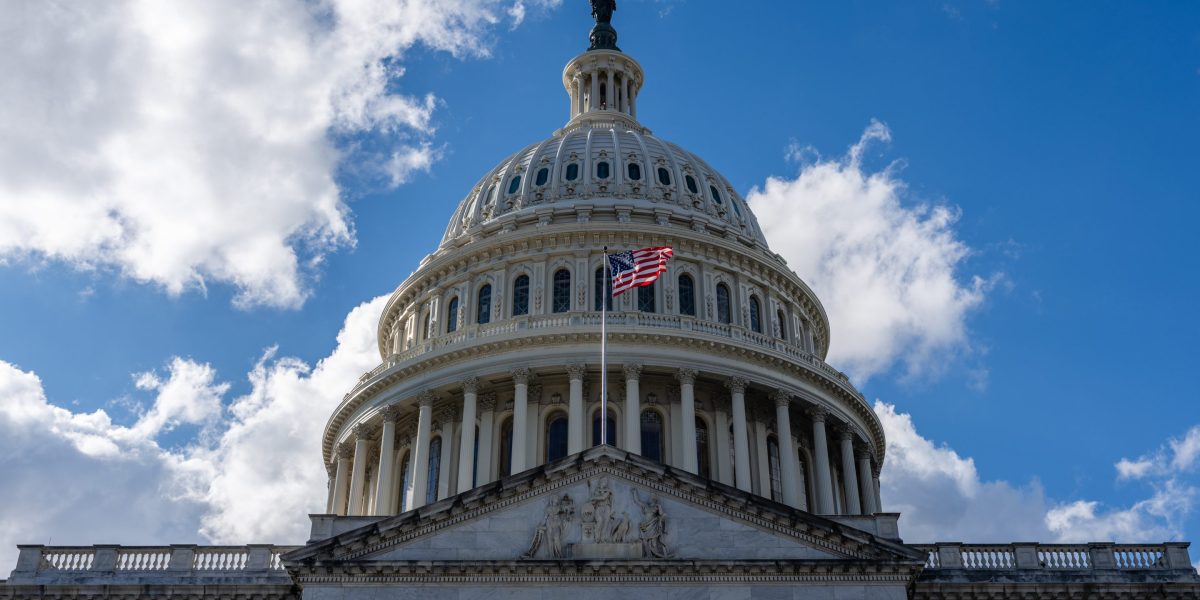



With the momentous weekend of the 250th Fourth of July now behind us, maybe it’s time to ask the big questions: where is America today? What does our 250-year history culminate in? And what role does AI have to play?
We definitely have a unique vantage point right now, from which to view American history. Information has never flowed like it does now. The Internet changed the world, and now, AI is doing the same, arguably in a much greater and more fundamental way.
I read this essay recently by Konstantine Buhler, a partner at Sequoia Capital, that talks about the foundation of America’s track record, when it comes to innovation, to building things, and to the “engine of prosperity” that we rely on to keep things humming along. I thought this was an interesting look at the geography of America and more – and I thought, in a sense, much of this is what an AI model might point out in assessing the American nation as a whole.
Not Just Flag-Waving
Buhler makes a caveat at the beginning of his piece:
“None of this is American chest pumping. If anything, it’s humbling. All of these advantages started way before us. America’s leadership role in the world is not because “we’re so great” but because we have such an advantage due to geography, resources, and the hard work of people who came before us.”
Native Americans would be at the top of that list, and the lack of living descendants of many of these tribes is tragic, because they would be able to supply voices for the future. Having said that, Buhler lists some of the very real advantages that Americans have in being situated stateside, in an era where geopolitical challenges certainly apply.
Let’s look at some of what Buhler picks out in describing the American advantage.
On Land and Sea
First of all, as Buhler points out, America, in a geographical sense, has a significant “moat.”
“The U.S. is surrounded by the two largest oceans in the world, the Pacific and the Atlantic,” Buhler writes. “For an Asian superpower to invade the mainland, it would have to cross over 8,800 kilometers. That takes a battleship 1-2 weeks. A European superpower would have to cross over 6,000 kilometers by boat. These are massive moats. In the venture space, we talk about moats all the time. They are critical to the success of a business and have real effects on deterring competing businesses. Those oceans are deterrents and allow the US to build in peace, with minimal risk of foreign adversaries.”
He mentions how “moat” is used in business, to talk about specialized or unique characteristics, but how, in statesmanship, having actual water between nations can help.
Buhler also mentions the U.S. network of rivers, the U.S. network of roads and rail, and the Great Lakes that hold around 21% of the world’s fresh water. Grand aquifers, deepwater ports and the southeastern Gulf Stream add to the aquatic life of the sprawling nation.
And then there’s the land…
“The North American heartland is the largest continuous stretch of fertile, arable farmland on Earth,” Buhler writes. “This pairing with the river systems allows us to grow massive food surpluses and move them immediately onto the water for export.”
Then there’s the rail system, and the roads, for moving all of this bounty.
Also, look at how Buhler presents the “lucky latitude” of the U.S. and the value of temperate zones:
“Most of the United States sits between 30 and 50 degrees north latitude. This is the planet’s agricultural and societal sweet spot. At latitudes below 25°N, you get intense solar radiation, high year-round temperatures, tropical disease pressure, and climates that range from equatorial rainforest to harsh desert, all of which make sustained, large-scale grain agriculture difficult. Above 55°N, growing seasons become too short, winters too severe, and permafrost makes large-scale agriculture impossible. Russia, which has an enormous land area, sits largely between 50 and 70 degrees north, which is why most of Russia’s land is cold, dark, and agriculturally marginal. China’s most productive land is in a relatively narrow band of its southeastern region. India sits between 8 and 37°N — productive but subject to monsoon variability and heat stress. The American Midwest — the world’s food basket — sits squarely in the optimal zone, receiving adequate rainfall, four distinct seasons, and growing conditions ideal for corn, wheat, soybeans, and virtually every temperate crop.”
That’s an advantage, too.
Other Good Stuff
In the ongoing list of American resources, I found things like the Appalachian mountains and American “sunlight profiles” to be rather less compelling. On the other, hand, the American exclusive economic zone is impressive, and Buhler also notes the diversity of the American agricultural market this way:
“The USA has extremely diverse climate zones,” he writes. “This means many varieties of food, and total food independence. We already talked about the heartland, which is the breadbasket of the world. But consider a very different region, California’s central valley, which has a ‘mediterranean-style’ climate.”
Buhler explains:
“On a global scale, (California) is arguably the most productive, diverse, and economically consequential piece of agricultural real estate on Earth. It occupies less than 1% of all USA farmland. Yet, it produces 25% (one-quarter) of the entire nation’s food supply including 40% of all fruits and nuts and 33% of all vegetables consumed in the United States.”
I’m reminded of an old All in the Family episode where reactionary head of household Archie Bunker, played expertly by Carroll O’Connor, opined that “California is the land of fruits and nuts,” and I guess this is what he was talking about, although Bunker added the pejorative punchline: “and every nut’s a little fruity – and every fruit’s a little nutty.”
Elemental Assets
In terms of mineral assets, there’s coal in Buhler’s essay, and iron and ash, and then, in a surprising pivot, English.
“English is the most common language of the United States and the operating system of the global economy,” Buhler writes, noting that 54-60% of all internet content is written in English. “Over 90% of scientific journals indexed in major global databases publish primarily in English. English is the mandated language of international aviation. It’s the language of global finance, international law, and diplomatic negotiation.”
Now, Buhler makes a similar point about the U.S. dollar as the world’s reserve currency, and we’ll see how long that lasts. But our linguistic and cultural exports are definitely a valuable add-on.
Our Document
At the end, Buhler refers to the U.S. Constitution, something that many Americans hold dear. I also liked this strange, eclectic list of “things America is first at: Nominal Gross Domestic Product, Stock Market Capitalization, Foreign Direct Investment Inflows, Private Wealth, Nobel Prizes, Total Olympic Golds, or Space Exploration Funding.”
So where does AI come in?
Well, America is first in hardware, with Nvidia as the world’s supplier of AI-focused designer chips, and OpenAI and Anthropic as model leaders, not to mention Google, Microsoft, Meta, and Amazon.
So although China is building its own AI systems, America is still at the top in many ways when it comes to LLMs and neural net development. Let’s see what happens throughout the second half of this year – because things are changing quickly. Stay tuned.


