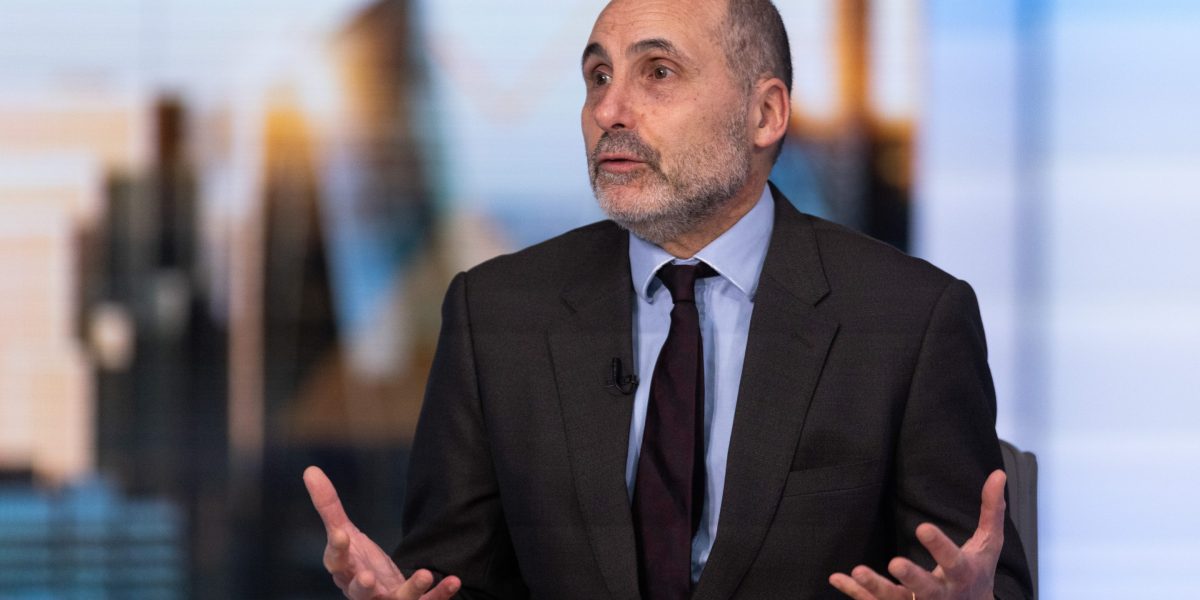



Federal Reserve Chairman Kevin Warsh apparently relishes a good debate, and the upcoming policy meeting is expected to see some robust back-and-forth.
The Federal Open Market Committee convenes Tuesday and Wednesday, marking his second meeting as chair. After his first one last month, he told reporters there was a “good family fight” about rates, though central bankers voted unanimously to keep them steady.
That’s a phrase he has used frequently in recent months as he seeks so-called regime change at the Fed. Since his nomination hearing in April, Warsh has mentioned “family fight” publicly 13 times, according to a CNBC tally.
But if the June FOMC meeting was a good family fight, the temperature for the next one could go up a notch. And unlike last month’s unanimous vote, Wall Street sees at least two dissents in favor of tightening policy at the upcoming meeting. That’s because much has changed.
Most notably, the U.S.-Iran ceasefire has collapsed, and renewed fighting has sent oil prices back up again. This time around, oil stockpiles are nearing operational lows, while ship traffic is now being attacked in the Red Sea and Black Sea as well as in the Persian Gulf.
In addition, chip shortages due to the AI boom have resulted in price hikes for consumer electronics, with hyperscalers showing no signs that their capital expenditure frenzy is cooling off.
Several Fed officials have signaled they have run out of patience with elevated inflation, which has exceeded their 2% target for five years. After waiting out a series of supply shocks by looking through temporary price spikes, they are ready to bring down the hammer.
A better-than-expected consumer price index for June helped ease fears of an imminent rate hike. But as oil keeps rising, investors are pricing in 34.2% odds that the Fed will lift rates by a quarter point on Wednesday, up from 12.8% a week ago, according to CME Group’s FedWatch tool.
“The July FOMC will be a family feud… just as Kevin Warsh intended,” Oscar Munoz, head of U.S. economics at TD Securities, said in a post. “And the survey says… policy will likely stay on hold for an additional meeting. Hawkish momentum is building, however. We expect two hawkish dissents.”
Wilford Harewood/Disney via Getty Images
He added that hawkish voices on the Fed are growing louder, while noting that a persistent surge in energy prices and/or more signs the AI boom is stoking inflation could trigger a rate hike.
Munoz also pointed out that Fed Governor Chris Waller warned “sternly staring at inflation until it melts before our withering gaze is not an option.”
Meanwhile, Dallas Fed President Lorie Logan said earlier this month that “inflation has been too high, for too long, and does not appear to be on track all the way back to 2%,” with price risks to the upside.
Cleveland Fed President Beth Hammack also said inflation is too high and that the labor market is “right around my level of maximum employment,” indicating more concern for prices versus jobs.
“For the first time in my tenure, I’m hearing from businesses who say they think we need to take action to curb inflation, and from consumers who can’t make ends meet about a growing sense of despair,” she wrote in a social media post.
Like Munoz, JPMorgan chief U.S. economist Michael Feroli predicted a “contested decision” at the Fed with at least two hawkish dissents from Hammack and Logan.
But he also highlighted signs of patience coming from Vice Chairman Philip Jefferson, Governor Lisa Cook, and New York Fed President John Williams.
Given their stances, a rate hike would require an “impassioned case” from Warsh to get a majority vote, Feroli said in a note.
Indeed, economists at Bank of America wrote that the spike in oil prices has made the FOMC meeting a close call. While they see rates remaining steady, Warsh could tip the scales.
“Not hiking could challenge the Fed’s credibility on inflation. But raising rates would go against his framework of looking through supply shocks. We think July is Warsh’s call as he has enough votes either way. He has strategic incentives to hike soon,” BofA said, reiterating a forecast for three quarter-point hikes this year.