

Close Menu
Alpha Leaders
  • Home
  • News
  • Leadership
  • Entrepreneurs
  • Business
  • Living
  • Innovation
  • More
    • Money & Finance
    • Web Stories
    • Global
    • Press Release
What's On
APIs Were Built For Applications; AI Agents Change The Equation

APIs Were Built For Applications; AI Agents Change The Equation

15 September 2026
Walmart heirs committing 0M to halve America’s maternal death rate

Walmart heirs committing $100M to halve America’s maternal death rate

15 September 2026
Why The Next Wave Of Medtech Startups Won’t Build Their Own Hardware

Why The Next Wave Of Medtech Startups Won’t Build Their Own Hardware

15 September 2026
Facebook X (Twitter) Instagram
Alpha Leaders
newsletter
  • Home
  • News
  • Leadership
  • Entrepreneurs
  • Business
  • Living
  • Innovation
  • More
    • Money & Finance
    • Web Stories
    • Global
    • Press Release
Alpha Leaders
Home » Trump Calls India a Friend, but Is Trying to Block Its Imports
Business

Trump Calls India a Friend, but Is Trying to Block Its Imports

Press RoomBy Press Room4 April 20255 Mins Read
Facebook Twitter Copy Link Pinterest LinkedIn Tumblr Email WhatsApp
Trump Calls India a Friend, but Is Trying to Block Its Imports

Sizing up what President Trump’s new tariffs mean for India was a puzzle from the start for even the country’s top trade economists. Its politicians, too, were stunned.

Starting next week, nearly all Indian goods arriving in the United States will be taxed an extra 27 percent.

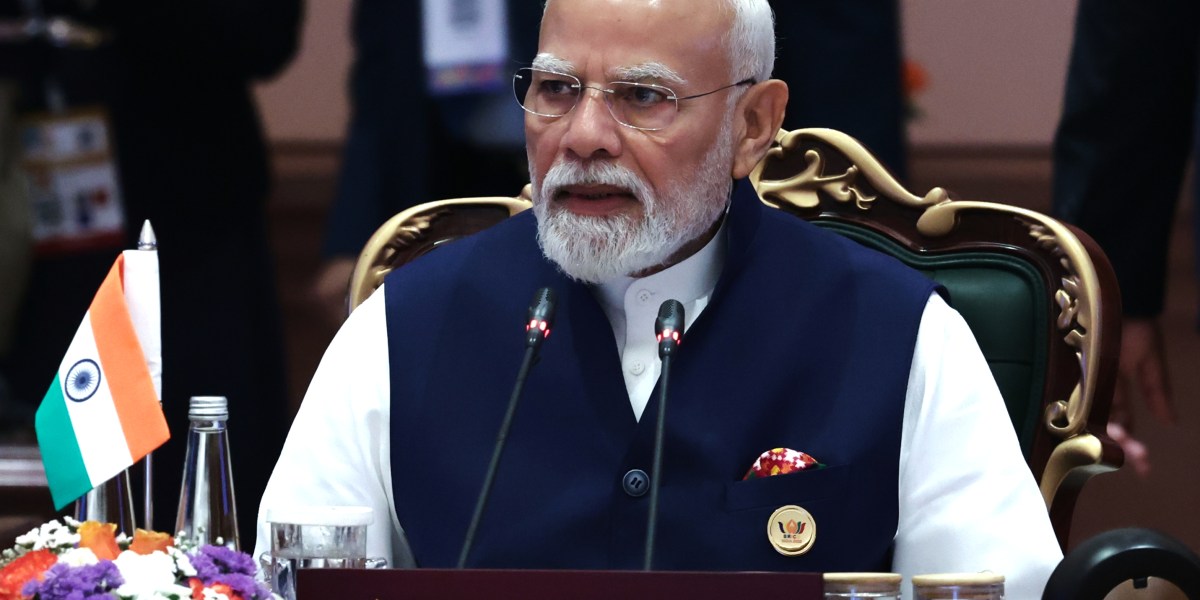
The figure was bafflingly high, in part because the government’s ministers had been flocking to Washington since Mr. Trump won re-election. From the Rose Garden, Mr. Trump addressed India’s prime minister, Narendra Modi, in absentia while delivering the disappointing news, calling him “a great friend of mine.” But that wasn’t enough.

The Trump administration, in a White House document, accused India of using “uniquely burdensome” methods to “make it difficult or costly for American companies to sell their products in India.”

The Indian government has been left figuring out how to respond. The country does sell more to the United States than it buys — by about $46 billion last year.

But unlike the other Asian countries that run trade surpluses with the United States, India has an overall negative balance of trade. It buys more from the rest of the world than it sells. That would make adjusting its trade policies to appease Mr. Trump especially painful.

Its currency was already weakening. Reducing its surplus with the United States would make everything it bought from the rest of the world more expensive.

Because of the new tariffs, some Indian companies will clearly have a harder time selling their products to American buyers. But it is unclear where that pain will land.

Mr. Trump isn’t wrong that India does use trade policies to wall off certain industries. In fact, some Indian economists are hoping that a crisis could force their country to stop using tariffs and other measures to protect its domestic industries from foreign sellers. They reason that more competition might force change and long-term gain. But in the short term, that looks unbearable. Bankruptcies of domestic companies would rise if suddenly forced to compete.

Some hopeful investors noted that, unlike countries that depended on exports, like China or Cambodia, India had a big and relatively untapped base of consumers at home. They could, in theory, replace American customers dissuaded by the higher cost of India’s imports.

“India is domestically a very huge market,” said M.D. Ranganathan, chairman of Catamaran Ventures, a private investment firm in Bengaluru. He said India’s manufacturers could keep improving even if forced to depend more on buyers at home.

Finally, as bad as India is getting it on the tariffs front — nearly all of the countries with which it competes on the world stage are getting it even worse. India has been trying for years, with some success but even more failure, to pick up manufacturing work that has been leaving China. Countries like Vietnam beat it to the punch. But with Vietnam’s exports looking at 46 percent tariffs, India’s 27 percent seems like an advantage. Whether Indian factories can replace Vietnam’s is a remaining big question.

The other solace: Some of India’s most important exports will escape punishment. Exemptions made for energy products mean that the fuel trade between India and the United States, in which India imports, refines and then exports oil products to America, should not be affected. Likewise, India’s prized pharmaceutical exports will be excluded from the new tariffs. Even its specialized gems trade might find a way to escape. Of course, there is no telling that Mr. Trump will keep to those carve outs; future tariffs are entirely possible.

Textiles may provide another bright spot. India suddenly looks better off than Bangladesh, with 37 percent tariffs, or Sri Lanka, with 44 percent — both nearby neighbors that had learned to outcompete India on low-margin garment manufacturing.

Making iPhones and other electronics in India to sell in the United States will be suddenly much more expensive than it used to be — but, perhaps, suddenly more appealing than making the same things in Southeast Asia.

Ajay Srivastava, a former trade official who runs the Global Trade Research Initiative, a think tank in New Delhi, wrote that Mr. Trump’s full list presented India with an opportunity.

“As global brands seek to diversify supply chains away from high-tariff countries, India can emerge as a preferred destination for new manufacturing setups and component assembly lines,” Mr. Srivastava wrote.

But the same problems that held India back from displacing China in global supply chains in 2022, when Russia’s invasion of Ukraine and Chinese economic problems were making foreign investors talk about “decoupling” or “friend shoring” their factories to other countries, haunt India still.

Despite more than 10 years of a multifaceted program called Make in India, the share of the economy that is industrial has fallen to just 13 percent. Services and agriculture claimed larger proportions. India remains a hard place to do business, subject to layers of political interference, and with improved infrastructure — that still falls short of global standards.

Mr. Srivastava is not naïve about the difficulties facing Indian factory managers. He thinks it has made good sense to protect local industries from leaner, meaner competitors. Indian industry, he said, is “like a sick child.” What loving parent would want to pit that kid against global champions?
Customs (Tariff) Donald J India International Trade and World Market modi Narendra Trump United States
Share. Facebook Twitter Pinterest LinkedIn Tumblr Email Copy Link

Related Articles

Indian PM Modi calls out BRICS, telling summit it’s time to convert ‘files to real-life impact’

Indian PM Modi calls out BRICS, telling summit it’s time to convert ‘files to real-life impact’

14 September 2026
How We Might Be Building A Strait Of Hormuz In Space

How We Might Be Building A Strait Of Hormuz In Space

30 July 2026
How to Change Your Image as a Heartless Luxury Titan Overnight

How to Change Your Image as a Heartless Luxury Titan Overnight

29 July 2026
What to Watch at the Federal Reserve’s July Meeting

What to Watch at the Federal Reserve’s July Meeting

29 July 2026
United States Bans Chinese Humanoid & Quadruped Robots, Citing National Security

United States Bans Chinese Humanoid & Quadruped Robots, Citing National Security

29 July 2026

The Iran War Just Put Another Key Oil Route at Risk

28 July 2026
Don't Miss
Trump’s Tariffs Will Make AI Data Centers More Expensive

Trump’s Tariffs Will Make AI Data Centers More Expensive

By Press Room4 April 2025

Donald Trump’s administration has gone all-in on AI: A day after his inauguration, the newly-elected…

Unwrap Christmas Sustainably: How To Handle Gifts You Don’t Want

Unwrap Christmas Sustainably: How To Handle Gifts You Don’t Want

27 December 2024
Sam Altman’s World Wants To Scan Your Eyes To Prove You’re Human

Sam Altman’s World Wants To Scan Your Eyes To Prove You’re Human

22 October 2024
Stay In Touch
  • Facebook
  • Twitter
  • Pinterest
  • Instagram
  • YouTube
  • Vimeo
Latest Articles
CEOs Need To Change The Equation

CEOs Need To Change The Equation

15 September 20260 Views
Harvard Kennedy fellow: The U.S. and China will never trust each other on AI. That may not matter

Harvard Kennedy fellow: The U.S. and China will never trust each other on AI. That may not matter

15 September 20261 Views
What Warehouse Robots Taught Me About Reliability

What Warehouse Robots Taught Me About Reliability

15 September 20262 Views
Exclusive: Expa and Coinbase Ventures-backed Fin.com emerges from stealth with  million seed round to build out global stablecoin infrastructure

Exclusive: Expa and Coinbase Ventures-backed Fin.com emerges from stealth with $20 million seed round to build out global stablecoin infrastructure

15 September 20261 Views

Recent Posts

  • APIs Were Built For Applications; AI Agents Change The Equation
  • Walmart heirs committing $100M to halve America’s maternal death rate
  • Why The Next Wave Of Medtech Startups Won’t Build Their Own Hardware
  • Millennials have peaked — now they’re having their ‘is this it?’ moment
  • CEOs Need To Change The Equation

Recent Comments

No comments to show.
About Us
About Us

Alpha Leaders is your one-stop website for the latest Entrepreneurs and Leaders news and updates, follow us now to get the news that matters to you.

Facebook X (Twitter) Pinterest YouTube WhatsApp
Our Picks
APIs Were Built For Applications; AI Agents Change The Equation

APIs Were Built For Applications; AI Agents Change The Equation

15 September 2026
Walmart heirs committing 0M to halve America’s maternal death rate

Walmart heirs committing $100M to halve America’s maternal death rate

15 September 2026
Why The Next Wave Of Medtech Startups Won’t Build Their Own Hardware

Why The Next Wave Of Medtech Startups Won’t Build Their Own Hardware

15 September 2026
Most Popular
Millennials have peaked — now they’re having their ‘is this it?’ moment

Millennials have peaked — now they’re having their ‘is this it?’ moment

15 September 20261 Views
CEOs Need To Change The Equation

CEOs Need To Change The Equation

15 September 20260 Views
Harvard Kennedy fellow: The U.S. and China will never trust each other on AI. That may not matter

Harvard Kennedy fellow: The U.S. and China will never trust each other on AI. That may not matter

15 September 20261 Views

Archives

  • September 2026
  • July 2026
  • June 2026
  • May 2026
  • April 2026
  • March 2026
  • February 2026
  • January 2026
  • December 2025
  • November 2025
  • October 2025
  • September 2025
  • August 2025
  • July 2025
  • June 2025
  • May 2025
  • April 2025
  • March 2025
  • February 2025
  • January 2025
  • December 2024
  • November 2024
  • October 2024
  • September 2024
  • August 2024
  • July 2024
  • June 2024
  • May 2024
  • April 2024
  • March 2024
  • February 2024
  • January 2024
  • December 2023
  • March 2022
  • January 2021
  • March 2020
  • January 2020

Categories

  • Blog
  • Business
  • Entrepreneurs
  • Global
  • Innovation
  • Leadership
  • Living
  • Money & Finance
  • News
  • Press Release
© 2026 Alpha Leaders. All Rights Reserved.
  • Privacy Policy
  • Terms of use
  • Advertise
  • Contact

Type above and press Enter to search. Press Esc to cancel.