

Close Menu
Alpha Leaders
  • Home
  • News
  • Leadership
  • Entrepreneurs
  • Business
  • Living
  • Innovation
  • More
    • Money & Finance
    • Web Stories
    • Global
    • Press Release
What's On
Is The Solution To Aerospace’s Backlog Crisis Hiding In Plain Sight?

Is The Solution To Aerospace’s Backlog Crisis Hiding In Plain Sight?

20 October 2026
Social Security benefits could be cut 22% in 2032—and one fix would mean a 40% payroll tax hike

Social Security benefits could be cut 22% in 2032—and one fix would mean a 40% payroll tax hike

20 October 2026
Ransomware Recovery Is The New Cybersecurity Battleground

Ransomware Recovery Is The New Cybersecurity Battleground

20 October 2026
Facebook X (Twitter) Instagram
Alpha Leaders
newsletter
  • Home
  • News
  • Leadership
  • Entrepreneurs
  • Business
  • Living
  • Innovation
  • More
    • Money & Finance
    • Web Stories
    • Global
    • Press Release
Alpha Leaders
Home » Trump’s ‘Art of the Deal’ can’t reopen the Strait of Hormuz — and it’s threatening a recession
News

Trump’s ‘Art of the Deal’ can’t reopen the Strait of Hormuz — and it’s threatening a recession

Press RoomBy Press Room16 March 20265 Mins Read
Facebook Twitter Copy Link Pinterest LinkedIn Tumblr Email WhatsApp
Trump’s ‘Art of the Deal’ can’t reopen the Strait of Hormuz — and it’s threatening a recession

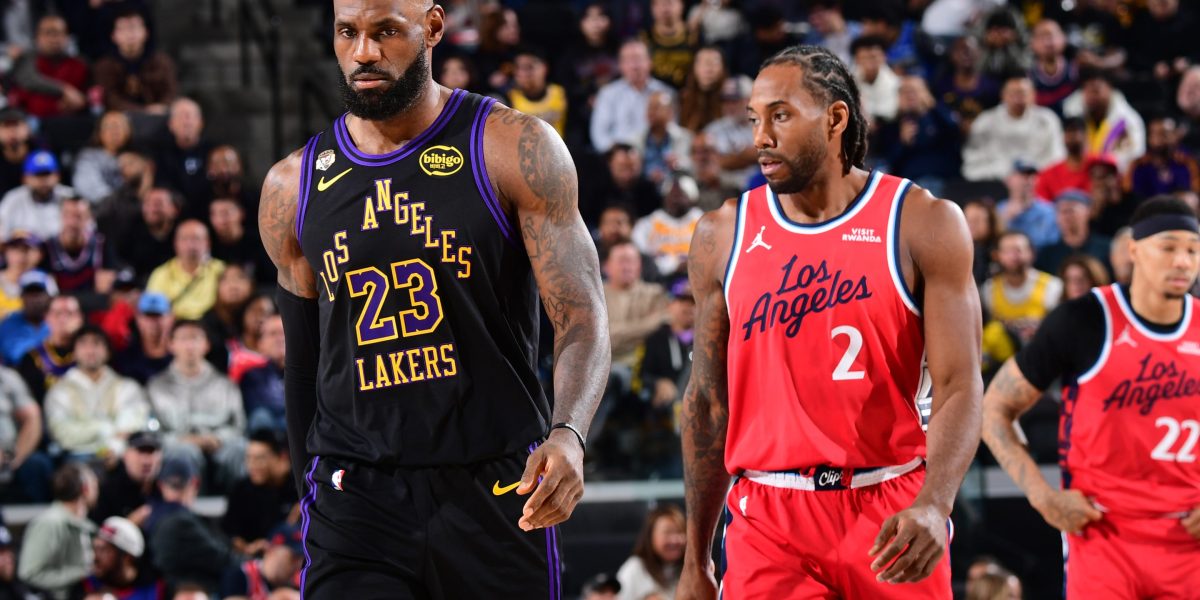
Donald Trump has spent the better part of 40 years mastering a single, ruthless skill: making other people absorb his losses. He perfected it in Atlantic City, where, as Fortune’s Shawn Tully reported, his casino empire lost a total of $1.1 billion, twice declared bankruptcy, and wrote down or restructured $1.8 billion in debt, as Trump paid himself roughly $82 million.

Trump also refined his methods in bankruptcy courts over the decades, filing for Chapter 11 protection six times across his business empire and walking away from each implosion with his name still on the marquee. He brought the same instinct to international diplomacy—renegotiating NATO funding commitments, tearing up the original Iran nuclear deal, brandishing tariffs until trading partners blinked. The playbook never changed: manufacture chaos, make everyone else desperate for a way out, then collect.

Now, on the third week of an active shooting war with Iran, Trump has run headlong into something his entire operating philosophy was never designed to handle: a 21-mile-wide chokepoint at the mouth of the Persian Gulf that has no CEO to bully, no bondholder to threaten, and no shareholders to absorb the loss. The Strait of Hormuz carries roughly 20% to 25% of the world’s oil supply every single day. It cannot be restructured. It cannot be taken into bankruptcy. And right now, it is effectively closed.

The deal that fell apart

The story begins, as so many Trump stories do, with a negotiation that went sideways. Through late February, Trump’s envoys conducted round after round of indirect nuclear talks with Iran in Geneva and Vienna, demanding that Tehran renounce uranium enrichment entirely. Trump told reporters he was “not happy” with Iran’s posture and that Iranian diplomats were not willing to go far enough. The familiar script seemed to be playing out—maximum pressure, strategic ambiguity, a deal dangled and then yanked back until the other side folded.​

But Iran, unlike Atlantic City bondholders, held a card Trump hadn’t fully priced in. When Trump launched a widely anticipated, yet still seemingly under-rehearsed attack on Iran, alongside Israel, Iranian forces began mining the strait, firing anti-ship missiles at commercial tankers, and deploying drones against vessels traversing the narrow waterway. U.S. Central Command sank 16 Iranian mine-laying vessels in an attempt to clear the passage. It wasn’t enough. Shipping activity through the strait ground nearly to a halt. As of Monday, Iran said traffic was going through the strait—just not for any U.S. allies.

When the numbers turn

The economic bill arrived faster than almost any analyst predicted. The International Energy Agency announced an emergency release of 400 million barrels from strategic reserves—a measure rarely deployed—as the conflict severed roughly 8 million barrels per day from global supply. Goldman Sachs revised its 2026 inflation forecast upward by 0.8 percentage points to 2.9% and slashed GDP growth projections by 0.3 points to 2.2%. In a worst-case scenario—a full month of disruption with crude averaging $110 a barrel—Goldman put recession probability at 25%.

For a president who built his second term on the explicit promise of lower prices and economic supremacy, the numbers were damning. The administration had tried diplomatic pressure, strategic reserve releases, and back-channel appeals to OPEC allies. None of it moved the needle. “The U.S. is running out of ways to get oil prices down,” CNBC concluded. “It is up to the military.” In Trump’s world, when a deal goes bad, you find a new counterparty. The global energy market doesn’t work that way.​

Make someone else pay

Confronted with an adversary immune to his usual leverage, Trump defaulted to the strategy he knows best: offload the cost onto someone else. On March 15, Trump told reporters he had “demanded” that roughly seven countries join a coalition to police the waterway, warning that any nation that refused would face a “bad future” with the United States.

It was a classic Trump move—the transactional ultimatum, the threat wrapped in a favor. But the response was a portrait of the limits of his brand of coercion. NATO allies rejected the demand outright. China, which continues importing Iranian oil, reacted with studied indifference. Trump suggested he might cancel a summit with Beijing over it; Beijing did not appear alarmed. The dealmaker had issued his terms. The world declined to countersign.

The adversary that won’t blink

On Friday and Saturday, U.S. forces executed strikes on Iran’s Kharg Island—the hub for roughly 90% of Iranian oil exports—hitting 90 military targets in what Trump called one of the largest operations in the history of the Middle East. And yet, he conceded, Tehran could still launch a drone or use mines and missiles in the waterway. The strait remained dangerous. Tankers stayed away.

Foreign policy analyst Matthew Kroenig put it plainly, telling NPR: “As long as Iran has drones and missiles and continues to fire them, I think many commercial shippers are going to think it’s just too dangerous even with an escort to pass through the strait.” Even after any ceasefire, uncleared mines could keep insurers—and thus tankers—away for months. You can’t renegotiate your way past an unswept mine.​

Trump said he wasn’t ready to make a deal because “the terms aren’t good enough.” In a boardroom, that’s leverage. In the Strait of Hormuz, it’s something closer to a confession. The Art of the Deal was always premised on the other side wanting something badly enough to eventually fold. The strait wants nothing. It simply is—narrow, contested, and utterly indifferent to the brand of the man trying to reopen it.​

For four decades, Trump found someone else to hold the bag when his bets went bad. Standing at the edge of the Persian Gulf, with oil markets convulsing, allies shrugging, and Iranian drones still buzzing over shipping lanes, he is learning what every creditor, contractor, and counterpart he ever stiffed already knew: Eventually, the deal comes due.

Donald Trump Iran Middle East
Share. Facebook Twitter Pinterest LinkedIn Tumblr Email Copy Link

Related Articles

Social Security benefits could be cut 22% in 2032—and one fix would mean a 40% payroll tax hike

Social Security benefits could be cut 22% in 2032—and one fix would mean a 40% payroll tax hike

20 October 2026
The non-gamer CEO racing to save Microsoft’s Xbox

The non-gamer CEO racing to save Microsoft’s Xbox

20 October 2026
Lakers, Clippers, Man City: why do so many sports owners have money on both sides of a situation?

Lakers, Clippers, Man City: why do so many sports owners have money on both sides of a situation?

20 October 2026
Mural, a startup founded by former Palantir engineers, raises  million bid to connect banks to the emerging bot economy

Mural, a startup founded by former Palantir engineers, raises $15 million bid to connect banks to the emerging bot economy

20 October 2026
Bank of America says 1% increase to interest rate would add  billion in national debt costs

Bank of America says 1% increase to interest rate would add $95 billion in national debt costs

20 October 2026
‘I love taking VC dollars and turning it into jobs’: inside SendCutSend’s .1 billion bet on American metal

‘I love taking VC dollars and turning it into jobs’: inside SendCutSend’s $2.1 billion bet on American metal

20 October 2026
Don't Miss
Unwrap Christmas Sustainably: How To Handle Gifts You Don’t Want

Unwrap Christmas Sustainably: How To Handle Gifts You Don’t Want

By Press Room27 December 2024

Every year, millions of people unwrap Christmas gifts that they do not love, need, or…

Trump’s Tariffs Will Make AI Data Centers More Expensive

Trump’s Tariffs Will Make AI Data Centers More Expensive

4 April 2025
Sam Altman’s World Wants To Scan Your Eyes To Prove You’re Human

Sam Altman’s World Wants To Scan Your Eyes To Prove You’re Human

22 October 2024
Stay In Touch
  • Facebook
  • Twitter
  • Pinterest
  • Instagram
  • YouTube
  • Vimeo
Latest Articles
Series C To NYSE IPO And OCC Chartered National Trust Bank

Series C To NYSE IPO And OCC Chartered National Trust Bank

20 October 20261 Views
Lakers, Clippers, Man City: why do so many sports owners have money on both sides of a situation?

Lakers, Clippers, Man City: why do so many sports owners have money on both sides of a situation?

20 October 20260 Views
The End Of Digital Identity As We Know It

The End Of Digital Identity As We Know It

20 October 20260 Views
Mural, a startup founded by former Palantir engineers, raises  million bid to connect banks to the emerging bot economy

Mural, a startup founded by former Palantir engineers, raises $15 million bid to connect banks to the emerging bot economy

20 October 20260 Views

Recent Posts

  • Is The Solution To Aerospace’s Backlog Crisis Hiding In Plain Sight?
  • Social Security benefits could be cut 22% in 2032—and one fix would mean a 40% payroll tax hike
  • Ransomware Recovery Is The New Cybersecurity Battleground
  • The non-gamer CEO racing to save Microsoft’s Xbox
  • Series C To NYSE IPO And OCC Chartered National Trust Bank

Recent Comments

No comments to show.
About Us
About Us

Alpha Leaders is your one-stop website for the latest Entrepreneurs and Leaders news and updates, follow us now to get the news that matters to you.

Facebook X (Twitter) Pinterest YouTube WhatsApp
Our Picks
Is The Solution To Aerospace’s Backlog Crisis Hiding In Plain Sight?

Is The Solution To Aerospace’s Backlog Crisis Hiding In Plain Sight?

20 October 2026
Social Security benefits could be cut 22% in 2032—and one fix would mean a 40% payroll tax hike

Social Security benefits could be cut 22% in 2032—and one fix would mean a 40% payroll tax hike

20 October 2026
Ransomware Recovery Is The New Cybersecurity Battleground

Ransomware Recovery Is The New Cybersecurity Battleground

20 October 2026
Most Popular
The non-gamer CEO racing to save Microsoft’s Xbox

The non-gamer CEO racing to save Microsoft’s Xbox

20 October 20260 Views
Series C To NYSE IPO And OCC Chartered National Trust Bank

Series C To NYSE IPO And OCC Chartered National Trust Bank

20 October 20261 Views
Lakers, Clippers, Man City: why do so many sports owners have money on both sides of a situation?

Lakers, Clippers, Man City: why do so many sports owners have money on both sides of a situation?

20 October 20260 Views

Archives

  • October 2026
  • September 2026
  • July 2026
  • June 2026
  • May 2026
  • April 2026
  • March 2026
  • February 2026
  • January 2026
  • December 2025
  • November 2025
  • October 2025
  • September 2025
  • August 2025
  • July 2025
  • June 2025
  • May 2025
  • April 2025
  • March 2025
  • February 2025
  • January 2025
  • December 2024
  • November 2024
  • October 2024
  • September 2024
  • August 2024
  • July 2024
  • June 2024
  • May 2024
  • April 2024
  • March 2024
  • February 2024
  • January 2024
  • December 2023
  • March 2022
  • January 2021
  • March 2020
  • January 2020

Categories

  • Blog
  • Business
  • Entrepreneurs
  • Global
  • Innovation
  • Leadership
  • Living
  • Money & Finance
  • News
  • Press Release
© 2026 Alpha Leaders. All Rights Reserved.
  • Privacy Policy
  • Terms of use
  • Advertise
  • Contact

Type above and press Enter to search. Press Esc to cancel.