

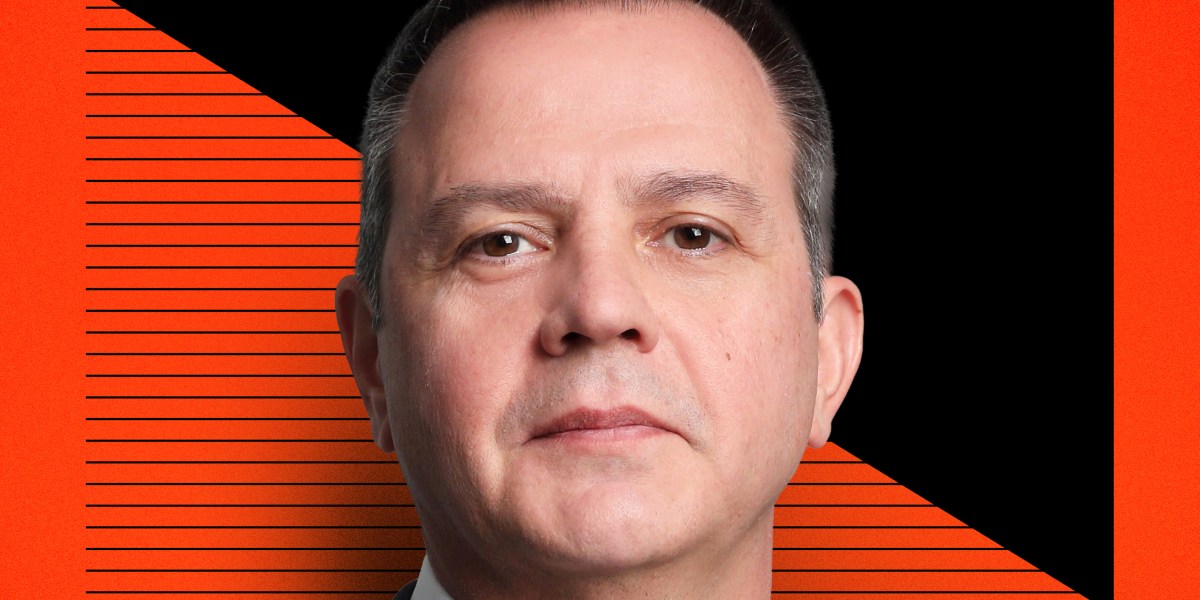




For just about everyone in Asia, President Trump’s latest round of severe tariffs is a disaster. Everyone but Liu Gang, who sees this moment as a chance to double down on his electronics factory in the Philippines.
“I tell companies: ‘Come to the Philippines,’” Mr. Liu said as he competed to be heard above the din of several machines, weighing 400 tons each, stamping out metal parts for Fujitsu A.T.M.s on the factory floor downstairs.
Mr. Trump’s harshest tariffs went into effect on Wednesday on products that are made in China and some of its rising manufacturing rivals in Southeast Asia: Vietnam, Cambodia, Thailand and Indonesia. The levies will transform these factory economies, once the world’s most sought after locations for making cars, bags, shoes and gadgets that Americans buy, into the last places on earth that any company wants to be.
Then there’s the Philippines.
The Southeast Asian country was also hit with tariffs, but its economic reliance on services and agriculture left it less exposed to the Trump administration’s reciprocal tariffs meant to punish manufacturing economies and bring factory jobs back to the United States. Goods coming from the Philippines will be taxed 17 percent, still high, but less than half of what products from Thailand will be tariffed and almost a third less than the levy on Vietnam.
The Philippines may be the only government in the world that has called Mr. Trump’s tariffs “good news.” Speaking hours after Mr. Trump announced them last week, a press officer for the Philippines government said the impact of tariffs would be “very minimal,” adding that “we may also gain investors from countries that have greater tariffs.”
Suddenly, the Philippines is popping up on the radar as companies scramble to find alternatives to their factories in places like Vietnam and Thailand.
At least half a dozen companies with customers in the United States have made inquiries in the last few weeks with Mr. Liu’s factory and his neighbors in one area of Batangas province that is a 90-minute drive south of Manila. Some have made commitments to shift production. It’s an unexpected turn of events for a country that has long lacked the manufacturing prowess that has pulled many other Asian nations out of poverty.
The shift could be temporary. Countries like Vietnam are racing to strike deals with Washington and reverse tariffs that will be catastrophic for their economies. And the Philippines faces a host of challenges that make it a more difficult place to get a factory going quickly. Raw materials like rubber and steel are difficult to procure and more expensive than in countries like China. Construction takes longer. But the Philippines has a large and young work force that costs less.
Mr. Liu began to move most of his factory production from Dongguan, in southern China, to Batangas in 2018 when Mr. Trump launched a trade conflict with China during his first term.
The American and Japanese companies that he supplies parts to like the Japanese electronic company Epson and Emerson, an industrial equipment maker based in St. Louis, had begun closing their factories in China and moving out. It was hard at first. There weren’t a lot of options for labor. Raw materials like aluminum was three times more expensive than in China. The workers he hired were not as productive as in China.
Still, everyone was optimistic. “The Philippines is like China was 15 years ago,” said Kevin Lee, a sales director at HYS Enterprise, which owns the factory in Batangas. Cheaper labor helped. It costs about $820 a month employ someone in China; in the Philippines that same worker costs $274, Mr. Lee said.
HYS started shipping two containers’ worth of raw materials from China each week stuffed with plastic pellets, aluminum sheet rolls and bolts and nuts. Mr. Liu brought in Chinese engineers to work with local staff and to start automating some of the manufacturing processes. Business picked up and four years later, in 2022, they bought 20,000 square meters for a third factory that will soon start die casting as well as painting for products like the door panels of Toyota cars.
The decision to move production to the Philippines from China paid off this week as the Trump administration raised tariffs on Chinese goods to more than 100 percent.
Now Mr. Liu is pitching his factory as a “one stop shop” alternative for factories in neighboring countries.
“You can’t put all your eggs in one basket,” he told a prospective new client on a recent visit to the factory as engineers stood close by, designing new tools for metal stamping and wire cutting machines.
In the newly built factory next door, injection molding machines sucked in plastic pellets and spat out printer trays. Several rows over, three giant laser cutting devices stamped and cut sheets of metal that will be used in power supply cases for Emerson. On the other side of the factory floor, a worker was leaving his welding station for lunch. A box of metal parts revealed his morning’s work, dozens of metal parts that are used to hold the wires on a Honda motorbike.
At the Fong Shann Printing factory a few blocks away, four companies with plants in Vietnam, Taiwan and China have visited in recent days to talk about contracting the factory to make the boxing materials for products they will start producing in the Philippines.
“We already have four new customers,” said Alan Tu, the vice general manager of Fong Shann’s factory in the Philippines. “After the tariff issue, they are looking elsewhere.”
On a recent day, three design and quality control employees were printing and reading — line by line — the instruction manual for a scientific calculator sold by Texas Instruments.
Around the corner, past towers of cardboard packaging, large industrial printers were churning out marketing for food products, and boxes for electric pianos and Casio calculators.
Prompted by customers in countries from Australia to Britain that have fretted over bungled supply chains and growing superpower tensions, some manufacturers have rented land in this special economic zone, one of dozens that offer tax incentives to test out whether they can make their products in the Philippines.
A short drive away in another industrial park, the Japanese medical device company Arkray is making preparations to scale up the manufacturing of its products that get shipped to the United States, which include health devices like lactate monitors and diabetes and urinalysis testing devices.
“We are talking about how we can change the supply chain,” said Hideaki Anai, the chief supply chain officer at Arkray. The company does most of its development in Japan but has opened factories around the world, most recently in Vietnam and Mexico.
“We can move maybe 70 percent of the products which we are sending to the U.S. from other countries,” Mr. Anai said. The change, which will affect around half of all the products that Arkray sells, will take a month to make happen because the company’s 400 or so products will need to be registered differently and the labels will need to be changed, Mr. Anai said.
“The Philippines was 0 percent but they will now charge 17 percent,” he said.
“Compared to Japan, which is now 25 percent, and Taiwan, which is 32 percent, the 17 percent is much better.”


