


Close Menu
Alpha Leaders
  • Home
  • News
  • Leadership
  • Entrepreneurs
  • Business
  • Living
  • Innovation
  • More
    • Money & Finance
    • Web Stories
    • Global
    • Press Release
What's On
Trump reduces size of two national monuments by 90% in efforts to expand land development

Trump reduces size of two national monuments by 90% in efforts to expand land development

14 July 2026
The No. 1 Online Habit That Slowly Drains Your Happiness, By A Psychologist

The No. 1 Online Habit That Slowly Drains Your Happiness, By A Psychologist

14 July 2026
NYS Gov. Hochul’s data center moratorium includes a new model for funding AI infrastructure 

NYS Gov. Hochul’s data center moratorium includes a new model for funding AI infrastructure 

14 July 2026
Facebook X (Twitter) Instagram
Alpha Leaders
newsletter
  • Home
  • News
  • Leadership
  • Entrepreneurs
  • Business
  • Living
  • Innovation
  • More
    • Money & Finance
    • Web Stories
    • Global
    • Press Release
Alpha Leaders
Home » ‘We are driving in the fog’: Hundreds of economists admit they’re flying blind on AI
News

‘We are driving in the fog’: Hundreds of economists admit they’re flying blind on AI

Press RoomBy Press Room13 July 20265 Mins Read
Facebook Twitter Copy Link Pinterest LinkedIn Tumblr Email WhatsApp
‘We are driving in the fog’: Hundreds of economists admit they’re flying blind on AI

“We are driving in the fog, and it is extraordinarily difficult to anticipate what will happen next.”

That alarmed voice is coming straight from the top of the economics profession. That’s Anton Korinek, a University of Virginia economics professor and one of the organizers of a statement signed this week by over 200 economists—including 16 Nobel laureates and the chief economists of OpenAI and Anthropic—admitting, in effect, that the profession is flying blind on AI.

The short statement, “We Must Act Now,” released Monday, doesn’t claim to have answers and claims the field is dangerously behind on the questions. It only offers three warnings.

  1. AI may become radically more powerful over the next 10 years.
  2. This could drive an unprecedented transformation of our economy, larger than the Industrial Revolution, but unfolding over a vastly shorter time frame. It could bring risks, including large-scale job displacement, as well as opportunities such as major gains in living standards.
  3. Economists, policymakers and technology leaders must act now to understand the economics of transformative AI and to build the incentives, guardrails, and institutions needed to steer AI in a direction that complements humans and benefits society.

Michael Spence, a Nobel laureate at NYU, called for an “all hands on deck” approach to “steering AI in beneficial directions”—given the scale, scope and speed of its advancements, along with the high degree of uncertainty about how big and when the impact will arrive.

That cuts to the heart of this document’s unusual nature: it’s not a policy platform or a set of predictions. It’s a demand for the infrastructure to see clearly, issued by people admitting they currently can’t. One top Wall Street analyst, who did not sign the statement, thinks he knows what the confusion is all about.

Even the skeptics say they’re guessing

What makes the fog metaphor credible rather than alarmist is who’s admitting it. Nela Richardson, ADP’s chief economist, has described much of the public debate over AI and employment comes down to “guesswork” given the huge range of variables involved.

Likewise, Daron Acemoglu, the MIT Nobel laureate who has been the field’s most rigorous skeptic of AI productivity claims, previously told Fortune that he finds much of the productivity discourse around AI “brainless” even as he now says recent advances have made him more worried about near-term disruption. Signing onto today’s statement, Acemoglu said he was “so happy to join other leading experts in calling for the urgent need to redirect AI so that its risks are minimized and it can work for the benefit of workers and society.”

Stanford’s Erik Brynjolfsson, who The Atlantic recently noted has a remarkable knack for getting people who disagree to work together, previously told Fortune that he was puzzled by many of Acemoglu’s projections on AI and productivity. It’s no surprise, then, that Acemoglu signed on and that Brynjolfsson was an organizer of this statement.

“AI capabilities are advancing far faster than our understanding of the economic implications,” Brynjolfsson said in today’s statement. “We must act now to guide AI to complement humans rather than simply imitate them—and to generate prosperity for the many, not just the few.”

Brynjolfsson is at work trying to build new tools to understand the impact: his Canaries Dashboard with ADP Research tracks 4.6 million workers across more than 730 occupations in near-real time and purports to show employment for workers ages 22 to 25 in AI-exposed occupations shrinking more than 4% annually, even as the aggregate labor market looks calm. Named after the proverbial canary in the coal mine, Brynjolfsson previously talked to Fortune about why “flying blind” is such an urgent problem: the danger is invisible at the headline level and only shows up once you cut the data by age and task exposure. “We are flying blind into one of the most consequential periods in world history,” he said at the dashboard’s launch. “We need timely, trusted evidence to understand where AI is creating value and where it is disrupting work.”

The instruments themselves are contested

Torsten Slok, Apollo Global Management’s influential chief economist, published a blog post a week ahead of the “We Must Act Now” statement, arguing that even the basic concept of “AI exposure”—the term at the center of most labor market research—is contested by five competing measurement frameworks, each of which produces different results.

One measures what workers actually do with Claude, using real chat logs. Another does the same with Microsoft Copilot. A third has human experts judge which job skills AI is theoretically capable of replacing, regardless of whether anyone is using it that way. A fourth asks ChatGPT to grade its own usefulness on each task, and a fifth scans employer job postings for AI skill mentions. The theoretical frameworks run systematically higher than the usage-based ones because they ignore whether adoption is actually happening or worth the cost.

The disagreement is worst exactly where the stakes are highest. “What is most striking,” Slok writes, “is that the five measures disagree most exactly where the stakes are highest, among the very jobs everyone wants to flag as at-risk—such as telemarketers, tax preparers and writers.” There is a big difference, in other words, between asking “What could AI do to this job?” and asking “What are workers actually using AI for?” The theoretical use cases (questions 3, 4 and 5) are running “systematically higher” than the real-world ones (1 and 2), he said, because they ignore whether adoption is even happening or worth the cost.

As he often does, Slok offered a “bottom line” takeaway: “When someone says a job is ‘highly exposed to AI,’ the honest first question is: Exposed by which measure, and measuring what? Until that is pinned down, the label ‘AI exposure’ carries far less meaning than it appears to.”


Disruption Economics nobel prize
Share. Facebook Twitter Pinterest LinkedIn Tumblr Email Copy Link

Related Articles

Trump reduces size of two national monuments by 90% in efforts to expand land development

Trump reduces size of two national monuments by 90% in efforts to expand land development

14 July 2026
NYS Gov. Hochul’s data center moratorium includes a new model for funding AI infrastructure 

NYS Gov. Hochul’s data center moratorium includes a new model for funding AI infrastructure 

14 July 2026
A leadership consultant’s warning to managers: Don’t mistake grief for underperformance

A leadership consultant’s warning to managers: Don’t mistake grief for underperformance

14 July 2026
The AI boom drove China’s 27% export jump in June as AI and the Iran war reshape global trade

The AI boom drove China’s 27% export jump in June as AI and the Iran war reshape global trade

14 July 2026
SoftBank CEO says asking if AI is a bubble is “foolish”, estimates  trillion needed to meet demand

SoftBank CEO says asking if AI is a bubble is “foolish”, estimates $5 trillion needed to meet demand

14 July 2026
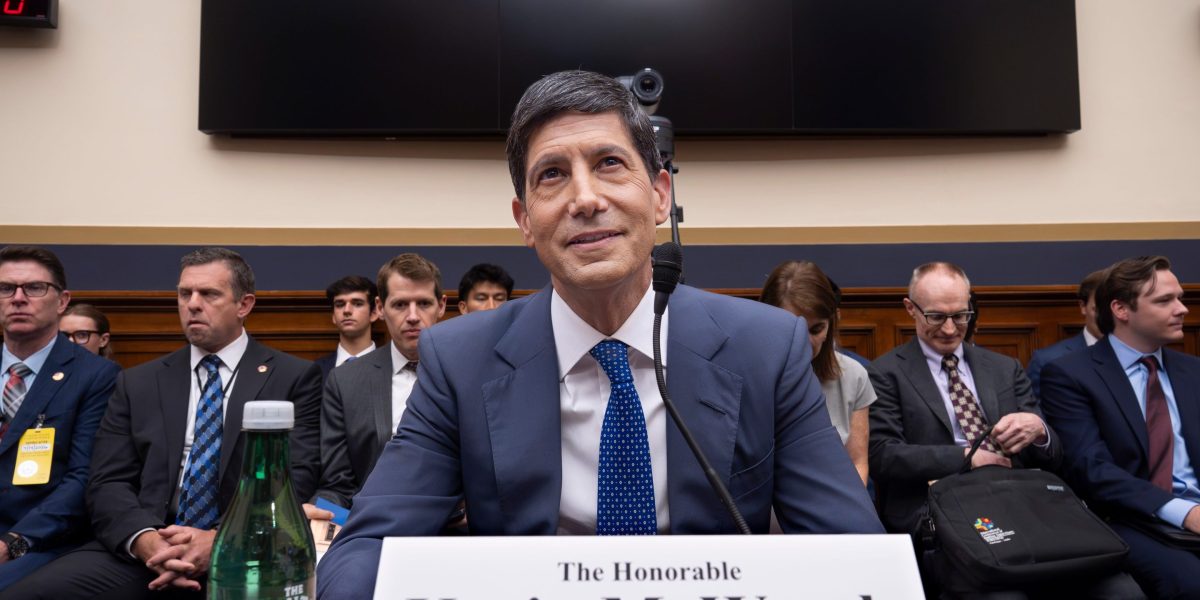
Kevin Warsh won’t say if the Fed’s done raising rates, says the Fed has ‘no tolerance’ for inflation

Kevin Warsh won’t say if the Fed’s done raising rates, says the Fed has ‘no tolerance’ for inflation

14 July 2026
Don't Miss
Unwrap Christmas Sustainably: How To Handle Gifts You Don’t Want

Unwrap Christmas Sustainably: How To Handle Gifts You Don’t Want

By Press Room27 December 2024

Every year, millions of people unwrap Christmas gifts that they do not love, need, or…

Exclusive: DeFi platform Azura launches after raising .9 million from Initialized

Exclusive: DeFi platform Azura launches after raising $6.9 million from Initialized

22 October 2024
Sam Altman’s World Wants To Scan Your Eyes To Prove You’re Human

Sam Altman’s World Wants To Scan Your Eyes To Prove You’re Human

22 October 2024
Stay In Touch
  • Facebook
  • Twitter
  • Pinterest
  • Instagram
  • YouTube
  • Vimeo
Latest Articles
A leadership consultant’s warning to managers: Don’t mistake grief for underperformance

A leadership consultant’s warning to managers: Don’t mistake grief for underperformance

14 July 20262 Views
Leonard Abramson, Health Care Innovator and Philanthropist, Dies at 93

Leonard Abramson, Health Care Innovator and Philanthropist, Dies at 93

14 July 20261 Views
NYT Connections Hints And Answers: Wednesday, July 15

NYT Connections Hints And Answers: Wednesday, July 15

14 July 20261 Views
The AI boom drove China’s 27% export jump in June as AI and the Iran war reshape global trade

The AI boom drove China’s 27% export jump in June as AI and the Iran war reshape global trade

14 July 20261 Views

Recent Posts

  • Trump reduces size of two national monuments by 90% in efforts to expand land development
  • The No. 1 Online Habit That Slowly Drains Your Happiness, By A Psychologist
  • NYS Gov. Hochul’s data center moratorium includes a new model for funding AI infrastructure 
  • Small Business Only American Institution With Bipartisan Support
  • A leadership consultant’s warning to managers: Don’t mistake grief for underperformance

Recent Comments

No comments to show.
About Us
About Us

Alpha Leaders is your one-stop website for the latest Entrepreneurs and Leaders news and updates, follow us now to get the news that matters to you.

Facebook X (Twitter) Pinterest YouTube WhatsApp
Our Picks
Trump reduces size of two national monuments by 90% in efforts to expand land development

Trump reduces size of two national monuments by 90% in efforts to expand land development

14 July 2026
The No. 1 Online Habit That Slowly Drains Your Happiness, By A Psychologist

The No. 1 Online Habit That Slowly Drains Your Happiness, By A Psychologist

14 July 2026
NYS Gov. Hochul’s data center moratorium includes a new model for funding AI infrastructure 

NYS Gov. Hochul’s data center moratorium includes a new model for funding AI infrastructure 

14 July 2026
Most Popular
Small Business Only American Institution With Bipartisan Support

Small Business Only American Institution With Bipartisan Support

14 July 20261 Views
A leadership consultant’s warning to managers: Don’t mistake grief for underperformance

A leadership consultant’s warning to managers: Don’t mistake grief for underperformance

14 July 20262 Views
Leonard Abramson, Health Care Innovator and Philanthropist, Dies at 93

Leonard Abramson, Health Care Innovator and Philanthropist, Dies at 93

14 July 20261 Views

Archives

  • July 2026
  • June 2026
  • May 2026
  • April 2026
  • March 2026
  • February 2026
  • January 2026
  • December 2025
  • November 2025
  • October 2025
  • September 2025
  • August 2025
  • July 2025
  • June 2025
  • May 2025
  • April 2025
  • March 2025
  • February 2025
  • January 2025
  • December 2024
  • November 2024
  • October 2024
  • September 2024
  • August 2024
  • July 2024
  • June 2024
  • May 2024
  • April 2024
  • March 2024
  • February 2024
  • January 2024
  • December 2023
  • March 2022
  • January 2021
  • March 2020
  • January 2020

Categories

  • Blog
  • Business
  • Entrepreneurs
  • Global
  • Innovation
  • Leadership
  • Living
  • Money & Finance
  • News
  • Press Release
© 2026 Alpha Leaders. All Rights Reserved.
  • Privacy Policy
  • Terms of use
  • Advertise
  • Contact

Type above and press Enter to search. Press Esc to cancel.