



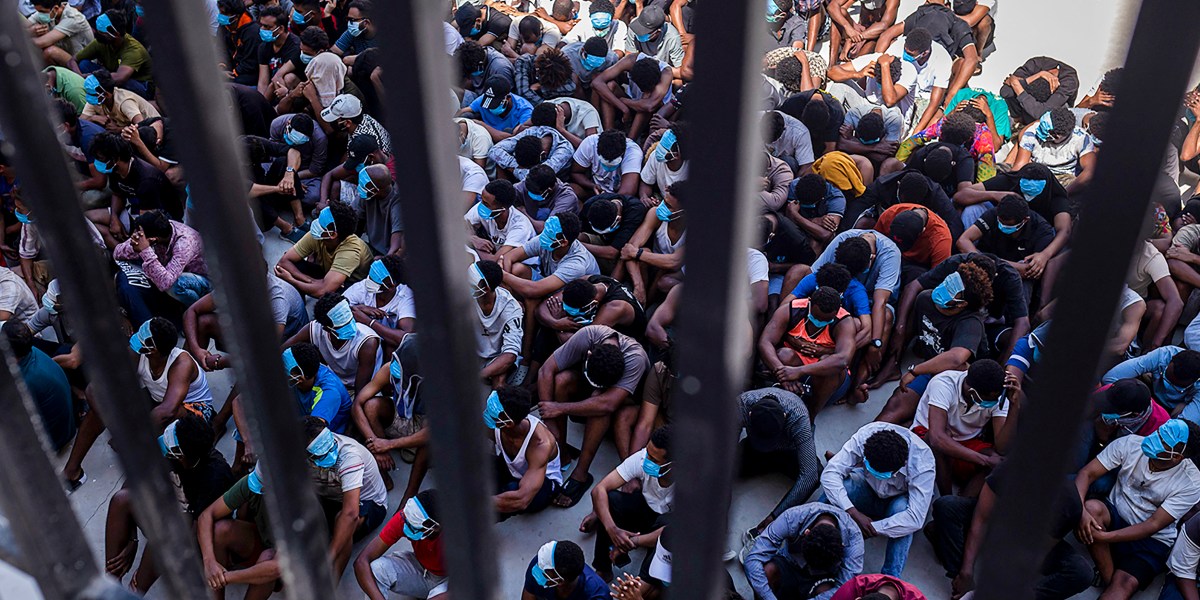
Southeast Asian governments and businesses have been rocked by a renewed focus on the region’s notorious scam centers, compounds where workers—often themselves victims of human trafficking—try to defraud individuals in wealthier economies like Singapore and Hong Kong.
In mid-October, the U.S. and UK slapped sanctions targeting individuals and entities within the Cambodia-based Prince Group, which officials accused of being linked to transnational cybercrime. Nearby Singapore later seized just over $115 million worth of assets tied to the Group. (The Prince Group this week said it “categorically rejects” any allegations that it or its chairman Chen Zhi engaged in any unlawful activity.)
South Korea also launched emergency measures last month to rescue its kidnapped nationals in Cambodia after one Korean tourist was found murdered near a scam compound. And on Oct. 22, Thailand Deputy Finance Minister Vorapak Tanyawong resigned after just a month on the job following accusations linking him to Cambodian scam center networks. (Vorapak has denied the allegations)
On Thursday, the U.S. announced that it will start a new “Scam Center Strike Force” to target cybercriminals based in Southeast Asia, with U.S. Attorney for the District of Columbia Jeanine Pirro dubbing it “a national security problem and a homeland security problem.”
It’s a dramatic escalation for an issue that’s remained in the headlines since the begining of the year, when a Chinese actor, Wang Xing, went missing in Thailand and brought to a scam center in neighboring Myanmar.
Hundreds of thousands more people remain trapped in Southeast Asian scam centers, according to the United Nations. Many were lured by false job ads on platforms like Facebook, says Jacob Sims, a fellow at Harvard University’s Asia Center and an expert on transnational crime and human rights in Southeast Asia.
“They get taken to these compounds that look like penal colonies, with barbed wires on the inside, guard towers facing in, and bars over the windows,” Sims adds. “They’re brought inside and told to scam people, and if they don’t, they will get beaten, tortured, abused, killed—and that becomes life for all of these people.”
These scam compounds are primarily located in three countries—Cambodia, Laos, and Myanmar—and particularly in their border areas, where local governments have ceded de facto control.
And despite escalating global efforts to dismantle them, sustainable change has proven difficult to achieve. When one scam center is taken down, another quickly mushrooms up elsewhere.
“The criminal groups are very strategic—they find areas where governance is weak, local authorities are easy to manipulate, and where corruption thrives. Those would be the perfect conditions for them to collude with local elites,” says Hammerli Sriyai, a visiting fellow at the ISEAS-Yusof Ishak Institute in Singapore.
A burgeoning problem
Scam centers are now a matter of global diplomacy. Last month, on the sidelines of the ASEAN summit in Kuala Lumpur, South Korea and Cambodia agreed to set up a dedicated task force to pursue traffickers. Separately, the U.S. and UK both seized $15 billion worth of Bitcoin from Southeast Asian scam empires.
For one, criminal groups have spent decades building up their elite protection networks, says Sims of Harvard. Many criminal networks pivoted from gambling to scam centers when the COVID-19 pandemic paused international travel.
The ballooning number of scam complexes then began receiving protection by local elites.
“Local officials and economic interests are often complicit (with scam center operations), providing protection in exchange for kick-backs,” says Joanne Lin, a senior fellow and coordinator from the ISEAS-Yusof Ishak Institute.
One example is KK Park, one of the largest scam compounds on the Myanmar-Thailand border. Spokespeople for Myanmar’s military have pointed fingers at the Karen National Union, an armed ethnic organization from the country, for jointly establishing KK Park alongside Chinese syndicates.
Scam centers have traditionally relied on trafficked people. A 2025 report by the UN Office of Drugs and Crime found that victims in Southeast Asian scam centers hailed from over 50 countries worldwide.
“The pandemic gave rise to a large, newly vulnerable population—people who used to hold stable jobs, are multilingual, urban, well-educated, younger and tech-savvy. It broadened the aperture of the type of people vulnerable to being trafficked to scam centers,” says Sims of Harvard.
But while scammers used to be mostly Chinese and Thai nationals, the workforce has now expanded to include more Burmese and Cambodian youth. Political instability, as well as Myanmar’s civil war, have eroded job prospects for the young, who now provide a steady source of labor for scam centers.
“This shows the corrupting influence of this industry. It’s not just pockets of foreigners that are using these countries as an island for their operations—it also draws in local people,” says Mark Bo, a researcher and co-author of Scam: Inside Southeast Asia’s Cybercrime Compounds.
AI, crypto, deepfakes
Scammers are also tapping new technologies to enhance their operations. Online translation services and AI deepfakes are increasing the sophistication and believability of scams.
Most common is the “pig butchering scam,” a long-term fraud where scammers build trust with a victim through a false friendship or romantic relationship, before enticing them with a fake investment scheme.
“If you think you’re dating a really attractive person online, you would want to talk to them, perhaps via video chat. In that case, the deepfakes employed are really good,” Sims says.
Scammers have also tapped alternative currencies, such as cryptocurrency and other decentralized finance (DeFi) instruments like stablecoins, to aid in the money laundering process and make illicit profits harder to trace.
These currencies are an integral part of cybercrime operations, as they are poorly understood and are often pseudo-anonymous, says Kristina Amerhauser, a senior analyst from the Global Initiative Against Transnational Organized Crime (GI-TOC).
“When you’re exchanging crypto back into fiat currency (i.e. government-issued currency, such as U.S. dollars), the “know your customer” checks performed by crypto exchanges are often limited, which makes it very attractive to criminals,” Amerhauser says.
A game of whack-a-mole
These scam centers have far-reaching impacts for Southeast Asia and beyond.
They erode public trust, drain household savings and prey especially on the elderly and less digitally literate, says Lin of the ISEAS-Yusof Ishak Institute. Many victims lose their life savings, which in turn weakens social stability.
And for governments, these activities damage international reputation and strain law enforcement resources, she adds.
But the transnational nature of scam centers—coupled with rampant corruption—makes it tough for law enforcement to counter them.
“International law frameworks are built on the back of state actors being viewed as partners—with everyone moving towards this nebulous idea of development, prosperity and freedom. But these countries don’t play by those rules,” Sims adds. “In [nations that house scam centers], the domestic rule of law is already so profoundly undermined, that the idea of upholding international law in any means other than rhetoric is quite impossible.”
And with the backing of local power brokers, enforcement becomes a game of whack-a-mole.
Even if international agencies like Interpol manage to track down and identify the perpetrators of the scam centers, it remains challenging to pin down a legitimate ‘authority’ they should work with to clamp down on them, says Yen Zhi Yi, a senior analyst from the S. Rajaratnam School of International Studies (RSIS) at the Nanyang Technological University. Instead, when a center is discovered or raided, the operators quickly relocate and resume business elsewhere, Lin says.
Root causes
As international pressure mounts, crackdowns on scam centers have intensified in recent months—as in the case of KK Park, where a military-led crackdown in October resulted in the arrests of over 2,000 people.
But some experts, like Sims and Sriyai, argue that such measures are only temporary solutions.
“Most of the observable response from the three nations has been performative and designed to move the industry into the hands of more powerful local elites or relieve international pressure—or both—so there’s no real reform,” Sims says.
Instead, they believe it is crucial to address the root causes of why people fall prey to scam operations in the first place.
Many across the globe are facing economic stagnation, job insecurity and inflation, Sriyai says, and individual countries need to fix their domestic problems to prevent citizens from being lured to scam centers.
Regional networks and intergovernmental organizations, such as ASEAN, or the Association of Southeast Asian Nations, also have a role to play.
“ASEAN can serve as a focal point that links Southeast Asian countries with the international community that may have technical expertise and resources to help the smaller ASEAN countries,” says Sriyai.
The coalition also provides an effective platform for negotiations with larger countries like China, where many of the scam syndicates hail from.
But ultimately, experts think individuals have to protect themselves. On this front, governments can help improve digital literacy, including teaching people what cryptocurrency and fintech platforms look like and how they function.
“Legislation and enforcement are important, but so is raising awareness and building people’s capacity to spot shady apps and know when they may be investing in a platform that is illegitimate,” says Amerhauser of GI-TOC.