


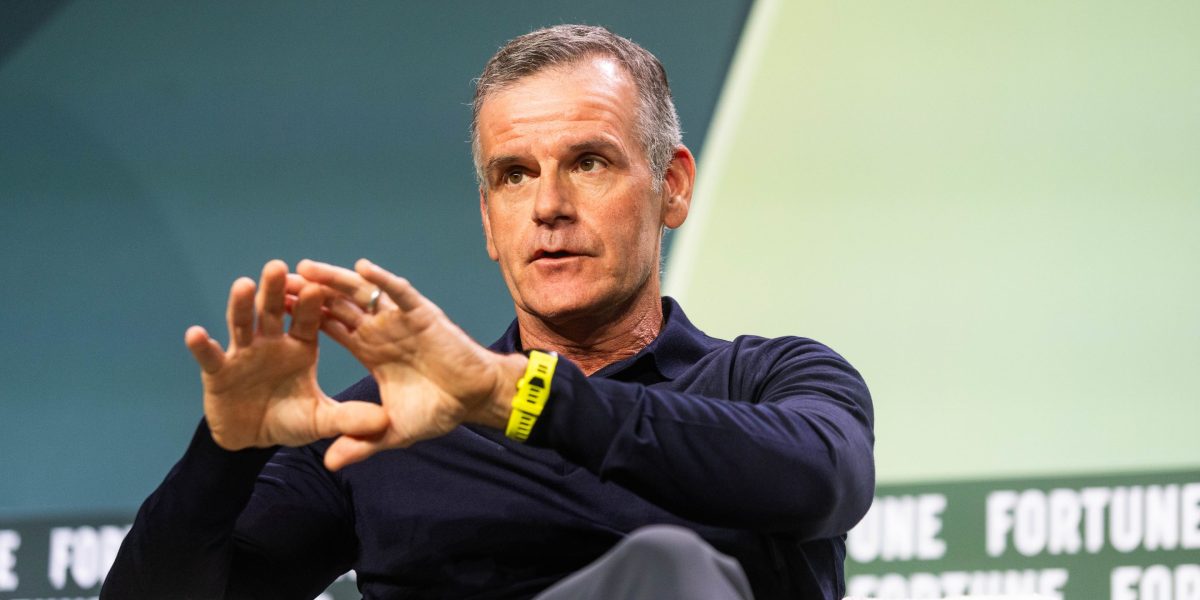
One of the more striking moments at this year’s Fortune COO Summit came when Dennis Woodside, the CEO of Freshworks and a former COO of Dropbox, asked the room a simple question: Who wants to be a CEO?
Not many hands went up.
Woodside found that surprising. His view, he told the crowd, is that if you hold the COO title, it’s usually because your CEO and board already see you as potential CEO material, even if no one has said it out loud.
“If you have the title of COO, you have it for a reason,” he told the audience. “The board and your CEO decided that you are on a path to being ready, potentially to be the CEO.”
That observation resonated with me because, over the years of interviewing chief operating officers, I’ve often encountered the same hesitation. Many COOs are reluctant to say publicly that they want the top job, even when their careers suggest they are being groomed for it. Some genuinely prefer the operator role. Others seem wary of appearing overly ambitious.
But Woodside argues that leaders should be honest with themselves about whether they aspire to the CEO seat—and, if they do, communicate that ambition early.
Woodside speaks from experience. His unconventional career has taken him from M&A law and consulting to leadership roles at Google, Motorola Mobility, Dropbox, Impossible Foods, and now Freshworks. Along the way, he says, nobody explicitly told him that becoming COO often means being considered for the CEO pipeline. He had to figure it out himself.
His advice is straightforward: Master the job you have today, but don’t be afraid to tell your board and mentors where you want to go. “You have to have that conversation: ‘I want to be the CEO someday. Help me get there,’” he says.
In a business environment increasingly shaped by AI disruption, succession challenges, and leadership turnover, it’s a reminder that the COO role is often more than an operational assignment. It may be the clearest signal a company can send that it believes someone is capable of running the entire enterprise.
READ MORE: These COOs became CEOs. Here’s what they wish everyone knew about the tricky transition
Ruth Umoh
[email protected]
Smarter in seconds
FIFA fiefdom. How Gianni Infantino built a FIFA-dom with a tight grip on soccer’s biggest global event
Command center. ‘Stop building silos of excellence’: Peloton’s COO has a Navy playbook for the new era of supply chain chaos
Skills shift. The IBM executive tasked with retraining 30 million workers is changing how she thinks about the AI finish line
Leadership lesson
Walmart CEO John Furner on adaptability: “Getting comfortable with change in a world that continues to change, I think, is a really great trait for any leader.”
News to know
Trump urged Israel and Iran to stop firing after both breached the April ceasefire. WSJ
SpaceX’s amended IPO filing sets aside 5% of shares for select insiders and associates who can sell immediately after the IPO, bypassing the usual lockup period. Fortune
AI threatens blue-state jobs most, leaving Democrats especially vulnerable to a growing tech backlash. Fortune
U.S. Soccer is using AI to scout 70 million teenagers, a move its leadership says is reshaping how players are scouted and developed. Fortune
Just 12 Fortune 500 companies have endured more than two centuries of wars, economic crashes, and sweeping changes in American history. Fortune
Intel’s stock is up nearly 500% after CEO Lip-Bu Tan halved management layers, finally signaling a turnaround. Fortune
A sweeping AI and automation effort is helping Macy’s improve demand forecasting, speed deliveries, and personalize shopping. Fortune
American money has transformed soccer, but fans fear the profit chase is warping the game without fixing its finances. FT