




There’s a long-standing notion that ostriches like to “bury” their heads in the sand when they see something dangerous approaching. Supposedly, the logic behind this is that if they can’t see the threat, then it technically isn’t there.
This idea, as amusing as it is, has long since been debunked. Ostriches don’t actually do this — but, ironically, we humans often do.
You can likely think of a time when you deliberately chose to not know something. Some of us like to put off checking our bank balance after a big weekend. Some of us ignore our nagging suspicions about a partner’s loyalty. Some of us scroll quickly past awful headlines about war or climate change.
This “the less I know, the better” mindset is surprisingly common in adulthood. What’s less obvious, however, is where we learn it from. After all, children are famously (even annoyingly) curious. They’re permanently asking questions and always wanting to know more. So, when is it that we move from this relentless curiosity in childhood to the selective avoidance we see in adults? And, more importantly, why?
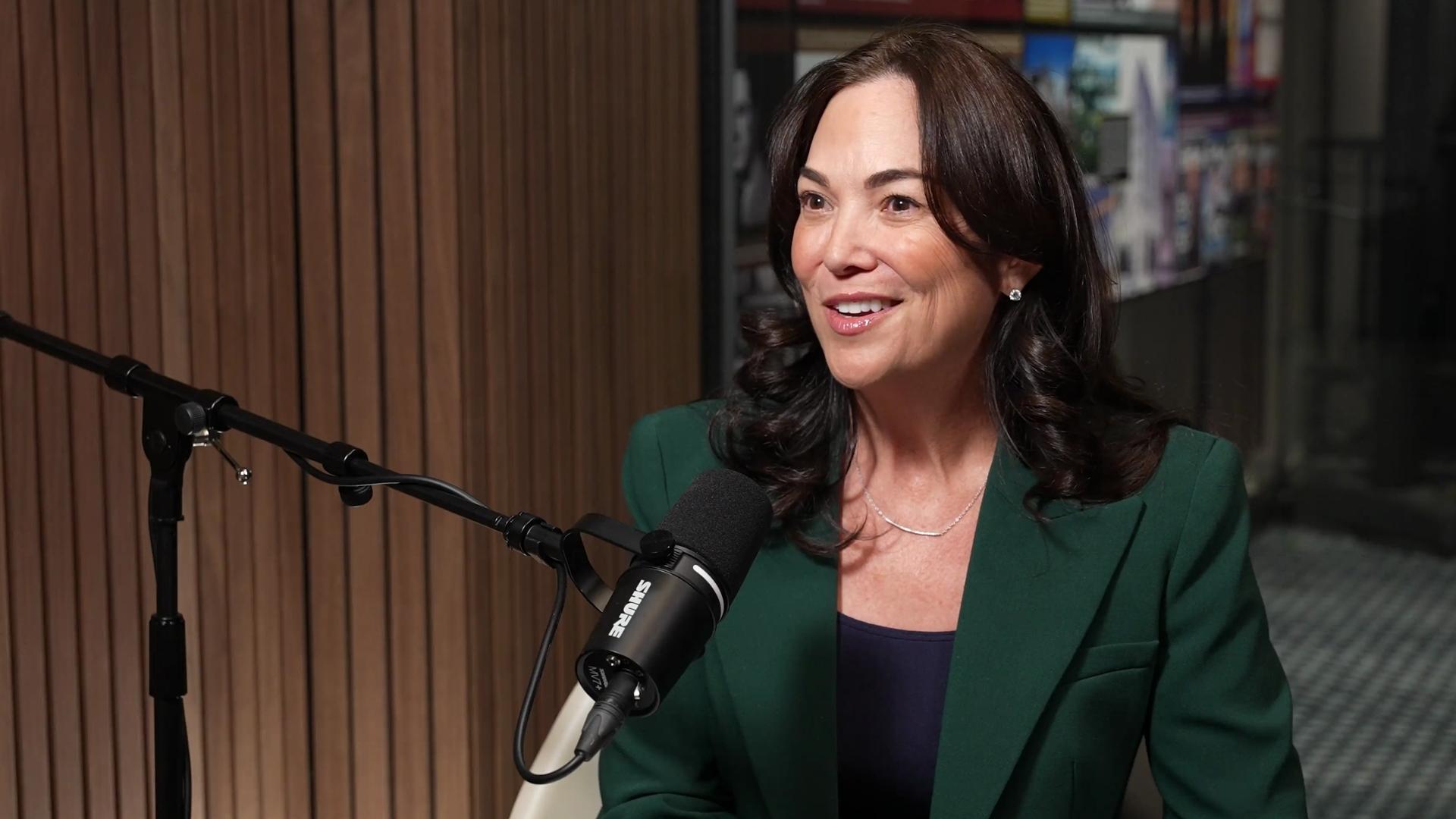
A June 2025 study published in Psychological Science, led by University of Chicago researcher Radhika Santhanagopalan, set out to answer that very question. Here’s a breakdown of the study’s findings, aptly titled “Becoming an Ostrich.”
What Is ‘Information Avoidance’?
As Santhanagopalan explained to me in an interview, “Adults avoid information across many consequential domains of life.” Continuing, she explained, “Yet this seemed inconsistent with what we know about children, who exhibit high levels of curiosity and a desire to learn.”
Information avoidance, within the context of the 2025 study, is not the same thing as being a little bit scatterbrained or slightly apathetic to something. It doesn’t refer to your forgetting to look something up or your partial indifference to an uninteresting subject.
Rather, it refers to the active decision a person makes to turn away from information that is free, readily available and, most importantly, highly relevant to them.
Many people would likely be quick to defend that they’d never act in willful ignorance like this. But, in reality, people exhibit this kind of behavior every day, and for a variety of different reasons, too.
You might, say, put off a certain medical test out of fear of receiving a specific result. You might avoid penning a performance review into your work calendar due to not wanting to confront your potential weaknesses. You may even choose, as a registered voter, to ignore concerning headlines about your favored candidate if it threatens your worldview.
In each of these cases, relevant information is right there for the taking. In some, the information may not even be necessarily harmful or scary. But regardless, rather than face potential discomfort, we just decide that we’re better off without an answer.
The Origins Of ‘Information Avoidance’
To trace the roots of our tendency to bury our heads in the sand, Santhanagopalan and her co-authors studied children between the ages of five and ten. These participants were specifically placed in scenarios in which they could either seek or avoid information.
The findings showed a very clear developmental shift.
Younger children were, as we’d expect, incredibly eager to learn — even if it still resulted in selfish choices afterward. In one experiment, for instance, children were given the chance to see what a partner’s payoff would be in a sharing game. In other words, not only did the younger children actively want to know their partners’ information, but they also often still chose the option that benefited themselves thereafter, too.
The older children, on the other hand, played quite differently in these experiments. They increasingly chose not to look at their partner’s payoff, but also went on to make the self-interested choice in any case.
Explaining this intriguing finding, Santhanagopalan said, “As children grow older, they become more concerned with fairness — or, at least, appearing fair.” Continuing, she explained, “Moral ‘wiggle room’ is the strategy that resolves this tension; by avoiding their partner’s payoff information, they can maintain the illusion of fairness.”
Why ‘Not Knowing’ Feels Safest (But Isn’t)
Why do kids — and later adults — choose ignorance when information is available? At a glance, you might assume that we simply outgrow our childlike curiosity as we age. But, in all likelihood, that natural curiosity is probably still within us. Only, as we mature, we recognize that this curiosity has to be tempered with our newfound values.
Specifically, the 2025 study highlights three main motivations:
- Protecting oneself from negative emotions. Children, and adults even more so, will do whatever they can to avoid information if they suspect that it’ll make them feel bad in some way or another. In fact, Santhanagopalan’s third experiment showed that even young, curious children avoided certain information if they were explicitly encouraged to “protect their emotions.”
- Preserving one’s self-image. People can far more easily maintain whatever internal sense of likeability, fairness or competence they have if they steer clear of uncomfortable truths. This result was observed in the second experiment; older children in this study still wanted to see themselves (and be seen by others) as fair, all while still acting selfishly.
- Acting in self-interest. Information avoidance makes it much easier to act in self-interest without feeling guilty. In fact, Santhanagopalan notes that adults do this all the time. She explains that consumers, for example, choose not to read about their favorite brands’ ethical practices. Companies, on the other hand, regularly turn a blind eye to the environmental impacts their supply chains may have. As she concludes, “All these instances allow us to wear a protective veil of ignorance while continuing to act in our own self-interest.”
Avoidance may seem harmless from this perspective; you might even say it’s adaptive. Both adults and children can essentially shield themselves totally from whatever distress they choose. It may also, in a way, help them cope with much of life’s uncertainty.
But over time, these small acts of “not knowing” can — and will — add up.
Skipping a health screening you’re too afraid to know the results of will placate your discomfort for the time being; it can also have genuinely deadly consequences later on down the line. Ignoring red flags or avoiding hard conversations in your love life may prevent conflict in the short term; it will likely also leave you stuck in an unsatisfying (or even harmful) relationship.
What we often forget when avoiding information is that nothing changes if nothing changes. How can we ever hope to improve if we repeatedly shield our eyes from whatever frightens us?
As Santhanagopalan notes, “Early avoidance in childhood may set the stage for broader societal challenges.” Continuing, she clarifies, “By repeatedly avoiding opposing views (almost training ourselves to turn away) we build avoidance habits that can harden into ideological rigidity over time.”
As a result, what may well have started out as a child’s strategy to avoid discomfort or maintain fairness can eventually become an adult’s way of shielding themselves from truths they’re not brave enough to face. It’s no wonder Santhanagopalan refers to this as a “developmental paradox:” we start out in life as curious explorers, eager as possible to soak up whatever knowledge we can. Yet, somewhere along the way, we learn to stick our heads in the sand.
As blissful as sandy oblivion feels, it can nevertheless shape the choices — and deepen the blind spots — that determine how your life unfolds.
Do you overconsume frightening information, rather than avoid it? Take this science-backed test to find out: Doomscrolling Scale