




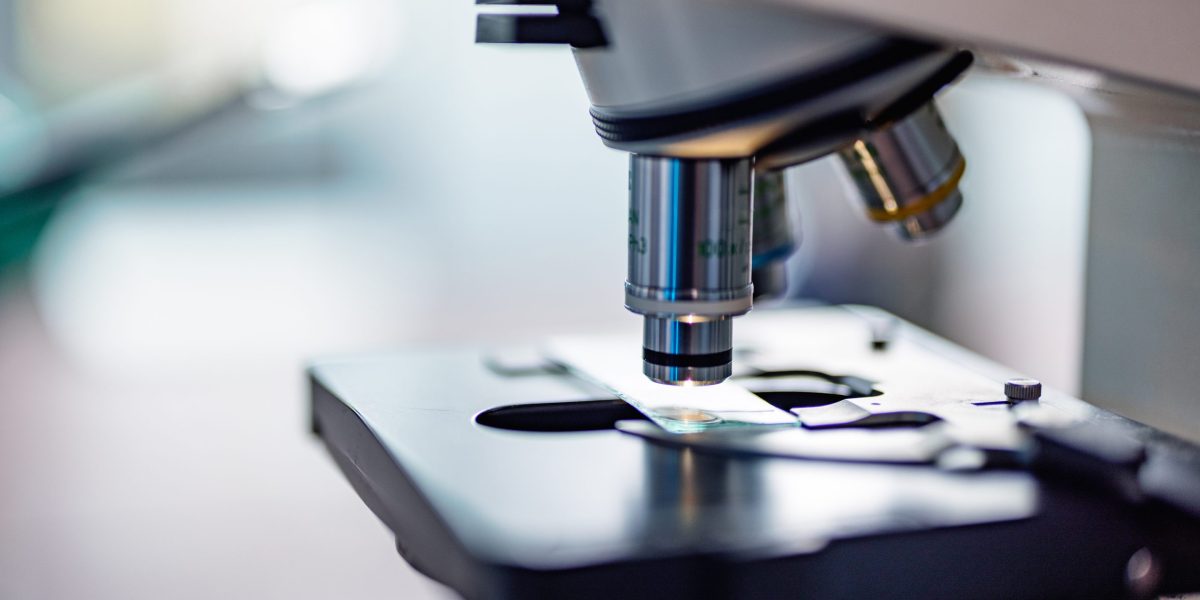
Imagine a factory where all the equipment is powered by AI, where robotic arms and assembly lines can “communicate” with their own shared language. Or picture a science lab, where microscopes can autonomously search for a certain type of molecule—all hours of the day, no humans necessary.
That’s the idea behind Anthropic new Model Hardware Standard (MHS), which the company released as a research preview on Thursday. MHS, which marks Anthropic’s first foray into so-called physical AI, is essentially a framework for connecting advanced large language models (LLMs) like Anthropic’s Claude with physical objects, from manufacturing equipment to microscopes.
With MHS, companies can integrate AI into their equipment in “hours or minutes,” Anthropic said. Typically, this process would take “weeks, if not months,” and require specialists to do a custom build. Expanded access to advanced AI tools will pave the way for “autonomous, round-the-clock experiments and workflows,” the company said. Scientific research and advanced manufacturing applications are among the primary uses.
The MHS can also help connect multiple devices to one another, enabling them to communicate through a set of commands, such as “read.” Any hardware device can understand these commands and act on them.
MHS is model-agnostic, meaning it works with any LLM—not just Claude—including models built by other companies such as OpenAI or open-source models. It’s built on the Model Context Protocol (MCP), a universal, open standard for connecting data sources that Anthropic debuted in 2024. The MCP is “kind of like the USB for AI to software connection,” Alek Kemeny, a member of the technical staff at Anthropic, tells Fortune.
Not all existing equipment can connect to MHS out of the box, as not all have a programming interface, Kemeny said. As part of this project, Anthropic is working with “a lot of device manufacturers” to build new products with the necessary interface, and are pre-loaded with the MHS. The company is also helping manufacturers to add MHS connections to existing products.
“That’s the future we imagine and are moving into,” Kemeny said. “In the future, scientists can buy these devices and out of the box it works. That’s just the process of adopting a standard.”
Jonah Cool, head of partnerships and deployment of science at Anthropic, added that often scientific equipment “suffers from proprietary solutions that are very brittle and often don’t meet the need of scientists.” MHS offers a standardized, easily programmable interface that aims to help them connect any model to their equipment. “We want to avoid vendor lock-in for scientists,” Cool said.
The MHS research preview comes amid increasing interest in the potential of combining AI and robotics. Hugging Face also debuted its first physical AI product today, a robotic duck, although it is not powered by MHS, Anthropic said. Nvidia, which is set to purchase Hugging Face for $13 billion, has also long championed physical AI. In March, Nvidia CEO Jensen Huang predicted that in the future “every industrial company will become a robotics company.”
Anthropic developed MHS in partnership with the HHMI Janelia Research Campus, a biomedical research center in Virginia. A “handful” of labs and hardware manufacturers received early access during development, in fields such as biotech, robotics, and quantum computing.
Some partners include Genentech, Carnegie Mellon university, quantum computing company QuEra, Universal Robots, Amazon Web Services, Doosan Robotics, Danaher, and Hugging Face.