



As global ecosystems continue to decline, financial institutions are under pressure to treat nature risk not just as an ESG issue, but as a core concern for stability, fiduciary duty, and long-term value.
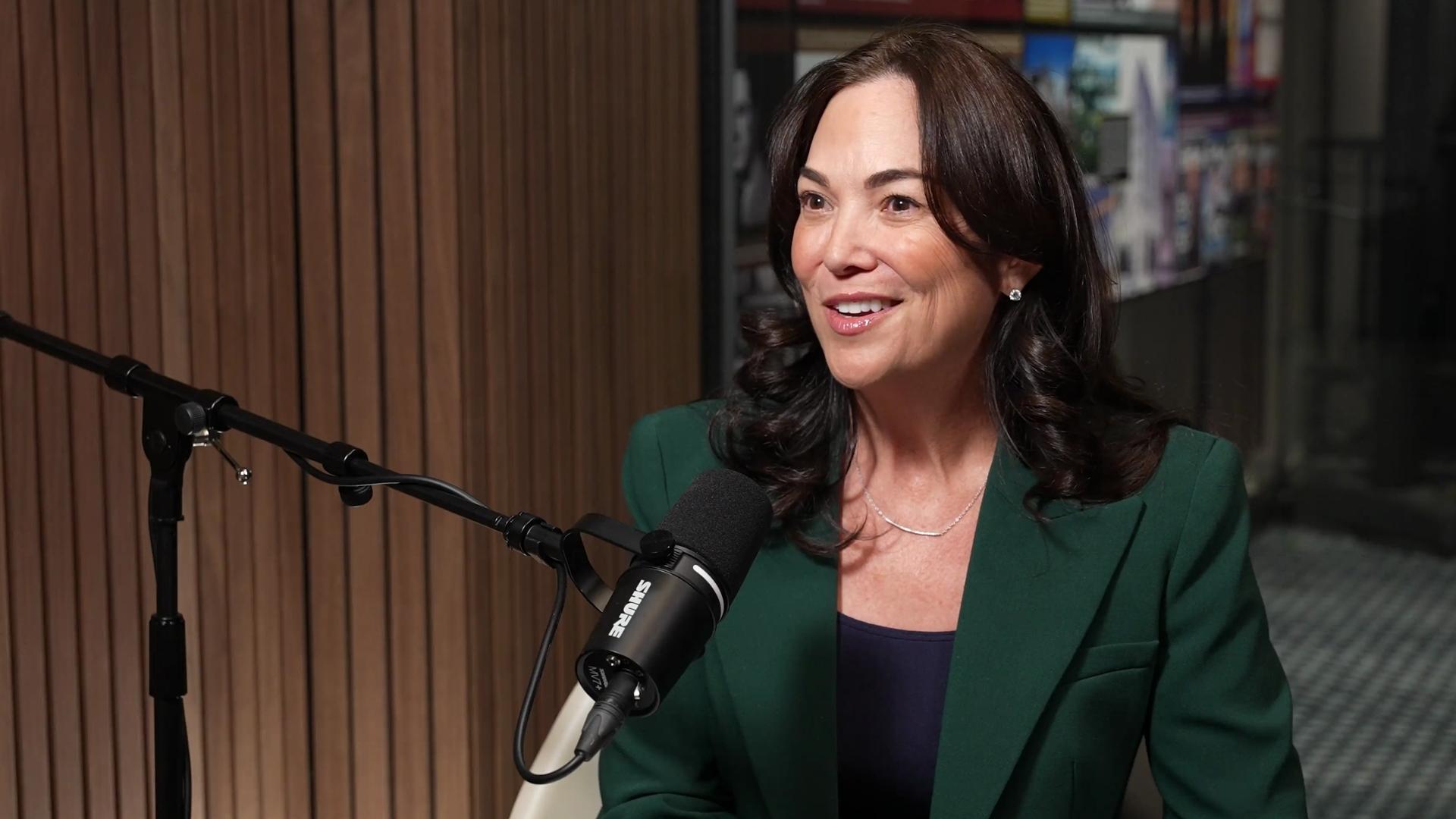
“You don’t get to choose what is a material financial risk.” That was the core message from Sarah Barker, head of climate and sustainability at Pollination, which cuts to the heart of a growing shift in boardroom responsibility. Nature loss, from soil degradation and freshwater stress to biodiversity collapse, is no longer a distant ecological concern. It is a direct financial issue, and one that boards must now be equipped to govern.
At a time when climate risk is becoming embedded in regulatory frameworks, nature risk is rapidly following suit. And with close to 20 trillion in AUM already aligned with the Taskforce on Nature-related Financial Disclosures (TNFD), the question is no longer whether nature matters, but whether boards know how to ask the right questions about it.
That’s exactly the purpose of the TNFD’s new guide, Asking Better Questions on Nature, a practical tool designed to help directors move from vague awareness to informed oversight. “Environmental issues that were once considered externalities are now financial,” says Barker. “Boards don’t need to become ecologists, but they do need to understand how to interrogate nature-related risks and opportunities. That’s what this guide enables.”
From Boardroom Blind Spots To Strategic Insight
The TNFD guide isn’t a checklist or disclosure framework. It’s a structured set of questions that helps directors assess whether their organisation is adequately understanding and managing nature-related issues, many of which have been invisible to traditional risk frameworks.
“The beauty of the guide,” says TNFD co-chair David Craig, “is that it breaks down what many perceive as overwhelming complexity into simple, strategic questions. Where are we dependent on nature? What happens if that breaks down? How are we integrating this into our business model?”
These aren’t just academic questions. For financial institutions, particularly asset owners and lenders, the risks are becoming increasingly undiversifiable. “Nature is becoming a source of systemic concentration risk,” Craig explains. “Investors are increasingly realising they hold large exposures in sectors and geographies that are highly vulnerable to ecosystem decline.”
This risk is especially in industries deeply reliant on clean water, pollination, and healthy soils. As these ecosystem services degrade, the consequences flow directly into economic activity, investment returns, and credit quality.
This was echoed by Ian Hudson, a TNFD Taskforce Member and head of nature and ecosystems at mining and commodities giant Anglo American, who emphasized that nature-related considerations are not symbolic. He argues that it’s critical that companies don’t treat nature-related efforts as checkbox compliance or PR, but to take the outputs and insights from processes like TNFD seriously and actually change how they operate as a result.
Dependencies, Not Just Impacts: The Shift Boards Must Make
One of the most useful tools behind this shift is TNFD’s LEAP framework, a four-step process that helps companies: locate their interactions with nature; evaluate their dependencies and impacts; assess related risks and opportunities; and prepare to respond and disclose. LEAP gives directors and executives a way to move from abstract concern to practical governance. It forces companies to map out their real-world reliance on nature, as for example how a mining company relies on water quality or how agriculture depends on pollinators, and assess the financial consequences of nature degradation.
Hudson highlights how the TNFD LEAP approach had transformed corporate awareness saying, “Just having this, this notion of a dependency as part of the LEAP framework is causing organizations, sectors, companies, to go I’ve never really thought about what I’m dependent on and what that means to my business.”
Crucially, he sees opportunity as well as risk, adding, “It’s not all impact and risk related. It’s about thinking about how if we did things differently, what opportunities could we create?” Hudson is currently chairing TNFD working group 14 which is focused on nature related opportunities.
From ESG Symbolism To Fiduciary Strategy
Hudson reinforces the idea that board-level fluency on nature is a sign of strategic maturity adding, “When I’ve got a chief executive or a chairman who can, who can stand up and talk about nature articulately and eloquently, and can provide real, tangible examples of how Anglo American is doing biodiversity, nature, positive things within the business, which they do regularly. Then that that tells us that we’ve got the right level of engagement that we need.”
For too long, nature-related activity in the corporate sphere has been confined to sustainability teams or limited to symbolic gestures such as tree planting, biodiversity offsets, rooftop gardens. But the TNFD guide is framed not around CSR or even ESG, but around fiduciary responsibility.
“This isn’t about whether you care,” Barker notes. “It’s about whether, as a director, you are fulfilling your duty of care, diligence, and loyalty to the company, and that includes understanding risks that affect your long-term strategy and performance.”
Directors don’t need to be ecologists, but they must govern for foreseeable risks. Legal experts across jurisdictions agree: failing to do so could expose them to legal, reputational, and shareholder consequences. “I think that all board members need to understand that this is not a topic only for tree-huggers or a pet project of particular board members,” says Hirotaka Hideshima, counsellor on Global Strategy to the President and Board of Directors of the Norinchukin Bank (and a Taskforce Member). “I believe it is crucial for all board members, including non-specialists, to understand that this is one of the main strategic decisions that they need to make if they wish for the survival of their businesses. Failure to do so can expose them to legal challenge, shareholder scrutiny, and reputational damage.”
Relevance For Financial Institutions
For investors like Norges Bank and Norinchukin, or pension funds overseeing billions, the guide plays a particularly important role. These institutions face nature-related risks both operationally and across portfolios, ranging from water stress to ecosystem disruption, often in indirect and poorly measured ways.
Portfolio-level analyses reveal that nature-related risks vary widely by sector and geography, from water stress inflating operational costs to disruptions in ecosystem services directly undermining productivity.
“Effective boards are at the core of good corporate governance, including when managing financially material sustainability risks related to impacts and dependencies on nature,” says Snorre Gjerde, Lead Investment Stewardship Manager at Norges Bank Investment Management and a Taskforce Member.
He adds, “As a shareholder in over 8,800 companies globally, we rely on boards to exercise oversight that supports long-term value creation and balances short-term performance with long-term resilience. We see value in voluntary resources and tools that help boards understand and oversee financially material nature-related risks relevant to the company’s business model.”
The TNFD framework helps identify where portfolio companies are dependent on ecosystem services, and where these dependencies may become liabilities. “It supports board-level governance by creating a shared language across sustainability teams, executives, and non-executive directors,” Craig explains. “And that’s critical for boards that may not have biodiversity or environmental expertise.”
It also helps institutions connect the dots between nature and the broader financial system. Declining nature impacts everything from food security to supply chain volatility to sovereign risk, all of which ripple through markets.
“Nature loss doesn’t cause one big shock,” says Craig. “It creates gradual, compounding instability from rising food prices, degraded farmland, disrupted water access. These affect everything from household budgets to GDP. That’s why central banks and supervisors are starting to treat nature as a financial stability concern.”
The Evidence Is In: Nature Loss Hits EBITDA
These risks are no longer theoretical. As documented in a new paper from TNFD, Oxford University’s Environmental Change Institute and Global Canopy, pollinator decline alone could jeopardize up to $577 billion in global crop production annually. Water stress, now an increasingly frequent occurrence, has been shown to raise operational costs for food and beverage firms by as much as 30% in affected regions. Such shocks affect credit quality, insurance availability, and long-term capital access.
Nature-related risks, the paper finds, are now affecting cash flows, cost of capital, and financing conditions across sectors. Nature loss doesn’t just hit the environment, it hits EBITDA. The report also emphasizes that while case-level disclosure remains spotty, the aggregate evidence base is robust. What’s missing is a consistent approach to integrated scenario analysis and a common language across disciplines, a gap TNFD aims to fill.
Risk, Reporting And Regulation Are Converging
The Asking Better Questions on Nature guide also serves as a practical bridge between high-level ESG strategy and on-the-ground governance. As regulatory frameworks such as the CSRD and ISSB evolve to include nature, boards must be ready to show that they are exercising oversight, not simply ticking boxes.
“Nature risk is still emerging in ESG reporting,” Barker says, “but boards will be asked how they considered these risks and what questions they asked. The guide helps demonstrate that governance is real, not reactive.”
It also points the way forward. The “nature transition,” as Craig describes it, is broader and more bottom-up than climate. It involves rethinking materials, land use, product design, and supply chains, creating new market opportunities, but also new exposures.
Legal guidance also reinforces that failure to address foreseeable and financially material nature risks could expose directors to breach of fiduciary duty, especially in jurisdictions where double materiality is becoming codified. In short, asking the right questions is not just good governance, it’s legal risk management.
The Call To Action: Start Asking Now
Boards aren’t expected to have all the answers but they are expected to ask the right questions. And increasingly, stakeholders from asset managers to regulators want evidence that they are doing just that.
Craig says, “The institutions that build this capacity now will be more resilient, more informed, and better positioned when mandatory disclosure inevitably arrives.” This is not just oversight, it’s leadership.
For financial institutions, the message is clear: nature is not a niche concern. It is an operating condition of the economy, a source of both risk and value. And boards that fail to recognise this may find themselves asking too little, too late.