



The European energy transition may be in full flow, but how European is it, really? Although a record 47% of the EU’s energy came from renewables in 2024, and EU countries now invest ten times as much in renewable energy as they do in oil and gas, the picks and shovels behind this green gold rush mostly come from elsewhere.
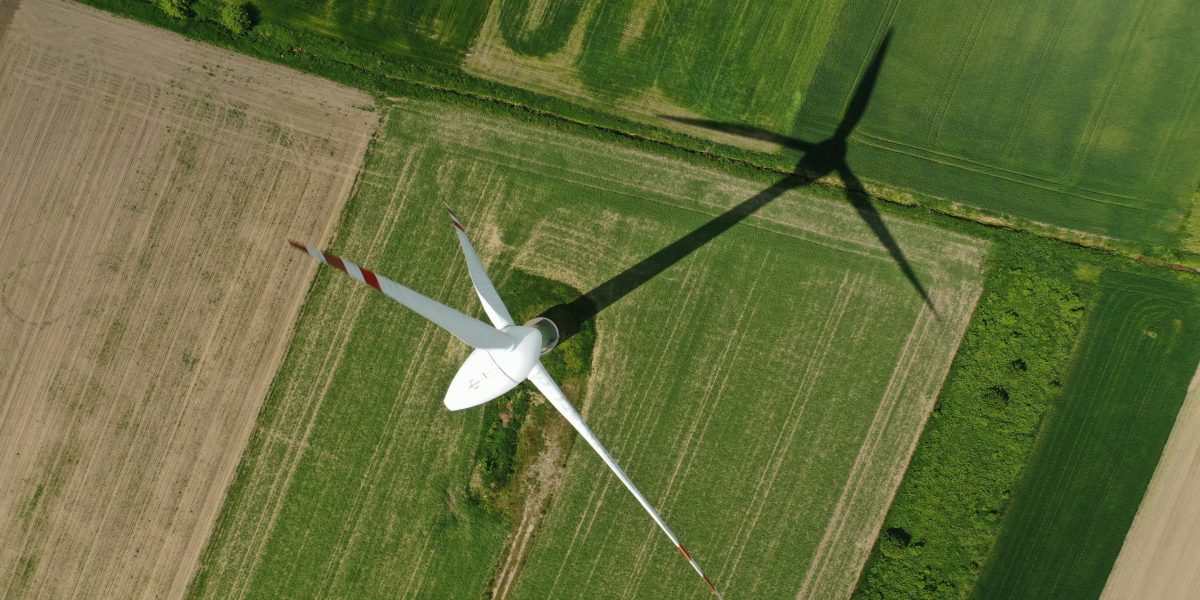
In 2024, 92% of the world’s supply of solar photovoltaic (PV) panels and 82% of wind turbines came from one country—China. There are no European firms in the solar PV producers top ten. And while the world’s number one wind turbine manufacturer, Vestas, is European, the rest of the top ten firms are not.
All of which begs the question, can—and should—Europe use the once-in-a-generation opportunity presented by decarbonization to reboot its own renewables supply chain, creating green jobs and sustainable wealth for the future? Or does the sheer scale of the challenge demand the capacity, availability and rock-bottom prices that only established Chinese suppliers can provide?
The market speaks
In purely economic terms, the answer is probably the latter, says Daniel Grosvenor, energy and resources specialist at consultants Deloitte in London: “What Europe really needs most of all is cheap, abundant and reliable energy. The broader economy will thrive more from that than from building its own renewable energy supply chain.”
Developing local capacity would almost certainly cost more and result in a slower rollout than relying on established providers, Grosvenor adds.
Even further along the green product pipeline, in sectors where European manufacturers still dominate, competition is heating up. Take the EV market—9.5% of EVs sold in Europe are now Chinese brands such as MG, BYD and Polestar. That doesn’t sound so much until you factor in the impressive rate of growth; the equivalent figure in 2019 was less than 1%.
That growth is usually ascribed to keen (and state-supported) pricing. Even after import tariffs—which are manufacturer-specific and based on the subsidies received by each firm from the Chinese government—Chinese EVs can still be significantly cheaper than European rivals.
In the U.K., where no additional tariffs are charged, China’s BYD, which sold its first electric car in Europe as recently as 2021, shifted 11,271 EVs in September, 880% more than the same month last year. Car rental firm Sixt has also signed a deal to be running 100,000 BYD EVs across Europe by 2028.
“What Europe really needs most of all is cheap, abundant and reliable energy. The broader economy will thrive more from that than from building its own renewable energy supply chain.”Daniel Grosvenor, energy and resources specialist at Deloitte
But it’s not just a question of cost. The quality and range of models on offer is now also at least as good, says Jan-Henrik Rauhut, global head of mobility at German industrial giant Siemens. “The Asian manufacturers coming to market do a really good job. They are spot on from a quality and technology point of view. I already see them on the same level as European [manufacturers] in that regard,” he adds.
Siemens is investing €650 million ($754 million) in decarbonizing its business, which includes electrifying its 43,000 strong global vehicle fleet by 2030. So far, 28% of these are battery-powered EVs worldwide, but that hit 94% of new vehicle orders in Germany.
European manufacturers still have the edge in terms of their service networks, Rauhut says, but Chinese brands are an increasingly attractive fleet proposition. “Right now we still have a stronger focus on European brands [because of their service networks] but in two or three years there’s a possibility the market dynamics might shift.”
The security question
Economics is not the only factor in Europe’s dilemma over whether to rely on Chinese green tech. Political questions, particularly around security of supply, also have a big part to play. Europe has been busily weaning itself off imported Russian gas since supplies were weaponized by Vladimir Putin in 2022, installing record amounts of domestic renewable capacity in its place.
But with so much of that renewable generating technology also imported from a single country, there is a risk that one strategic geopolitical vulnerability is simply replaced with another.
“If we are dependent on one country for much of our energy supply chain, as we were on Russia for gas, are we happy with that?” asks Grosvenor. “Particularly when it comes to critical components [like solar panels and wind turbines], I think we are seeing many European countries think about security of supply in a much broader context.”
“Right now we still have a stronger focus on European brands [because of their service networks] but in two or three years there’s a possibility the market dynamics might shift.”Jan-Henrik Rauhut, global head of mobility at Siemens
Even if the political will is growing to buy European, the sheer level of Chinese subsidies makes it hard to implement. An OECD report published in February found that between 2006 and 2023 wind turbine manufacturers in China received government subsidies and other support (including below-market credit) of around 2.5% and 4.5%, compared with well below 1% for EU companies.
The same report also found that the cost of materials required to manufacture a turbine is 40% higher in Europe than in China.
Consequently, Chinese-made turbines can be 30% or more cheaper than European equivalents, while Chinese firms also offer inducements such as deferred payment terms which even the largest European firms struggle to match.
“I’m very much a fan of competition, but it has to be on equal terms,” the outgoing CTO of Vestas, Anders Nielsen, said on the subject of Chinese competition in a recent podcast. “But if someone can run a loss for years and years and be subsidized for it, that is not a level playing field, it’s someone buying the market.”
The European Commission appears to have some sympathy with this view, and is currently conducting an investigation into Chinese wind turbine pricing.
Green shoots
So much for the bad news. But could the prospects for European companies looking to compete with China on more commercial terms actually be better than they appear? The market for solar PVs–in which Europe was once a leader—has been dominated in recent years more thoroughly by cheap Chinese imports than any other renewable sector.
But while Europe cannot compete on price, it may soon be able to win on new technology, says David Ward, CEO of U.K.-based solar scale-up Oxford PV. “All the Chinese manufacturers are losing money, so we have reached the bottom of the prices that are possible. The only way to improve energy cost now is to make [the solar panels] more efficient.”
That’s where his firm comes in. Oxford PV’s tandem panels are the most efficient solar PV modules in the world, thanks to next-generation technology, which adds a thin layer of perovskite (a novel semiconductor) on top of the traditional silicon. The result is a module capable of converting 26.9% of the sunlight it captures into electricity, nearly 2% better than the best of conventional rivals currently coming out of China. Production for pilot customers is already underway at Oxford PV’s factory in Brandenburg, Germany.
The firm’s ultimate goal is to license the technology as well as making it. The panels will be more expensive to buy, Ward admits, but their superior efficiency means that lifetime energy costs—the levelised cost of energy (LCOE) as it is known in the business—will be around 10% lower than conventional alternatives.
Such intellectual property advantages could give Europe just the kind of edge needed to redress the balance, concludes Ward. “People have tried to reignite [solar panel] manufacturing in Europe before, but they have always struggled because there hasn’t been a differentiator. You need the IP set in this technology to be able to compete with China”.