


This is the published version of Forbes’ Future of Work newsletter, which offers the latest news for chief human resources officers and other talent managers on disruptive technologies, managing the workforce and trends in the remote work debate. Click here to get it delivered to your inbox every Monday!
Will AI kill pointless jobs? Will it improve the ones that matter? Can companies really move the needle on hiring for skill—rather than by the prestigiousness of a college degree? What’s holding back women at work? Will we ever, finally, maybe-next-year resolve the remote work battle?
These and other questions will be at the forefront of Forbes’ Future of Work Summit on September 12 in New York. This week, we shared our growing roster of speakers, which includes Calendly CEO Tope Awotona, Lattice CEO Sarah Franklin, Etsy CEO Josh Silverman, Moms First founder Reshma Saujani, the founders of AI 50 listmakers Writer, Harvey and Tome, as well as the chief people officers or human resources chiefs from Accenture, Pinterest, IBM, Chevron and more. It’s going to be a packed, thought-provoking day full of dynamic discussions and high-level networking. If you’d like to apply to attend—our summit is invite-only—the application link is here.
Here’s to a great week.
ARTIFICIAL INTELLIGENCE
Humanoid robots are having a moment, writes Forbes’ Amy Feldman in a profile of Apptronik, a small University of Texas at Austin spinout that has been making a humanoid called Apollo for the past eight years with, until recently, only $28 million in total funding. Amazon is testing out bipedal robots called Digit from startup Agility Robotics in its warehouses. Figure AI recently raised a $675 million megaround to develop humanoids for BMW and others. And Elon Musk is pitching Tesla’s futuristic Optimus as one day being able to help assemble cars. Apptronik’s founders spoke with Feldman about the growing interest in the company—they’ve signed up Mercedes to test one robot in a plant in Hungary and have agreements with materials-handling equipment maker Terex, logistics giant GXO and some dozen other companies.
Forbes recently published our annual Cloud 100 list, which includes a range of AI companies such as Anthropic, Midjourney, Glean and Cohere. One spotlight: Fintech unicorn Ramp, which wants AI to help manage your company’s finances. The company, valued at $7.65 billion as of April, claims it’s the fastest growing corporate card in the U.S. Cofounder and CTO Karim Atiyeh told Forbes he’d one day like to see Ramp have AI agents that serve as executive assistants or business negotiators: “I’m looking forward to the day where I could just tell Ramp, ‘Book my flight back home.’ And it knows where home is, when my last meeting is, what the policy of my company is, it’s all taken care of,” he said.
HUMAN CAPITAL
The July jobs report released August 2 helped send the stock market reeling at the start of last week, after the Labor Department reported the U.S. economy added fewer jobs than expected, stoking fears of a possible recession. But fewer new Americans filed for unemployment last week than expected: Initial jobless claims for the week ending August 3 were 233,000, according to Labor Department data released Thursday, down 17,000 from the prior week’s revised 250,000, and below consensus economist estimates of 240,000.
What’s the true cost of a layoff? It’s a lot more than just the tally of severance payments for terminated workers. Bloomberg’s Matthew Boyle, in a research-backed graphics story, talks with experts about the actual cost of laying off workers—from reduced productivity by those who remain to voluntary departure costs, increased unemployment taxes and all the inevitable legal fees.
WHAT’S NEXT: HYATT HOTELS CHRO MALAIKA MYERS
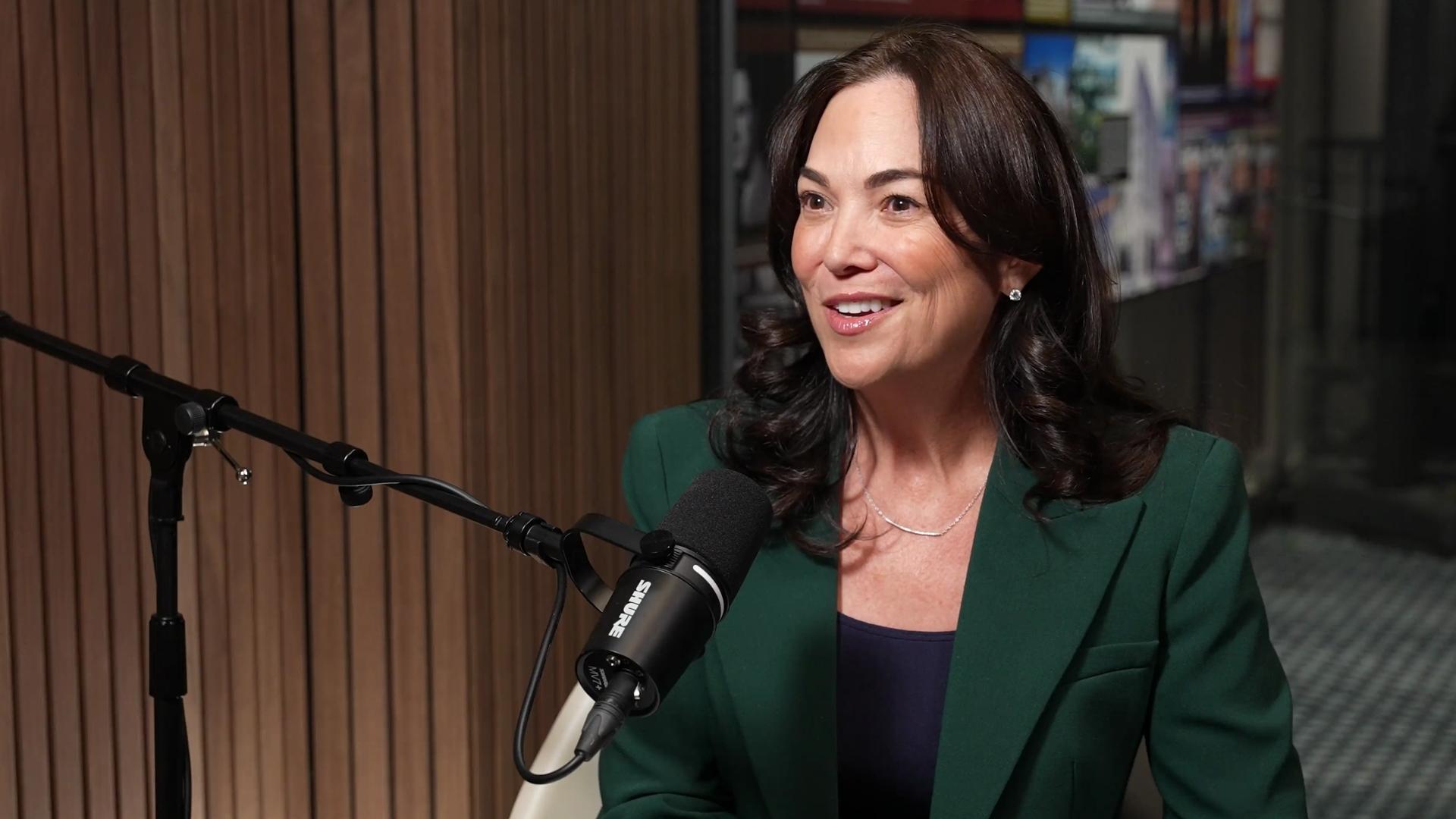
As the travel industry surfaces from a post-pandemic travel boom and a challenging labor market, Forbes spoke with Malaika Myers, the chief human resources officer at Hyatt Hotels, which has a global workforce of some 206,000 people. We spoke about skills-based hiring, flexibility for the front lines, and why it’s getting a little easier to recruit tech talent to the hospitality industry. Excerpts from the conversation have been edited for length and clarity.
How long has Hyatt been looking at the issue of skills-based hiring and what changes have you made?
It’s come in phases. The initial phase was really brought about by an initiative we launched back in 2017 when we were thinking about what our philanthropic platform should be, and what issues we really wanted to lean into. We landed on a focus around the employment of opportunity youth. These are people 16 to 24—not in school and not employed. They’re not coming to us with a lot of skill.
Yes, there’s a philanthropic angle, but there was clearly a talent angle for us as well. We worked with a partner to get to the underlying character traits that would lend themselves to a career in hospitality. We used an assessment in the early days to help us—and the youth—understand what kind of jobs might be a fit.
We’re in the middle of an HR evolution. We’re incorporating a lot of ‘agile’ ways of working into our culture and into the behaviors we expect. That really lends itself to thinking about the skills that people bring to the table—not necessarily what job they’re in today. We’re moving away from jobs as they were—more static job descriptions—and we’re moving towards tasks.
I hear that phrase so much—that a job is a set of skills. Haven’t we always cared about the skills people bring to the job?
It’s more about the flexibility and the fungibility of how you use those skills. Pick a job. We might have someone who’s a compensation analyst. But when you think about the skills they have, you’d say they’re good with data. They’re probably good with systems. They have an analytical mindset. The future is when you start to say, well, okay, I have a commercial piece of analytical work that needs to be done [and it doesn’t matter that it’s not an HR or compensation analysis task]. I think the consulting firms are probably the furthest along on this.
In today’s world we are stuck in our box. I’m in compensation and I’m in HR, so I don’t ever know about or get a chance to work on a commercial piece of [analysis]. The organization doesn’t get the benefit of you being able to apply that skill in a different way. In tomorrow’s world, you will know about it and we’ll know about your skills. It really will cause us to rethink how we think about structuring work, how we think about compensating work, how we think about careers.
Are you seeing any shift in tech workers’ interest in working for industries like yours, given all the layoffs and disruption in tech?
For sure. Two years ago, we were in desperation mode trying to recruit that talent. Today, it’s still not easy. It’s still the toughest talent for us to find. But it is easier. … I can’t snap my fingers and get any top [tech] talent, but nor am I trying to explain to people what my company does.
We spend so much time talking about flexibility on the job, and it seems focused on office-based workers. How are you trying to give people in your hotels more flexibility and control of their schedules?
When I first joined this industry, at some point I realized that a hotel was like a hospital. It never closes: 24/7, 365, Christmas, New Year’s. You name it, we’re open. That has traditionally meant that everybody who worked there—when they were working, they were at the property.
The pandemic really shifted that for us. As we came out of it into a horrific talent market where we couldn’t get enough people to be staffed, it really pushed us to think differently about flexibility. First, there are the management level positions. All of them had no real flexibility before. We now have sort of a cafeteria menu of flexible options that many of our hotels figure out which works for them. Maybe it’s four days [on property] and you work one day from home, or getting two days in a row off. And there are some jobs where people thought it would be impossible for flexibility. Like a chef. A chef has to be in the kitchen cooking, right? Except chefs order food. They plan menus. Those things don’t have to be done on property. So even our chef can work from home every other week or something like that.
For front-line colleagues, they historically had to work eight-hour shifts. We had people coming to us saying I love that server job, but I have to drop my child off and I can’t be here before nine, and then I have to pick them up, so I have to leave at two. We had managers start to open their minds to say, you know what? That works for us. Because if you’re not here doing that, you know who’s going to be doing that? Me.
FACTS + COMMENT
Forbes’ Megan Poinski, who pens our C-Suite newsletters, spoke with Google Cloud executive Oliver Parker, who works with executives daily on AI adoption, about new Google research shared exclusively with Forbes that surveyed 2,508 C-suite executives across the globe.
74%: The percentage of executives already seeing some kind of ROI from their use of AI.
45%: The percentage of executives who implemented generative AI to improve productivity and said that it has doubled.
“You have to infuse a culture of experimentation. You’re building a set of muscle and capability where people feel that they can experiment and be creative.” – Oliver Parker
STRATEGIES + ADVICE
Here’s how to help manage the growing anxieties workers have on the job—from this fall’s election anxiety to concerns about climate change.
Frustrated at work? How to decide if you should stay, pivot or quit.
Workforces have never been more polarized. Here’s how to make them more inclusive in a divided world.
VIDEO
QUIZ
Which 2024 Paris Olympics star tweeted in a post on X, ‘I love my Black job,’ taking an apparent jab at former President Donald Trump and his repeated use of “Black jobs” at his controversial National Association of Black Journalists interview?
- Noah Lyles
- Simone Biles
- Kevin Durant
- Snoop Dogg
Check out the right answer here.