When Party City and Joann Fabrics liquidated last year, Michaels Stores had an opportunity to swoop in and fill the void each retailer had left in the market. It jumped at the chance.
In a matter of months, Michaels, an arts and crafts retailer, had built out party supply spaces at its 1,400 stores, set up a supply chain to source helium, installed balloon-filling equipment, and trained employees on how to use it. Just as quickly, it started selling much more fabric at 1,000 of its locations after buying JoAnn’s intellectual property and store brands at bankruptcy auction.
Michaels can move at “rapid speed,” says CEO David Boone, who took the reins in February 2025 and oversaw the inventory expansions. Owned by private equity firm Apollo Global Management, Michaels is unhindered by having to sell Wall Street on the rationale for an acquisition or new strategy.
“If you want to do things, your board is just a phone call away,” says the 57-year-old Boone who was previously CEO of Staples Canada and held senior jobs at grocer Loblaws and TD Bank. “You can make decisions much quicker and do things that are more profound and maybe not as easily explainable to the public markets.”
Michaels’ party supplies and fabrics push is more than opportunism; it’s the centerpiece of its strategy to find growth beyond a maturing arts-and-crafts market, where the retailer has spent a decade fighting Hobby Lobby for market share.
As a private company, Michaels is not bound to disclose financial results publicly, but media reports suggest Boone’s moves are paying off: Bloomberg reported last week that Michaels saw first quarter sales and adjusted earnings grow by a double-digit percentage, citing people familiar with the matter.
Before that, Michaels had experienced a decade of stagnation, with annual revenue stuck at around $5 billion, according to the National Retail Federation, and had repeatedly failed to narrow the gap with arch-rival Hobby Lobby, which was about $1 billion bigger by revenue. (Hobby Lobby is also privately held and does not disclose its financial results.) In 2021, Michaels agreed to be bought by Apollo in a $5 billion deal with the goal of becoming a nimbler chain with more appealing stores.
Immediately after the acquisition, former Michaels CEO Ashley Buchanan focused his efforts on improving the store’s e-commerce, streamlining its assortment, and making stores easier to shop. (Ashley left for Kohl’s in early 2025 but lost that job after just four months on suspicions he had directed company business to his romantic partner.)
But it was clear that Michaels needed more. “We spent a lot of time building out a lot of great digital infrastructure, but clearly not enough on stores and the store experience and that’s where we’ve shifted all of our capital in the past 12 months,” says Boone.
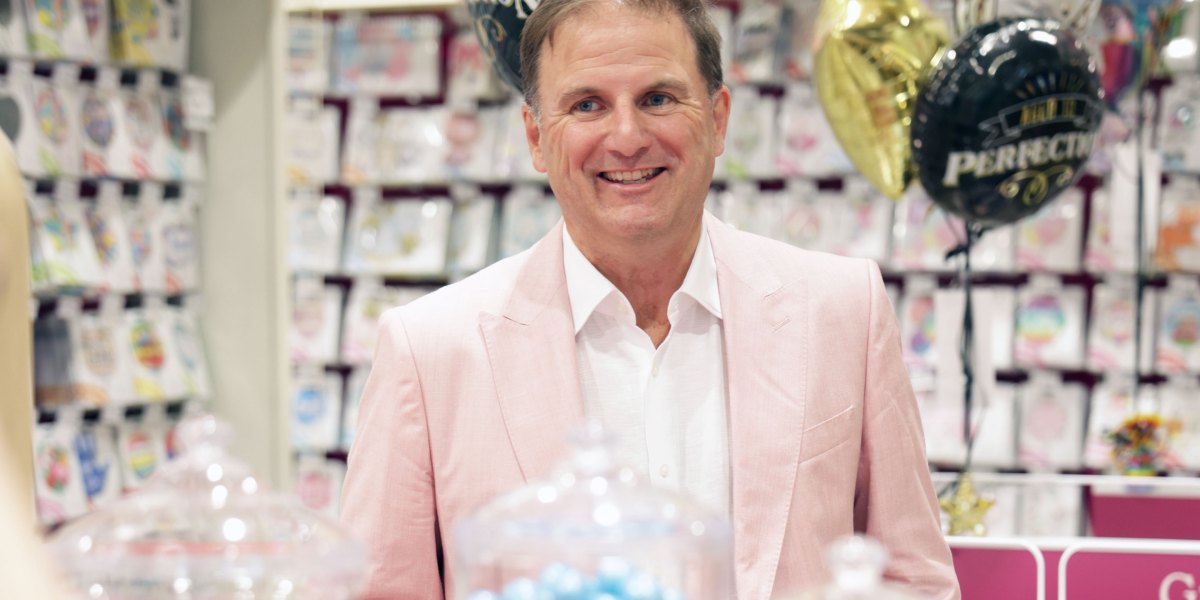
Zhuzhing up stores has included adding ‘party shops’ with balloons, flowers, and greeting cards to bolster Michaels’ ambitions to be a ‘celebrations’ retailer as much as it is an arts and crafts chain. Party City’s stores were notoriously poorly maintained, and Boone sees an opportunity for Michaels to lure party supply shoppers with an inviting in-person experience. Michaels has also installed in-store kiosks where shoppers can experiment with art and jewelry-making supplies.
The retailer is deferring to regional managers to ramp up local selections. For instance, Michaels sells bachelorette decorations in Nashville and horse-themed decor in Calgary, Alberta, home to the Stampede rodeo.
All this adds up to a revived retailer that Boone thinks can be much bigger. Both Joann and Party City were $2 billion-a-year businesses, and he expects Michaels to grab a good chunk of those markets to generate growth.
Michaels has been in private equity hands for five years, just shy of the idustry’s typical seven-year cycle for seeking an exit. Naturally, Michaels is facing questions about going public again. “Apollo has owned Michaels for a while and will likely want to realize that investment at some point, but our main focus is on delivering the best experience for our customers,” said Boone, when asked about a potential IPO. (Michaels has been on and off the stock market a number of times in its history: it went public in 2014 before going private seven years later.)
Boone says ownership structure is secondary to focusing on fundamentals. “I always tell people that the customer has no clue who owns the company and doesn’t care,” he says. “It’s almost irrelevant as long as you’re delivering for the customer.”